
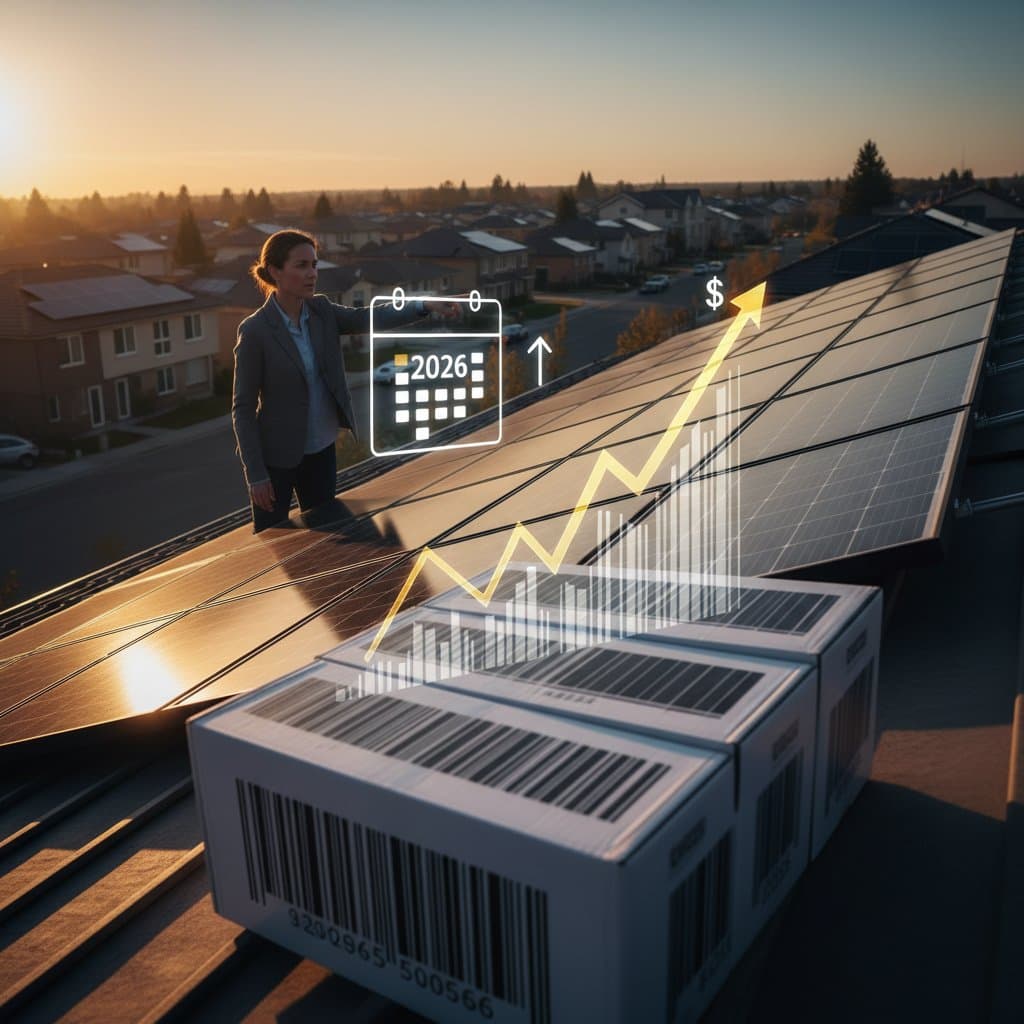
2026 Solar Tariffs: Prepare for Elevated Panel Prices
Solar policy changes often complicate planning for homeowners. Questions arise about the optimal timing for installation amid fluctuating trade regulations. Tariffs on imported panels and components directly influence equipment costs and investment returns. The anticipated 2026 tariff revisions will likely drive up prices in the short term. Grasping the underlying factors and strategic responses enables informed choices to mitigate rising expenses.
Tariffs and Their Impact on Solar Panel Pricing
Tariffs function as taxes on imported products. Governments impose them to safeguard local industries or address trade imbalances. In the solar sector, these duties target panels, cells, and ancillary materials like aluminum frames and glass. Elevated import taxes raise the per-watt cost of modules, which installers typically pass on to customers.
Consider a standard panel priced at 35 cents per watt prior to tariffs. A 15 percent duty adjusts this to approximately 40 cents per watt. For a 7-kilowatt residential system, this adjustment contributes about $350 to equipment expenses. Labor and inverter costs remain unchanged, resulting in a 2 to 4 percent overall system price increase. Such increments accumulate significantly in larger projects.
Factors Prompting the 2026 Tariff Changes
Policymakers introduce these tariffs to bolster domestic manufacturing. Many panels originate from Asian facilities leveraging low labor expenses and subsidies. Local producers contend this distorts competition. Tariffs seek to level the field and stimulate U.S. production growth.
Implementation challenges persist due to production timelines. Domestic expansion requires years, while solar demand surges. Until American facilities satisfy market needs, imports remain vital. This dependency exposes the sector to tariff-induced supply constraints and temporary price surges for installers and residents alike.
Projected Shifts in Panel Pricing
Industry forecasts indicate module prices will rise 10 to 15 percent upon tariff activation. Homeowners face varying effects based on system scale, funding options, and rebates.
For a 7-kilowatt setup currently at $2.80 per watt installed, the pre-incentive total reaches $19,600. A 12 percent panel cost escalation pushes this to $21,900. The federal tax credit, applied as a percentage of the full cost, yields a net increase of roughly $1,600 after incentives.
This adjustment extends the payback period marginally. With annual electricity savings of $1,400, repayment shifts from 8 years to about 9 years. Long-term benefits persist, though the initial financial barrier heightens.
Strategic Importance of Installation Timing
Systems installed prior to tariff hikes secure lower equipment rates. Installers procure panels in volume and often maintain pre-tariff stockpiles. As these deplete, subsequent imports incur higher duties. Contracts finalized early can thus apply favorable pricing, even for delayed completions.
Delaying decisions risks elevated costs for identical configurations. For those contemplating solar, obtaining quotes and committing promptly preserves affordability ahead of 2026 changes.
Benefits of Domestic Production Growth
Tariffs encourage local manufacturing, yielding advantages like reduced supply chain lengths, reliable timelines, and enhanced oversight. U.S.-produced panels frequently offer extended warranties and verifiable origins.
Scaling domestic output demands substantial effort, including facility construction, workforce training, and material procurement. Imports will sustain demand in the interim. While future U.S. choices expand, immediate price pressures loom unavoidable.
Broader Market Implications of Tariffs
Effects extend beyond panels to components such as racking, inverters, and storage units through indirect channels. Rising panel expenses strain installer finances, prompting minor adjustments in labor or margins. Competitive firms may offset portions to retain clients.
Large-scale utility projects, procuring by the megawatt, might defer or scale back. This demand fluctuation influences component availability and logistics costs. Residential markets experience amplified or moderated price dynamics accordingly.
Immediate Actions for Homeowners
Tailor solar choices to regional specifics. Collect essential data before proceeding:
- Assess utility rates. At 18 cents per kilowatt-hour and 10,000 kilowatt-hours annual usage, bills total $1,800. A system generating 9,000 kilowatt-hours offsets $1,620 yearly.
- Examine incentives. Federal and state programs reduce costs by 30 percent or greater. Utilities may provide additional rebates or output-based compensation.
- Evaluate panel efficiencies. Advanced models generate more power per area, offsetting tariff hikes via superior yield from limited roof space.
- Inquire on stock availability. Providers with pre-tariff imports can extend current pricing to scheduled projects.
Illustrative Cost and Savings Breakdown
Examine a 7-kilowatt system yielding 1,300 kilowatt-hours per kilowatt annually, or 9,100 kilowatt-hours total. Valued at 18 cents per kilowatt-hour, this equates to $1,638 in yearly bill reductions.
Pre-incentive cost of $19,600 with a 30 percent credit nets $13,720, achieving payback in 8.4 years. Tariff-adjusted to $21,900, the net drops to $15,330, extending payback to 9.4 years. Lifetime gains surpass $25,000 over 20 years, underscoring enduring value.
Enduring Solar Investment Dynamics
Short-term tariff disruptions contrast with advancing technologies. Annual efficiency gains, durable inverters, and optimized installations drive costs downward over time.
Reliable energy independence, ecological advantages, and stable bill reductions motivate adoption. Solar outperforms numerous home improvements in returns, delivering cost-free power for decades with basic upkeep.
Essential Steps to Advance Your Solar Project
For imminent installations, pursue these measures:
- Solicit competitive bids. Review brands, coverage terms, and payment plans.
- Probe tariff mitigation. Early commitments enable access to untariffed inventory.
- Inspect roof integrity. Pre-installation repairs avoid later disruptions and expenses.
- Incorporate performance tracking. Systems with oversight sustain efficiency and resolve anomalies swiftly.
- Monitor regulatory shifts. Incentives, billing policies, and credits evolve regularly.
Proactive navigation of tariffs maximizes energy cost reductions and property enhancements.
FAQ
Will tariffs render solar installations unaffordable?
No. Modest price elevations persist alongside robust incentives and savings, limiting overall cost growth to a few percent.
Can expanded domestic production counteract tariffs?
In time, yes. Emerging facilities will boost supply and steady prices, though the adjustment spans years.
Is pre-tariff installation advisable?
If prepared financially, absolutely. It secures reduced rates and accelerated returns.
What price increase for panels is anticipated?
Estimates range from 10 to 15 percent, influenced by negotiations, logistics, and exchange rates.
Do tariffs impact all equipment uniformly?
Primarily modules and cells; inverters, mounts, and batteries encounter secondary effects.
Does the federal credit adjust post-tariffs?
Yes. It scales with total expenses, proportionally elevating the incentive amount.
Might community solar evade tariff costs?
Bulk negotiations can temper effects, yet material expenses remain affected.
What if domestic supply growth is awaited?
Future variety increases, but elevated pricing may endure. Prompt action captures immediate benefits.
Thorough preparation positions homeowners to leverage solar's financial and environmental rewards amid policy evolutions.