
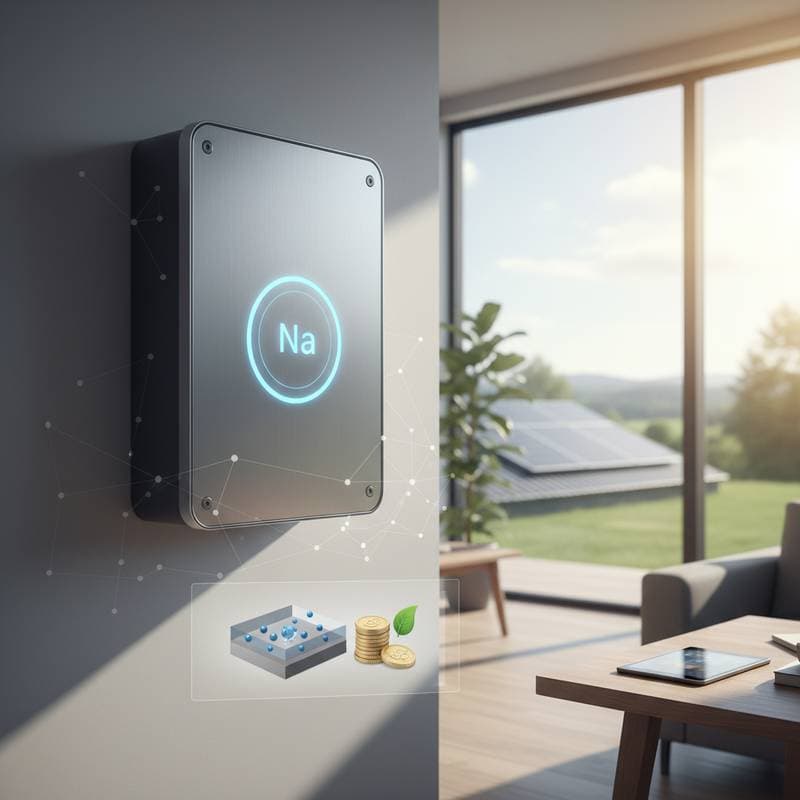
Sodium-Ion Batteries: An Emerging Alternative to Lithium for Solar Storage
Homeowners who consider solar energy frequently encounter a significant obstacle in battery storage. Lithium-ion batteries lead the market, yet their elevated costs, constrained supply chains, and reliance on scarce raw materials deter potential adopters. Sodium-ion batteries emerge as a promising alternative that offers reduced expenses, easier procurement, and enhanced safety for fixed storage applications.
This article details the nature of sodium-ion batteries, contrasts them with lithium-ion systems, and provides essential information for homeowners evaluating their use in solar storage. It covers installation protocols and safety measures, emphasizing tasks that demand the expertise of certified electricians and solar specialists.
Key Benefits of Sodium-Ion Batteries
1. Reduced Material Expenses
Sodium costs far less than lithium. Extraction of lithium occurs in geographically limited areas, whereas sodium derives from ubiquitous table salt. This disparity in availability translates to lower battery production costs and diminished susceptibility to market fluctuations.
2. Enhanced Safety Characteristics
Sodium-ion batteries exhibit lower propensity for overheating or thermal runaway incidents. Their chemical composition functions reliably across broader temperature ranges. For residential users, these traits translate to minimized fire hazards and reduced need for intricate cooling mechanisms.
3. Greater Environmental Compatibility
Lithium procurement typically demands resource-heavy mining processes that consume substantial water volumes. Sodium's abundance alleviates such pressures on ecosystems. Furthermore, reliance on prevalent materials fosters local production capabilities, which streamline supply logistics and bolster recycling infrastructure.
4. Seamless Integration Potential
Sodium-ion cells frequently align with established lithium-ion physical dimensions. This congruence enables producers to modify existing assembly processes with minimal overhauls, accelerating widespread availability.
Operational Principles of Sodium-Ion Batteries
Sodium-ion batteries function through principles akin to those in lithium-ion technology. In the charging phase, sodium ions shuttle from the cathode to the anode via an electrolyte solution. Upon discharge, these ions reverse direction, liberating the accumulated energy.
Essential elements comprise:
- Cathode: Typically constructed from layered oxides incorporating sodium alongside transition metals for structural integrity.
- Anode: Employs hard carbon variants or alternative carbon structures designed to handle the expanded size of sodium ions.
- Electrolyte: Consists of a sodium salt in liquid solvent that facilitates ion transport between electrodes.
The greater size of sodium ions relative to lithium necessitates adaptations in material behavior during repeated cycles. Developers address expansion and contraction through refined electrode architectures and protective coatings, ensuring longevity across thousands of charges.
Guidelines for Installation
Proper installation of battery systems demands meticulous electrical oversight. Sodium-ion setups adhere to protocols similar to those for lithium-based storage, including compliance with prevailing safety standards and regulations. Prior to proceeding, consult the local Authority Having Jurisdiction to ascertain applicable codes for fire prevention and electrical integrity.
Required Tools and Materials
- Torque-adjustable screwdriver for securing terminals
- Non-contact voltage detection device
- Connectors certified for the system's voltage rating
- Conduit components and hardware suitable for mounting
- Insulated gloves paired with protective eyewear
Sequential Installation Process
- Evaluate the Location: Confirm that the area provides adequate space, airflow, and separation distances as specified by the manufacturer and regulatory codes.
- Plan the Configuration: Align the inverter and charge controller parameters with the battery's voltage output and storage capacity.
- Isolate Power Sources: Deactivate both solar array and grid connections prior to any wiring modifications.
- Position the Battery: Affix the unit to a stable floor or utilize a wall mount engineered to support its mass.
- Establish Electrical Links: Adhere precisely to the provided schematics. Apply torque to connections at manufacturer-recommended levels.
- Conduct Verification Tests: Engage a qualified electrician exclusively for energized assessments and validation.
- Finalize Activation: Verify seamless interaction between the inverter, battery management system, and overall setup.
Refrain from attaching or detaching battery cables while circuits remain active. Double-check polarity alignments before introducing power. In cases of uncertainty regarding wiring configurations or grounding procedures, immediately summon a licensed electrician.
Protocols for Fire and Thermal Management
Despite the superior thermal resilience of sodium-ion batteries compared to lithium variants, all storage solutions harbor inherent risks. Prevent placement in areas exposed to intense sunlight, extreme temperatures, or physical impacts.
Professionals must observe prescribed clearances and containment specifications outlined by the producer and jurisdictional rules. Certain configurations necessitate enclosures rated for outdoor use or segregated spaces constructed with fire-retardant materials.
The National Electrical Code delineates standards for energy storage installations to mitigate dangers. Adherence to these provisions remains essential for obtaining necessary approvals.
Projections for Market Development and Accessibility
Multiple manufacturers have unveiled sodium-ion offerings tailored for immobile storage needs. Initial releases focus on industrial and grid-scale deployments, with compact variants for homes progressing through testing phases.
Analysts anticipate substantial declines in cost per kilowatt-hour as manufacturing volumes increase. Such reductions position solar storage as a feasible choice for residences that once depended solely on net metering arrangements.
Dr. Karen Liu, a materials scientist at the National Renewable Energy Laboratory, stated, "Sodium-ion chemistry provides a clear path toward affordable, domestically sourced energy storage. It will not replace lithium everywhere, but it will expand access."
Seeking Expert Guidance and Implementation Steps
View every battery deployment as a vital electrical endeavor. Select electricians and solar technicians holding licenses and certifications from bodies like NABCEP.
Prior to acquisition, verify that the product bears certification from an accredited testing entity. Inquire with the local Authority Having Jurisdiction about permitting obligations. Certain locales mandate evaluations by fire officials for storage systems.
Following setup, arrange routine examinations and compile records of maintenance activities, software enhancements, and operational metrics. These logs facilitate warranty enforcement and promote sustained safety.
Essential Takeaways for Solar Storage Decisions
- Sodium-ion batteries substitute sodium for lithium, alleviating cost pressures and material shortages.
- They deliver superior thermal safety and ecological advantages.
- While energy density lags behind lithium, it suffices for immobile applications.
- Rigorous compliance with electrical standards governs installation and upkeep.
- Professional expertise proves indispensable for connections and system initialization.
- Favorable recycling prospects and supply dynamics support sodium-ion expansion.
Sodium-ion batteries represent an immediate, practical pathway to broaden the reach of residential solar storage, empowering more households with efficient energy solutions.