
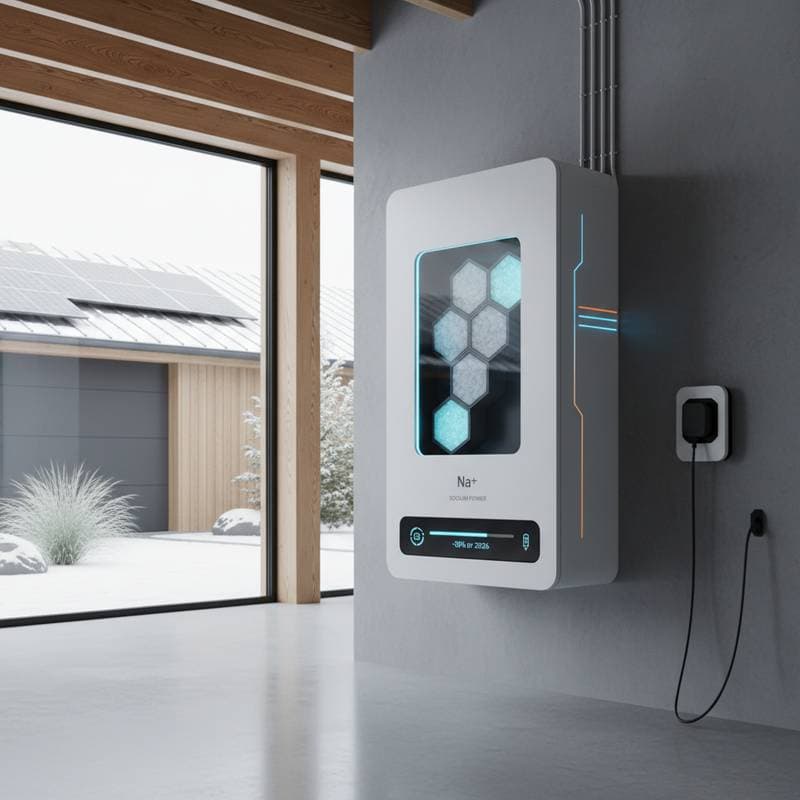
Sodium-Ion Batteries: A Cost-Effective Shift for Solar Storage by 2026
Homeowners monitor energy storage expenses with keen interest. Lithium-based systems maintain elevated prices, prompting a search for dependable, economical options. Sodium-ion batteries emerge as a promising advancement. These batteries employ salt rather than lithium, which promises to decrease storage expenses and enhance supply stability for home solar installations.
The Significance of Sodium-Ion Technology
Sodium-ion batteries operate similarly to lithium-ion varieties. Each technology shuttles ions between cathode and anode to capture and discharge energy. The primary distinction lies in the materials. Sodium proves far more plentiful than lithium and derives from everyday salt. Such accessibility diminishes material expenses and lessens reliance on scarce mining locales.
For residential users, this transition translates to reduced initial investments in solar-plus-storage setups. Industry analysts predict that sodium-ion solutions will achieve commercial viability shortly, provided manufacturing achieves efficient scale. Multiple research initiatives and battery producers advance toward substantial pilot operations.
Sodium-Ion Versus Lithium-Ion: A Detailed Comparison
Homeowners evaluate battery options based on expense, efficiency, and security. Sodium-ion configurations excel in select areas while presenting compromises elsewhere.
Key Advantages:
- Reduced material expenses from plentiful sodium supplies
- Enhanced functionality in low-temperature conditions
- Diminished fire hazards due to inherent chemical stability
Notable Drawbacks:
- Inferior energy density compared to lithium-ion counterparts
- Increased physical footprint for comparable capacity
- Limited availability of residential-certified models at present
Lithium-ion batteries dominate applications demanding compact, high-density storage. Sodium-ion alternatives suit scenarios with ample space, where enduring affordability outweighs size constraints.
Prioritizing Safety and Dependability
All battery installations involve electrical and chemical risks. Homeowners must avoid opening, altering, or repairing battery enclosures. In cases of swelling, fluid discharge, or abnormal warmth, isolate the unit via the designated cutoff mechanism and summon a certified electrician or manufacturer support.
Sodium-ion batteries lessen the likelihood of thermal runaway, yet they manage substantial energy volumes. Local fire services and insurers mandate adherence to regional electrical standards, with professional installation required. Typically, the Authority Having Jurisdiction demands permitting and examination prior to linking with a home solar setup.
Confirm that the system bears certification from an accredited laboratory, such as UL. Ensure the installer furnishes records demonstrating conformity to National Electrical Code provisions for energy storage.
Guiding Installation and Upkeep
When integrating storage into an established solar system, assess inverter compatibility. Certain inverters accommodate diverse chemistries via software enhancements, whereas others necessitate specialized connectors.
Essential Pre-Installation Actions for Homeowners:
- Consult the solar supplier to validate system alignment.
- Obtain certification paperwork and warranty specifications.
- Inquire with the municipal building authority regarding permit necessities.
- Engage a qualified electrician for cabling and integration.
- Arrange for official review post-installation.
Sealed battery modules demand little ongoing care. Maintain unobstructed ventilation, inspect terminal corrosion, and track notifications via the provider's application or dashboard. Upon fault indication, refrain from multiple resets. Engage a skilled technician to diagnose the issue.
Advantages for Environment and Supply Networks
Sodium-ion batteries curtail dependence on vital minerals such as cobalt and nickel. This adjustment bolsters worldwide supply consistency and mitigates extraction-related ecological harm. With sodium resources distributed globally, manufacturing can localize nearer to consumer bases, thereby reducing transit emissions and elevating access.
Laboratory analyses indicate that sodium systems preserve approximately eighty percent capacity following thousands of charge-discharge cycles. Such endurance facilitates both utility-scale and home backup applications.
Preparing for Sodium-Ion Adoption in Homes
With scaling production, sodium-ion batteries will penetrate residential markets at per-kilowatt-hour rates below those of prevailing lithium options. Their formulation aligns with moderate-capacity needs for routine energy cycling, mirroring typical solar household patterns.
Prior to acquisition, scrutinize warranty durations, cycle endurance, and temperature tolerances. Inquire if regional rebates extend to sodium configurations. Certain utilities incorporate them within battery incentives, though some await certification revisions.
Homeowners who remain vigilant and collaborate with accredited experts position themselves optimally for secure integration. Sodium-ion storage complements rather than supplants lithium entirely, yet it offers a viable, economical pathway for solar enthusiasts pursuing sustained performance and fiscal prudence.