
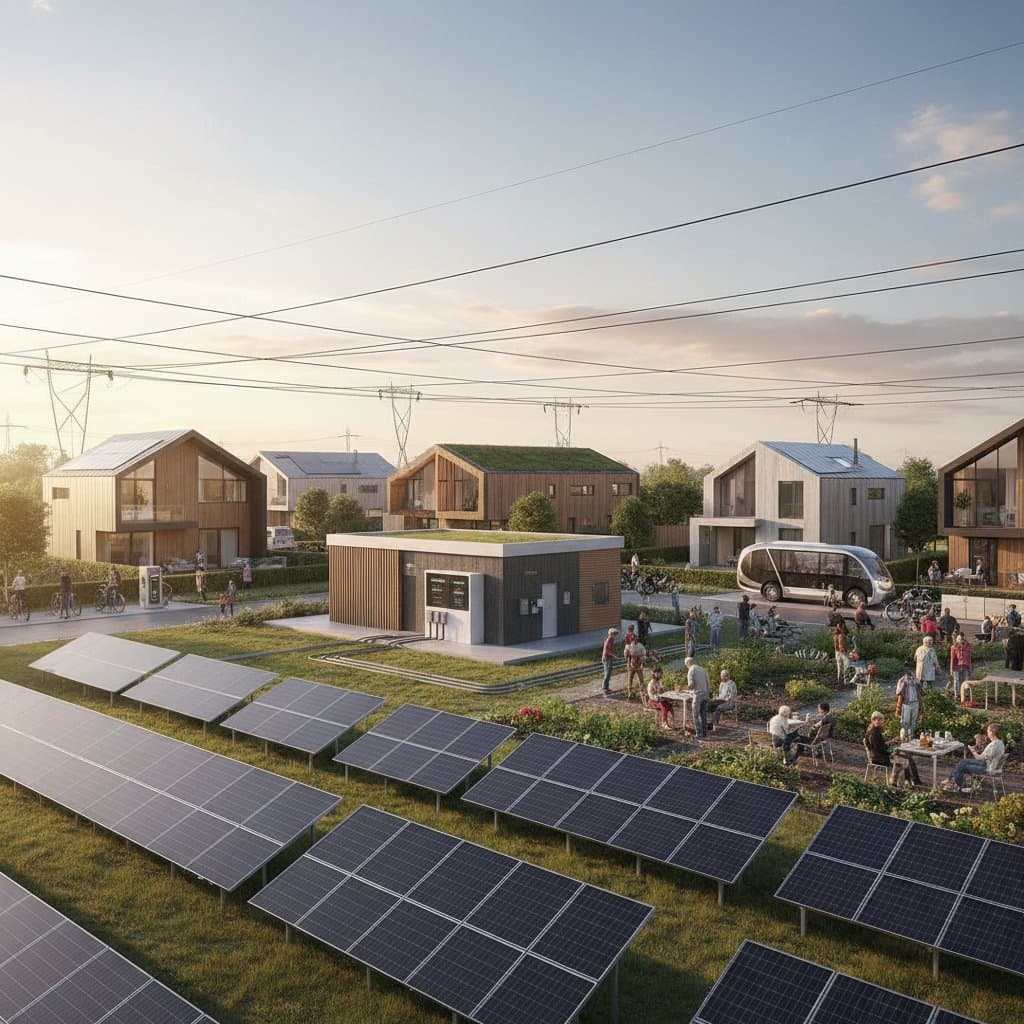
Communities Advance Energy Independence Through Shared Solar
Homeowners often seek ways to decrease energy expenses yet face barriers from the initial investment required for rooftop solar. Shared solar addresses this challenge effectively. Residents in various neighborhoods collaborate to establish community-sized installations that provide renewable electricity, distribute financial benefits, and promote unified advancement.
Shared solar, also known as community solar or a neighborhood microgrid, enables individuals to access solar advantages regardless of roof suitability, shading issues, or rental status. Participants purchase or subscribe to a portion of a larger array and receive corresponding credits on their utility statements for the generated power. This approach extends renewable energy opportunities to virtually all households.
The Significance of Shared Solar
Rising energy prices and occasional grid instability highlight the need for proactive solutions. Shared solar empowers neighborhoods to manage their energy destiny. It lowers expenses, strengthens reliability, and retains more funds within the local economy. For instance, a 250-kilowatt array produces approximately 325,000 kilowatt-hours annually. With an average rate of 24 cents per kilowatt-hour, this yields about 78,000 dollars in yearly value distributed among subscribers.
The ecological benefits stand out prominently. Such a system prevents the emission of roughly 230 metric tons of carbon dioxide each year, equivalent to removing 50 vehicles from circulation. As communities unite to harness these advantages, the overall environmental progress surpasses that of isolated rooftop efforts.
The Mechanics of Shared Solar Systems
Shared solar operates through a straightforward framework. A developer or cooperative places panels on expansive surfaces such as large rooftops, open fields, or parking structures. Participants commit to a share via direct investment or subscription, and utilities apply monthly credits proportional to the system's output.
Advanced technologies support the process. Smart inverters, monitoring platforms, and digital meters oversee generation and allocation. In enhanced configurations, batteries capture surplus energy for subsequent deployment, forming a compact microgrid capable of functioning independently during grid disruptions.
Consider a project serving 50 homes with a 300-kilowatt solar array and a 400-kilowatt-hour battery storage unit. During peak sunlight, the array satisfies daytime needs, replenishes the battery, and exports excess to the utility grid. In evenings or outages, the battery sustains essential operations.
Financial Aspects, Incentives, and Return on Investment
Designers structure shared solar to equitably distribute expenses. A standard community installation costs around 1.60 dollars per watt. For a 300-kilowatt project, the total reaches approximately 480,000 dollars. Available grants, federal tax credits, and state rebates often offset 30 to 60 percent of these funds.
Subscribers typically encounter straightforward economics. A family invests about 500 dollars in a share that compensates for 2,000 kilowatt-hours yearly. At 24 cents per kilowatt-hour, this translates to 480 dollars in annual savings. Return periods range from two to four years, influenced by local rates and incentives. Thereafter, benefits persist throughout the equipment's lifespan, which exceeds 20 years in most cases.
Launching a Shared Solar Initiative in Your Area
Successful projects originate from grassroots engagement. Assemble a group of interested neighbors and compile recent utility bills to assess aggregate consumption. Pinpoint potential locations, such as school buildings, places of worship, or business rooftops, and conduct a shading analysis alongside structural evaluations.
Solicit proposals from installers experienced in community projects. Evaluate options using consistent criteria: projected system capacity, annual energy yield, upkeep expenses, and governance models. Consult your utility regarding interconnection requirements and verify qualification for relevant incentives.
Financing options vary. Some groups establish cooperatives for collective ownership, while others partner with developers who oversee building and operations for a subscription charge. Maintain openness regarding expenses, potential challenges, and projected gains to sustain participant confidence.
Advantages Extending Past Savings
Shared solar delivers benefits beyond reduced statements. It cultivates social bonds and instills community pride. Members frequently express greater assurance from possessing a dependable, green energy resource. These initiatives may elevate local property values and draw sustainability-minded newcomers.
Integration with efficiency measures amplifies results. Implement upgrades like LED fixtures, programmable thermostats, and insulation enhancements. Reduced overall usage allows the shared system to fulfill a larger share of needs.
Ensuring Long-Term System Efficiency
Post-installation maintenance remains uncomplicated. Conduct visual panel checks one to two times yearly, and monitor inverters and batteries remotely. Perform cleaning only when debris notably impairs performance. Warranties typically guarantee 20 to 25 years of reliable operation.
Organize yearly assessments and disseminate performance metrics to participants. This practice sustains motivation and confirms that all members witness the continuous returns.
Practical Actions to Advance Community Solar
Initiate discussions with neighbors to gauge enthusiasm for shared solar. Review 12 months of electricity bills to calculate total demand. Scout viable host sites, reach out to qualified installers, and commission a viability assessment. Even modest endeavors significantly bolster local durability and self-reliance.
Shared solar demonstrates that renewable energy extends beyond solitary rooftops. Collective action transforms clean power into a communal success that enriches every participant.