
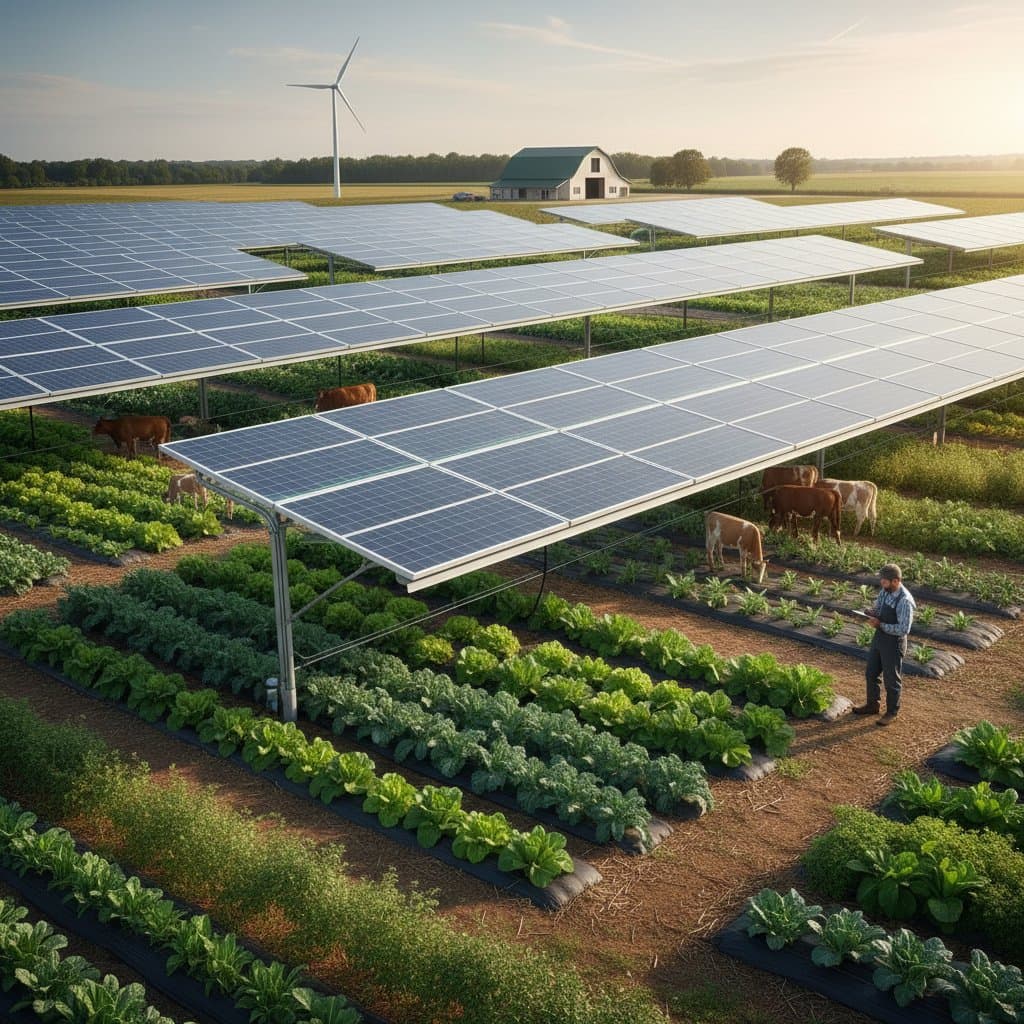
Solar Farms That Support Agriculture: The Rise of Agrivoltaics
Solar farms often occupy land previously used for crops, prompting concerns about food production. Agrivoltaics addresses this by integrating solar energy systems with farming on shared acreage. This strategy transforms potential conflicts into synergies that benefit energy goals and agricultural needs.
The approach gains traction as a solution to expanding renewables without sacrificing farmland. Systems are engineered to accommodate both solar capture and farming activities, fostering dual productivity.
Importance of Agrivoltaics
Agrivoltaics resonates with homeowners through parallels to rooftop solar benefits, such as emission reductions and energy cost savings. Farms near urban areas contribute to community solar initiatives, linking rural output with city consumers and retaining economic value locally.
These systems safeguard open spaces by maintaining soil vitality and biodiversity. Crops like vegetables and grains, along with native pollinators, thrive under or between panels, ensuring ongoing food output alongside electricity generation.
Operational Mechanics
Agrivoltaic installations feature raised solar arrays that permit sunlight penetration, equipment maneuverability, and livestock movement below. Panels are positioned with increased spacing or elevation compared to traditional setups, facilitating field access.
Partial shading from panels aids shade-tolerant plants by moderating temperatures. In arid areas, this reduces transpiration and soil moisture loss, enhancing plant health and decreasing irrigation demands.
Standard configurations elevate panels to approximately eight feet, with tilts optimized for solar efficiency and crop illumination. Solar trackers adjust orientations throughout the day to balance energy yield and agricultural light exposure.
Quantitative Insights
Consider a 1-megawatt agrivoltaic array spanning five acres. Each acre sustains several tons of produce or grazing for small livestock. The array produces about 1.3 million kilowatt-hours annually, equivalent to $312,000 in energy value at 24 cents per kilowatt-hour.
Crop revenues add $15,000 to $25,000 per acre, varying by type. This combined income stream buffers against market volatility. Farmers typically collaborate with developers via leases or revenue-sharing agreements to secure consistent earnings.
Community Advantages
Agrivoltaic projects integrate with community solar programs, where subscribers earn bill credits from array output. This option benefits those unable to host personal installations, promoting equitable access to renewables.
Local food distribution shortens supply chains, cutting transport emissions and costs. Schools, markets, and food banks gain from proximate sources, while grid stability improves through distributed rural generation meeting urban demand.
Investment, Incentives, and Returns
Initial costs exceed standard solar by 10 to 25 percent due to elevated structures and custom designs. Federal and state incentives, including grants for conservation and rural development, mitigate these expenses.
Blended revenues from energy and crops yield payback periods of eight to twelve years, influenced by scale, insolation, and rates. Post-payback, systems deliver long-term income from both sectors.
Farmers may initiate with pilot installations on limited land to evaluate crop performance, informing scaled implementations.
Implementation and Design Process
Effective agrivoltaics demands thorough site evaluation. Essential steps include:
- Shade evaluation. Assess sunlight availability for crops across daily and seasonal cycles.
- Plant selection. Prioritize shade-adapted varieties like lettuce, spinach, tomatoes, peppers, or berries.
- Array configuration. Optimize panel spacing and angles for dual functionality.
- Water management. Integrate efficient drip irrigation compatible with under-panel operations.
- Access planning. Incorporate routes for machinery and personnel.
Compliance with utility, zoning, and easement regulations ensures feasibility. Thorough preparation aligns energy and farming objectives.
Ecological and Wellness Benefits
Agrivoltaics enhances environmental outcomes beyond power generation. Shading cools soil, curbs erosion, and boosts moisture retention, aiding crops and habitats.
Under-panel native vegetation draws pollinators, elevating regional biodiversity. Livestock experiences reduced heat stress in shaded zones, with ground covers minimizing chemical use.
Air quality improves as each megawatt displaces about 1,000 metric tons of annual carbon dioxide emissions, comparable to removing hundreds of vehicles from roads. Paired with local agriculture, these gains amplify sustainability.
Economic Resilience Factors
Agrivoltaics stimulates local employment in installation, maintenance, and distribution. Rural economies benefit from expanded services in engineering and agriculture.
Land values appreciate with diversified revenues, offering stability during yield fluctuations. Insurers and lenders favor such operations for their risk mitigation through multiple income sources.
Challenges and Resolutions
Key hurdles involve higher costs, integration complexities, and operational unknowns. Innovations like adjustable mounts and monitoring software address these effectively.
Lightweight foundations prevent soil damage, while educational pilots by universities and agencies demonstrate viability. Site visits and peer consultations build farmer assurance.
Residential Ties to Agrivoltaics
Homeowners without farmland can engage via community solar from agrivoltaic sources, supporting dual-use while cutting bills.
On small properties, solar canopies over gardens mimic the concept, shading plants and powering homes for integrated benefits.
Guidance for Prospective Participants
Landowners considering agrivoltaics should:
- Review annual utility statements for consumption patterns.
- Engage solar firms with agricultural expertise.
- Obtain comparable quotes detailing insolation, equipment, and connections.
- Verify zoning for hybrid uses with authorities.
- Test soil suitability for target crops.
Ongoing upkeep involves periodic panel cleaning, inspections of components, and crop rotation to sustain productivity.
Building a Unified Food-Energy Future
Agrivoltaics demonstrates compatibility between renewables and agriculture, aligning climate action with farm viability and community health.
Participation through policy advocacy, investments, or solar subscriptions advances resilient systems. Selecting local, energy-integrated produce reinforces viable shared models, cumulatively reshaping land and energy practices.
FAQ
What defines agrivoltaics?
Agrivoltaics combines solar power generation with crop or livestock farming on identical land.
Which plants suit under-panel growth?
Shade-tolerant options like leafy greens, berries, herbs, and certain roots excel due to moderated conditions.
Does it impact power efficiency?
Slight reductions occur from spacing, yet optimized designs and trackers sustain high output alongside land gains.
How does it influence daily farm activities?
Proper clearance and layout preserve access for equipment and labor.
Is grazing feasible beneath panels?
Yes, species such as goats, sheep, and poultry utilize shaded areas safely.
What drives primary expenses?
Costs encompass elevated supports, electrical setups, and dual infrastructure, offset by incentives and revenues.
What is the panel lifespan?
Modules warrant 25 years, often exceeding this with gradual efficiency decline.