
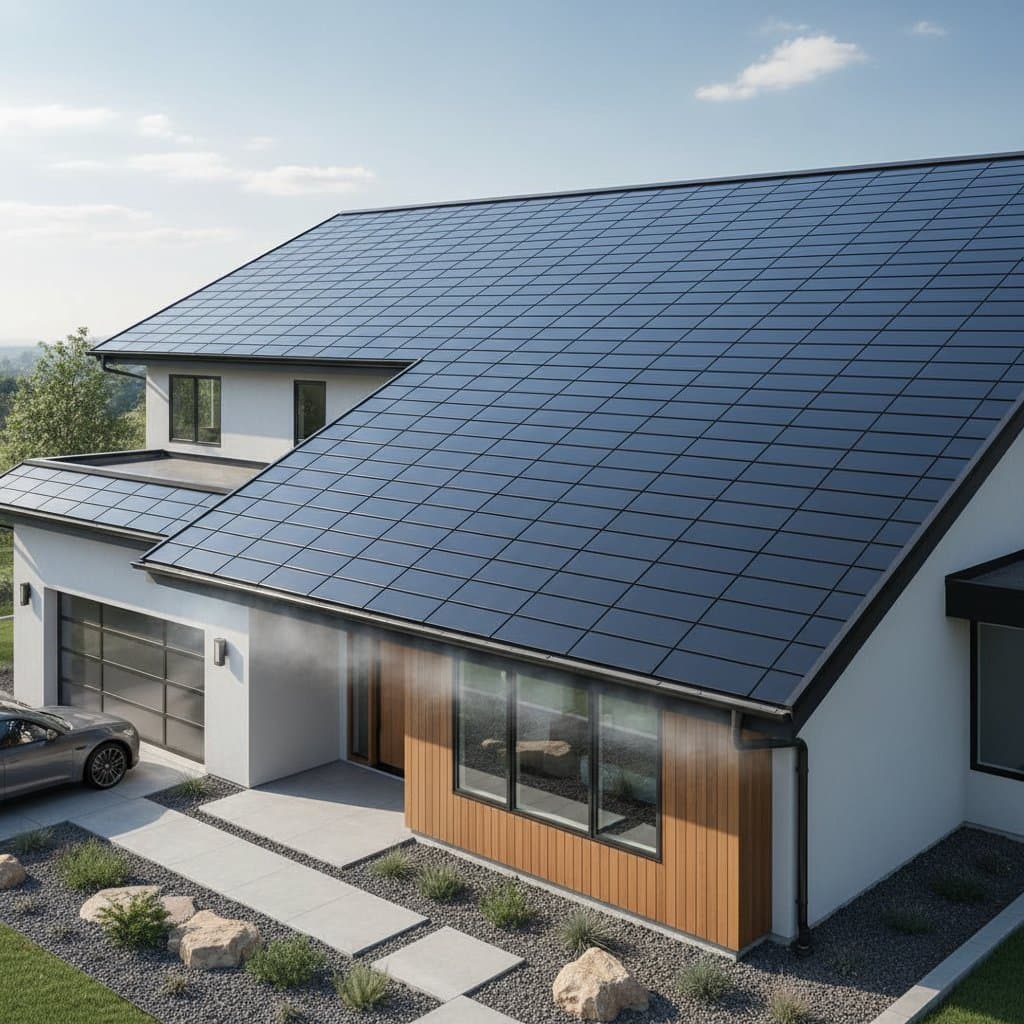
Smart Roof Tiles: Generating Power and Cooling Homes Seamlessly
Homeowners seek effective methods to lower energy expenses, elevate living comfort, and enhance property worth. Smart roof tiles unite solar energy production with passive cooling within a single roofing solution. These innovative tiles convert sunlight into electricity and minimize heat infiltration into the attic, yielding a cooler interior and self-sustaining clean energy source.
This guide details the operation of smart roof tiles, distinguishes them from conventional solar panels, examines their cooling advantages, and highlights the importance of engaging certified professionals for installation or evaluation.
Mechanics of Power Generation in Smart Roof Tiles
Each tile incorporates multiple specialized layers:
- A tempered glass top sheet that permits sunlight penetration to the photovoltaic cells.
- Photovoltaic wafers that transform sunlight into direct current electricity.
- Conductive backing and connectors that integrate each tile into the overall electrical circuit.
- Underlayment and flashing that provide essential water resistance.
Sunlight activates the tiles by exciting electrons in the solar cells, which generates an electrical current. This current travels via hidden wiring to an inverter, where it converts to alternating current suitable for home appliances.
Smart roof tiles generate power comparably to traditional solar panels, yet they offer a streamlined, cohesive appearance. Installers avoid the use of racking systems, visible conduits, or prominent panel mounts, preserving the roof's aesthetic integrity.
Smart Roof Tiles Versus Standard Solar Panels
| Feature | Smart Roof Tiles | Standard Solar Panels |
|---|---|---|
| Appearance | Seamless and integrated | Elevated and prominent |
| Cooling Effect | Reflective surfaces and ventilation | Generally absent |
| Installation | Unified roofing and electrical | Added atop existing roof |
| Maintenance | Replace individual tiles as needed | Involves panel or rack disassembly |
| Cost | Elevated initial investment | More affordable upfront |
| Durability | Engineered for direct exposure | Relies on mounting and roof condition |
Smart roof tiles involve higher installation expenses but serve as a comprehensive replacement for both roofing and solar components. Their unified construction often lowers ongoing maintenance needs and elevates visual appeal, proving advantageous in areas with rigorous design regulations.
Step-by-Step Installation Process
The installation of smart roof tiles merges roofing expertise with electrical integration. Professionals follow a structured sequence to guarantee safety and efficiency:
- Site Assessment. Experts inspect the roof's direction, potential shading, and structural integrity. Any compromised decking requires reinforcement or replacement prior to proceeding.
- System Design. The team plans tile arrangement, inverter location, and wiring routes. Accurate string configuration balances voltage and current for optimal performance.
- Permits and Approvals. Detailed plans submit to local authorities for review. Compliance with electrical and building codes receives formal endorsement.
- Roof Preparation. Existing materials remove carefully. Installers apply underlayment, flashing, and drip edges per manufacturer guidelines.
- Tile Placement. Tiles position in overlapping courses, securing with snaps or bolts. Connections form via certified plugs for seamless integration.
- Electrical Integration. Wires route to the inverter and primary service panel. Technicians confirm grounding and bonding adherence.
- Testing and Final Inspection. Output verifies through voltage, current, and continuity checks. Local inspectors approve the system before energizing.
Systems remain inactive until inspections pass. Faulty wiring risks arc faults, potential fires, or structural harm.
Evaluating Energy Output and Financial Implications
Performance hinges on factors such as roof pitch, compass alignment, and shade levels. Optimal south-facing setups with unobstructed sunlight offset substantial household energy demands. Certain configurations feature built-in microinverters that sustain efficiency amid partial shadows.
Initial outlays surpass those of basic shingle roofs, yet smart tiles yield enduring savings via:
- Decreased utility payments from on-site generation.
- Access to federal solar tax credits and regional incentives.
- Diminished air conditioning needs from moderated attic heat.
- Elevated home resale value through contemporary functionality and style.
Solicit quotes emphasizing cost per watt of power capacity and cost per square foot of coverage. These indicators reveal true economic viability.
Securing Expert Guidance for Optimal Results
Initiate the process with a comprehensive consultation from a certified solar roofing specialist. Demand a thorough roof evaluation, shade assessment, and customized energy projection.
Aged or compromised roofs may necessitate a structural engineer's load analysis. Upgrades to electrical service could accommodate additional circuits and equipment.
Smart roof tiles provide dual advantages of renewable energy production and enhanced thermal regulation. Through meticulous planning, regulatory adherence, and skilled execution, they establish a reliable foundation for sustained energy independence and residential comfort.