
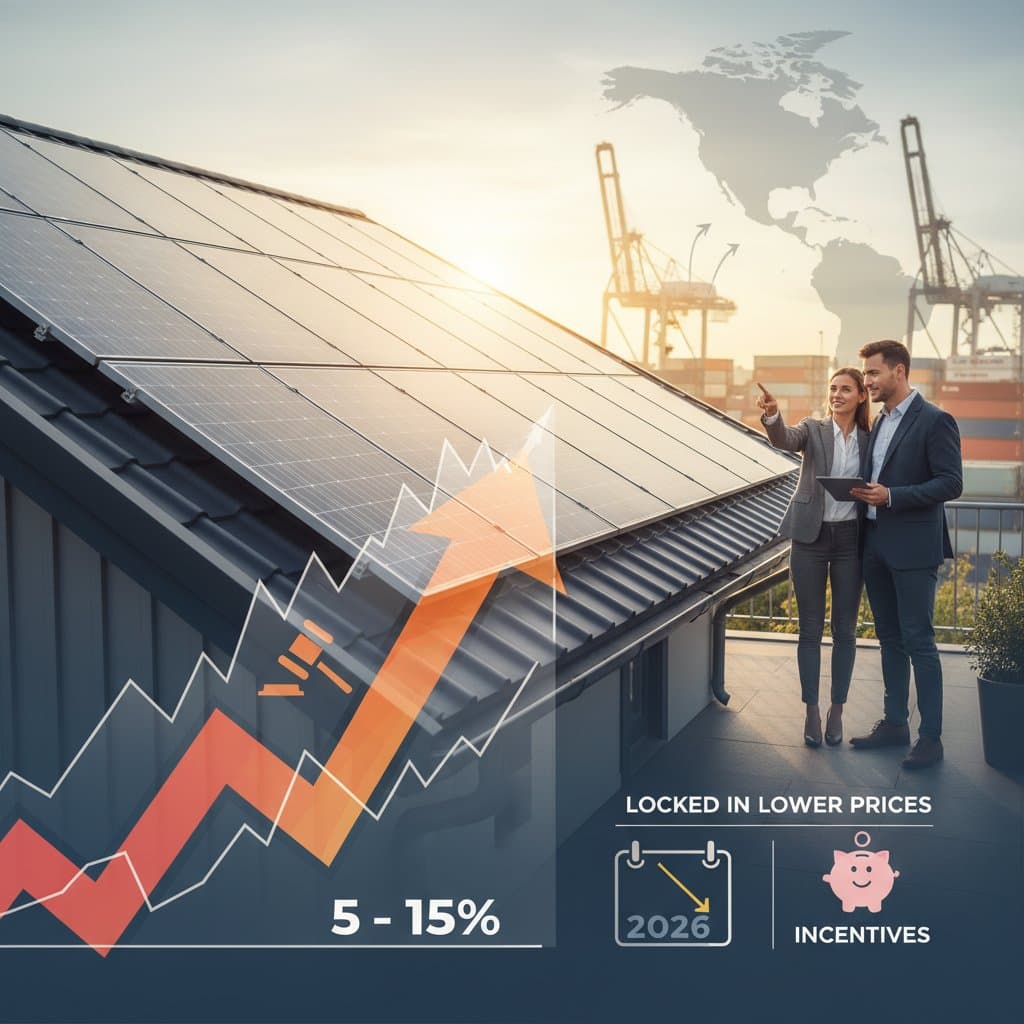
Anticipate Solar Panel Price Increases from 2026 Tariffs
Homeowners increasingly inquire about impending tariffs on imported solar panels and their impact on budgets. Solar energy serves as an effective method to manage utility expenses, yet policy adjustments influence pricing and supply. These tariffs will elevate equipment costs, potentially rendering solar installations more costly in the coming years. Individuals possess the opportunity to proceed before these modifications fully implement, employing tactics to preempt escalating expenses.
This piece delineates the factors propelling these anticipated elevations, examines tariff effects on the solar supply chain, and outlines measures to safeguard investments. Whether contemplating a comprehensive solar array, battery integration, or minor energy enhancements, comprehension of forthcoming price alterations facilitates informed choices.
Tariffs and Their Effect on Solar Expenses
Tariffs function as taxes on imported goods. Importers incur fees proportional to the goods' value upon entry. These expenses transfer through distributors to installers and ultimately to residential customers.
Consider a standard imported solar module priced at 0.35 dollars per watt; a 20 percent tariff elevates it to 0.42 dollars per watt. For a 7-kilowatt system, this increment contributes approximately 490 dollars to equipment expenses prior to additional markups. Incorporating labor, design, and operational costs, the overall project may surge by 700 to 1,000 dollars.
Although these figures appear moderate initially, they accumulate rapidly in expansive systems and alongside other supply chain factors, such as transportation and raw material fluctuations.
Domestic Production and Supply Chain Evolution
Tariffs aim to promote local manufacturing. United States facilities expand operations, yet establishing a robust production infrastructure demands time. Fabricating solar cells, wafers, and modules necessitates advanced machinery and trained personnel.
Should domestic output expand, prices may stabilize over time. In the immediate period, however, American-made panels frequently command higher rates owing to limited scale and elevated production expenditures. Consequently, consumers might encounter premiums until output achieves substantial volumes.
Solar's Enduring Advantages
Despite prospective price upticks, solar installations represent a robust long-term strategy for residential energy management. Panels endure for 25 years or longer, while electricity rates typically escalate beyond inflation. Each kilowatt-hour produced domestically diminishes utility expenditures and carbon emissions.
In the Philadelphia area, a 7-kilowatt system yields roughly 9,100 kilowatt-hours annually. With an average rate of 24 cents per kilowatt-hour, this offsets approximately 2,180 dollars each year. Across 20 years, savings exceed 43,000 dollars in electricity costs, excluding tax credits or performance incentives.
Strategies to Prepare for Tariff Implementation
- Obtain quotes promptly. Solicit a minimum of three proposals from certified installers. Verify that each includes system capacity, projected output, and equipment specifications.
- Secure price guarantees. Certain agreements fix rates for a defined duration. Determine if tariff adjustments could alter the final invoice.
- Assess available incentives. Compile details on federal tax credits, regional rebates, and renewable energy certificates. These elements substantially lower net expenses.
- Account for permitting schedules. Approval and grid connection processes span several weeks. Initiating early ensures eligibility under prevailing rates and materials.
- Examine roof integrity. Should roof replacement loom, synchronize projects to prevent solar delays.
Weighing Expenses, Performance, and Durability
Attractive pricing holds appeal, yet superior quality and warranty provisions prove more valuable long-term. Premium modules with 25-year performance assurances generate thousands of extra kilowatt-hours relative to inferior options that deteriorate swiftly. Minor variations in efficiency or degradation influence cumulative savings.
During proposal evaluations, inquire regarding panel efficiency, warranty conditions, and inverter selections. Configurations featuring microinverters or power optimizers incur modest initial premiums but enhance output on obstructed roofs and streamline upkeep.
Incremental Measures for Varied Budgets
Should a complete solar setup appear unattainable currently, accessible initiatives prepare residences for subsequent enhancements.
- Prioritize energy conservation. Implement LED illumination, intelligent thermostats, and airtight window seals to minimize consumption.
- Optimize appliance usage. Operate dishwashers and washers amid daylight if solar exists, or anticipate demand shifting.
- Enhance electrical infrastructure. Incorporate wiring pathways or panel capacity for eventual solar linkage during upgrades.
- Select suitable roofing. Opt for reflective surfaces that dissipate heat, thereby optimizing panel functionality.
These actions reduce inefficiency and render homes primed for solar adoption.
Solar's Sustained Worth
Tariffs might induce short-term price surges, but solar's core principles endure. Installed panels produce renewable energy for decades with scant maintenance. The worth of this output appreciates as utility charges ascend. Market analyses indicate that solar-integrated properties transact more rapidly and at elevated values.
Energy autonomy affords reassurance. Paired with storage solutions, systems sustain operations amid disruptions and navigate peak pricing adeptly. Even compact arrays maintain critical functions during grid failures.
System Upkeep and Ongoing Management
Solar arrays demand minimal intervention, though routine inspections sustain optimal yield. Clear panels of accumulations and track performance via inverter interfaces. Should output decline abruptly, engage installers for diagnostics.
Examine anchors and cabling biennially, particularly post-extreme conditions. Inverters endure 10 to 15 years; budget for mid-term renewal. Numerous producers provide comprehensive warranties encompassing components and services. Expanding recycling initiatives facilitate eco-friendly decommissioning.
Actionable Measures for Residents
- Collect usage records. Retrieve 12 months of electricity data to determine precise system dimensions.
- Conduct shade assessments. Professionals simulate roof viability and propose optimal configurations.
- Standardize comparisons. Confirm quotes align on capacity and yield projections.
- Finalize agreements. Upon readiness, execute contracts prior to tariff escalations.
- Anticipate scalability. Integrate pathways for storage or vehicle charging, even with initial solar focus.
Each initiative fortifies financial protection and bolsters energy security. Proceeding ahead of tariff hikes preserves affordability while advancing sustainable living.
Frequently Asked Questions
Will tariffs elevate prices for every solar panel?
Imported panels predominantly face increases, though select domestic producers may maintain stability. Supply and brand selections shape ultimate expenses.
Is it possible to circumvent tariffs by acquiring panels beforehand?
Indeed. Goods procured and received pre-tariff application preserve existing rates. Early commitments secure these terms.
What magnitude of addition might tariffs impose on residential systems?
Projections differ, yet 5 to 15 percent hikes are feasible. For a standard 7-kilowatt array, this equates to 700 to 2,000 dollars.