
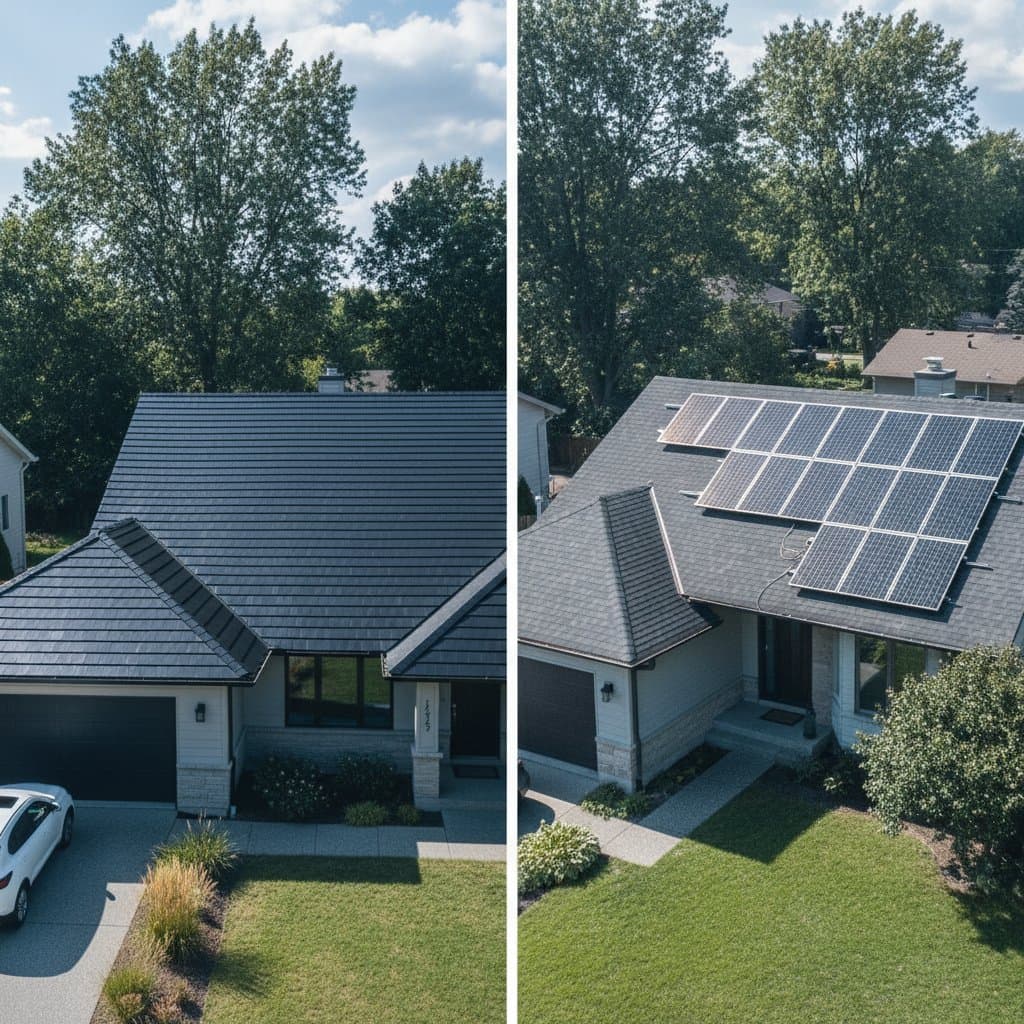
Solar Shingles vs Panels: 2026 Cost Showdown
Solar research often presents a maze of options, with each product positioned as revolutionary. Homeowners frequently question if integrated solar shingles have matured enough to supplant traditional solar panels. Both technologies hold market relevance, yet their expenses, capabilities, and enduring benefits vary significantly and merit close examination.
How Each System Functions
Solar panel systems employ framed modules secured atop the roof surface. Photovoltaic cells within each panel transform sunlight into electrical energy. These panels link via wiring to an inverter, which generates power suitable for household use.
Solar shingles operate on identical photovoltaic principles. The key distinction lies in embedding the photovoltaic material directly into the roofing material. Individual shingles serve dual roles as protective covering and miniature energy producers. This integration yields a streamlined appearance, though it alters installation, repair, and upkeep procedures.
Efficiency and Output Comparison
Standard solar panels achieve approximately 20 percent sunlight-to-electricity conversion. High-end variants exceed 22 percent. Solar shingles generally operate between 14 and 18 percent efficiency. This disparity results in reduced electricity generation per square foot from shingle-covered roofs.
Consider a household requiring 9,000 kilowatt-hours annually. A 7-kilowatt panel array, yielding about 1,300 kilowatt-hours per kilowatt yearly, satisfies this need. Achieving equivalent output with shingles demands 9 to 10 kilowatts of coverage. Such expansion elevates material and installation expenses.
Cost Analysis and Return on Investment
In typical markets, a reliable solar panel installation ranges from 2.75 to 3.25 dollars per watt prior to incentives. For a 7-kilowatt setup, the total approaches 21,000 dollars. Applying the 30 percent federal tax credit reduces the effective cost to roughly 14,700 dollars. At an average utility rate of 18 cents per kilowatt-hour, annual savings reach about 1,600 dollars. Return on investment typically occurs within nine years, influenced by fixed charges and rate fluctuations.
Solar shingles command higher prices, often 4 to 6 dollars per watt. A 9-kilowatt shingle installation may total 45,000 dollars before incentives, or approximately 31,500 dollars afterward. Under the same utility rate, savings align with panel outcomes, yet the elevated initial outlay extends payback to 16 to 18 years.
Aesthetic and Structural Considerations
Panels mount above the roof via racking systems, permitting airflow beneath to maintain cooler temperatures and optimal efficiency. Shingles adhere flush to the roof deck, potentially retaining heat and marginally impairing output. Nevertheless, shingles integrate seamlessly with designs emphasizing visual harmony. During new builds or complete roof overhauls, shingles consolidate upgrades, partially mitigating cost differences.
Durability and Upkeep
Solar panels endure 25 to 30 years, exhibiting under 0.5 percent degradation annually. Shingles represent emerging technology; warranties align with panel durations, but long-term resilience remains under evaluation. Repairing specific shingles proves more demanding than replacing an entire panel. Performance monitoring tools aid oversight, though addressing issues on integrated roofs necessitates expert technicians.
Selecting the Right Option
Individuals undertaking roof replacements might prefer shingles, as they merge solar integration with roofing renewal. For additions to established roofs, panels deliver superior savings. Panels facilitate straightforward expansions, such as incorporating battery storage in the future.
Practical Steps for Implementation
Initiate with a professional roof assessment and shading evaluation. Request installers provide kilowatt-hour production projections rather than mere system capacity. Scrutinize inverter and module warranties in detail. Maintain surfaces free of debris and arrange periodic inspections to sustain peak performance. Thoughtful planning and care enable both systems to supply dependable renewable energy over extended periods.
FAQ
1. Do solar shingles require special roofing materials?
They supplant conventional shingles, making them ideal for comprehensive roof installations over partial overlays.
2. Can solar panels be removed and reused?
Yes, qualified professionals can dismount panels for roof maintenance and reinstall them afterward.
3. How do warranty terms compare?
Panel systems typically include 25-year performance assurances. Shingle warranties mirror this span but may incorporate distinct roofing protections.
4. Are solar shingles fire-rated like regular roofing?
Yes, approved systems comply with established building code fire standards.