
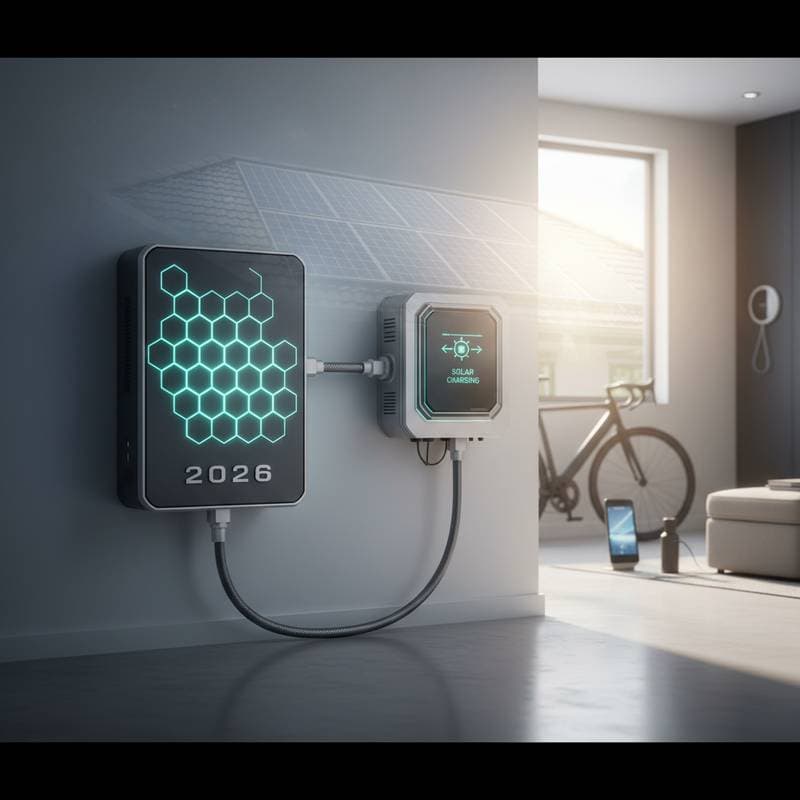
Solid-State Batteries: The 2026 Breakthrough for Solar Energy
Homeowners increasingly seek to combine solar power with dependable storage solutions, yet concerns about battery safety, durability, and expense persist. Solid-state batteries represent the next advancement in this field. These batteries offer enhanced safety, rapid charging capabilities, and extended longevity, thereby strengthening the reliability of solar energy for residential applications and reducing dependence on utility services.
Understanding the significance requires no technical expertise. Solid-state batteries employ a solid material in place of the flammable liquid electrolyte found in conventional lithium-ion cells. This fundamental change alters the dynamics of energy transfer, retention, and endurance. Consequently, batteries experience reduced risk of overheating and achieve greater usable capacity. For households with solar installations, this results in increased nightly energy storage and diminished long-term maintenance needs.
Key Benefits for Solar-Equipped Homes
Contemporary lithium-ion storage performs adequately but experiences gradual capacity degradation over repeated cycles. A standard battery retains approximately 80 percent of its initial capacity after a decade of daily use. Solid-state batteries target retention rates of 90 to 95 percent under identical conditions. This improvement equates to hundreds of extra nights of usable solar energy over the system's life.
Safety emerges as a primary benefit. The absence of liquid electrolytes eliminates the potential for thermal runaway during routine operations. Residents benefit from systems that operate quietly and maintain lower temperatures, suitable for installation in garages or utility spaces without specialized fireproofing. Enhanced stability also allows these batteries to function effectively across broader temperature extremes, accommodating summer highs and winter lows.
Fundamentals of the Technology
The essential distinction resides in the electrolyte component. Rather than relying on a liquid to transport ions between the anode and cathode, solid-state batteries utilize ceramic or polymer solids. Solar panels convert sunlight into electricity, which then charges the battery. Within the cell, ions traverse the solid medium, enabling denser and more stable energy storage. The lack of degradable or evaporative liquids ensures consistent performance across thousands of charge-discharge cycles.
Developers continue to optimize materials that harmonize conductivity, safety, and affordability. Prototypes already demonstrate energy densities reaching 400 watt-hours per kilogram, surpassing the 250 watt-hours per kilogram typical of lithium-ion units. This advancement permits more compact and lightweight batteries that deliver equivalent energy, potentially reducing required installation space by up to 50 percent.
Pricing and Return on Investment
Solid-state systems will command a premium upon initial market entry compared to lithium-ion alternatives. Projections indicate costs of approximately 600 dollars per kilowatt-hour for installed units, versus 400 dollars for current options. However, extended lifespan and elevated efficiency shorten the effective payback timeline.
Consider a 10-kilowatt-hour lithium-ion battery, which might supply 30,000 kilowatt-hours before necessitating replacement. A comparable solid-state unit could extend this to 45,000 kilowatt-hours. At an electricity rate of 24 cents per kilowatt-hour, the additional output generates 3,600 dollars in value. Across 15 years of solar operation, these factors position solid-state technology as economically advantageous.
Available Incentives and System Integration
Government incentives at federal and state levels generally extend to batteries integrated with solar systems, provided they primarily charge from renewable sources. Solid-state batteries should qualify upon residential availability. These units interface with existing inverters and monitoring platforms, eliminating the need for comprehensive system overhauls. Permitting processes accelerate, and utilities typically treat storage enhancements as routine modifications.
Process for Installation and Upkeep
The installation procedure for solid-state batteries mirrors that of existing systems. Professionals perform a site assessment, evaluate solar panel output, and determine capacity based on household energy patterns. The battery enclosure secures adjacent to the inverter, links to the electrical service panel, and integrates with monitoring applications. Upkeep remains straightforward. Sealed construction and solid electrolytes minimize components requiring inspection. Warranties typically span 10 to 15 years, with operational lifespans exceeding those periods.
Practical Advantages in Daily Use
The tangible value of solid-state storage becomes evident during grid outages or high-cost peak usage intervals. These batteries sustain evening demands with greater efficiency, powering essentials such as lighting, appliances, and internet connectivity without generating noise or pollutants. Paired with solar panels, they facilitate near-constant renewable energy provision. Residences gain resilience against disruptions and insulation from fluctuating energy prices.
Preparing for Adoption
- Compile 12 months of utility statements to pinpoint peak usage periods.
- Consult local solar specialists regarding forthcoming solid-state products and inverter compatibility.
- Assess eligibility for incentives applicable to solar-paired storage.
- Evaluate available space for wiring and airflow to facilitate future installations.
- Monitor announcements of product releases and obtain multiple quotations upon market entry.
Proactive measures in planning and financial preparation streamline the adoption process as technologies arrive locally. Each household incorporating storage contributes to grid stability and regional environmental improvements.
Frequently Asked Questions
What distinguishes solid-state batteries from lithium-ion batteries?
Solid-state batteries incorporate a solid electrolyte rather than a liquid, enhancing safety, energy density, and longevity.