
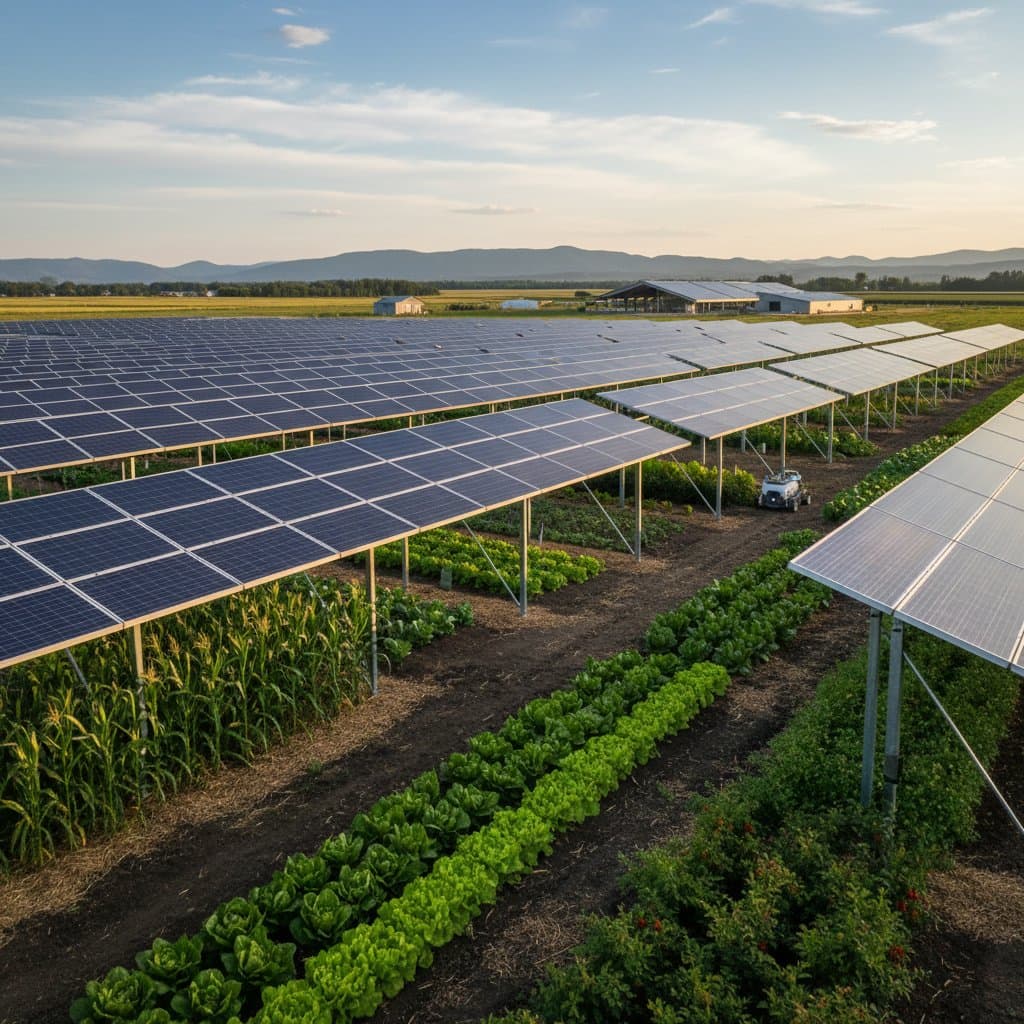
Agrivoltaics Allows Solar Panels and Crops to Share Land
Many homeowners and farmers wonder whether solar panels and crops can occupy the same land. Agrivoltaics, also known as dual-use solar, demonstrates that both activities can proceed together. This method pairs clean energy production with active farmland. Communities gain food and power simultaneously while rural and suburban areas become more resilient.
Why Agrivoltaics Matters
Land availability limits solar expansion in many regions. Conventional solar farms frequently displace fields previously used for food production. Agrivoltaics alters this pattern. Panels sit higher above the ground or stand farther apart so the same acre continues to grow crops and generate electricity. Farmland remains productive, soil health stays protected, and owners receive an additional revenue source.
Panels also supply shade that lowers heat stress for selected crops and livestock. Reduced evaporation cuts water demand, which proves useful during dry periods. Vegetation beneath the arrays keeps panels cooler and can raise their efficiency by several percent.
How It Works
A standard agrivoltaic installation elevates modules six to ten feet. Leafy greens, herbs, and berries grow beneath or between rows. Sun-loving crops may produce modestly lower yields while shade-tolerant varieties often perform better. A planting of leafy greens under panels can reach roughly 80 percent of open-field output, yet electricity sales from the same area frequently match or exceed crop revenue.
A one-megawatt agrivoltaic array produces about 1.3 million kilowatt-hours annually in many mid-Atlantic locations. At twenty cents per kilowatt-hour this output represents roughly 260000 dollars in electricity value before fees. Combined crop and energy returns can make each acre two to three times more productive than single-use land.
Costs and Incentives
Initial expenses exceed those of standard ground-mount systems because of taller racking, stronger posts, and equipment that accommodates farm machinery. A dual-use array typically costs 10 to 15 percent more per watt. Federal and state incentives offset part of the difference through credits tied to renewable generation, soil conservation, and water savings. Some programs supply grants that cover added design expenses.
For a small farm the resulting payback period ranges from seven to ten years depending on local energy rates and crop choices. After that point combined income from power sales and produce continues for decades with low ongoing inputs.
Installation and Operation
Site design begins with a shade analysis that balances light for plants against panel output. Single-axis trackers can adjust tilt throughout the day. Ground cover often includes clover, native grasses, or pollinator mixes that support soil biology and beneficial insects. Maintenance covers panel cleaning, wiring inspections, and vegetation control. Sheep or goats can graze beneath the arrays and keep grass at an acceptable height without mechanical equipment.
Practical Steps for Landowners
- Request a combined solar and shade evaluation of the property.
- Collect twelve months of electric bills to calculate potential offset value.
- Obtain proposals from installers experienced with elevated arrays.
- Verify eligibility for renewable-energy and agricultural incentive programs.
- Select crops suited to regional conditions and available light.
Long-Term Value for Farms and Communities
Agrivoltaics demonstrates that energy production and agriculture can advance together. Thoughtful layout and ongoing management deliver steady electricity, support local food systems, and maintain land productivity for future use.