
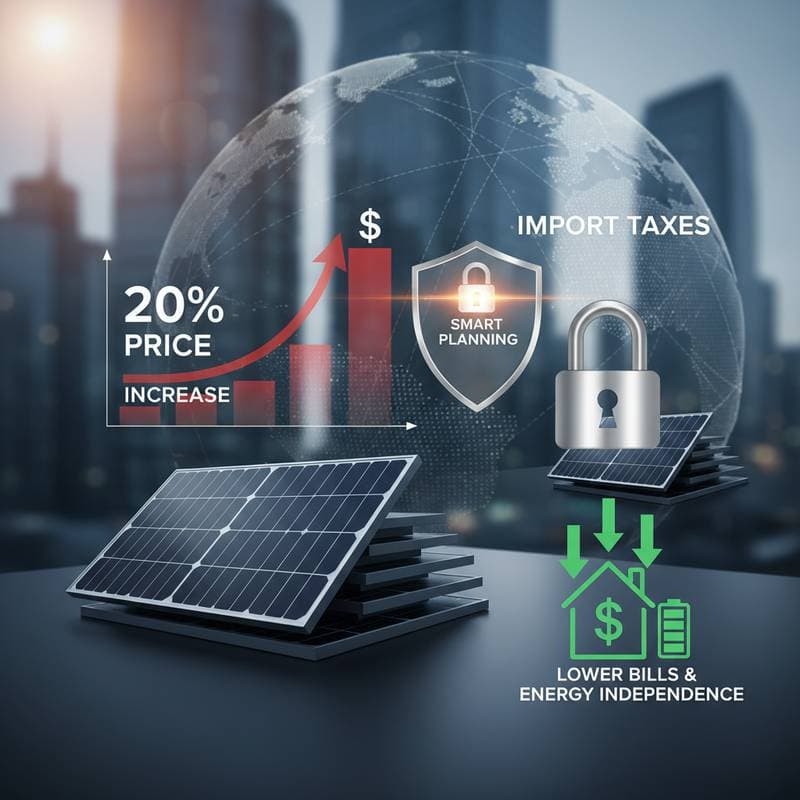
How 2026 Solar Tariffs May Increase Panel Expenses
Homeowners planning solar installations face new considerations due to upcoming tariffs on imported panels. These import taxes can raise equipment prices and affect project budgets. Understanding the changes allows better preparation while preserving long-term energy savings.
Factors Behind Potential Price Increases
Tariffs function as taxes on goods brought into the country. They often target photovoltaic panels and related components from specific regions. Suppliers typically pass a portion of these added expenses to installers and customers.
Analysts project panel cost rises between ten and twenty percent based on country of origin and component type. A standard seven kilowatt residential system priced near twelve thousand dollars could see an increase of roughly eighteen hundred dollars at a fifteen percent adjustment. Domestic assembly operations experience smaller effects than those reliant on imported cells.
Market Adjustments and Demand Patterns
System pricing includes panels as thirty to forty percent of the total alongside inverters, labor, and permits. Installers may absorb some increases or switch suppliers to limit customer impact. Demand can shift as some homeowners accelerate projects while others delay decisions.
Market balance usually returns within several months. Short term inventory and scheduling variations remain possible during the adjustment.
Purpose and Timeline of Tariff Policies
These measures aim to strengthen domestic manufacturing capacity and reduce reliance on overseas supply chains. Expanded local production supports job creation and more stable delivery schedules. New facilities require time to reach full output, which creates a transition period of potential supply constraints.
Impact on Individual Home Projects
A seven kilowatt system in the Philadelphia region can produce approximately nine thousand one hundred kilowatt hours annually. At twenty four cents per kilowatt hour this output offsets roughly two thousand one hundred eighty dollars in utility expenses each year. An added one or two thousand dollars in upfront cost extends payback by about one year while savings continue for decades afterward.
Preparation Steps Before Tariff Implementation
- Obtain three comparable proposals from licensed local installers using consistent system assumptions.
- Verify current federal, state, and utility incentives that reduce net project costs.
- Complete a roof assessment including shade analysis and structural evaluation.
- Explore financing agreements that fix rates prior to material price changes.
- Inquire about panels with partial or full domestic assembly to minimize tariff exposure.
Evaluating Panel Quality and Performance
Higher efficiency modules with strong warranties deliver better lifetime value than lower priced alternatives. Review twenty five year performance guarantees and twelve year product defect coverage. Confirm installer certification for chosen brands to maintain warranty eligibility.
Complementary Efficiency Improvements
Reducing household energy consumption lowers the required solar array size. Effective upgrades include heat pump HVAC systems, enhanced attic insulation, and air sealing measures. Additional steps involve smart thermostats, duct sealing, and LED lighting replacements.
Sustained Advantages of Solar Adoption
Solar systems provide predictable energy production despite rising utility rates. Minimal maintenance involves periodic cleaning and connection inspections. Battery storage adds resilience during outages by supporting essential circuits.
Recommended Actions for Homeowners
- Compile twelve months of utility data to establish usage patterns.
- Arrange a site assessment with a qualified solar professional.
- Compare proposals that specify identical equipment and warranty terms.
- Request details on system monitoring capabilities.
- Schedule annual spring inspections to maintain optimal performance.