
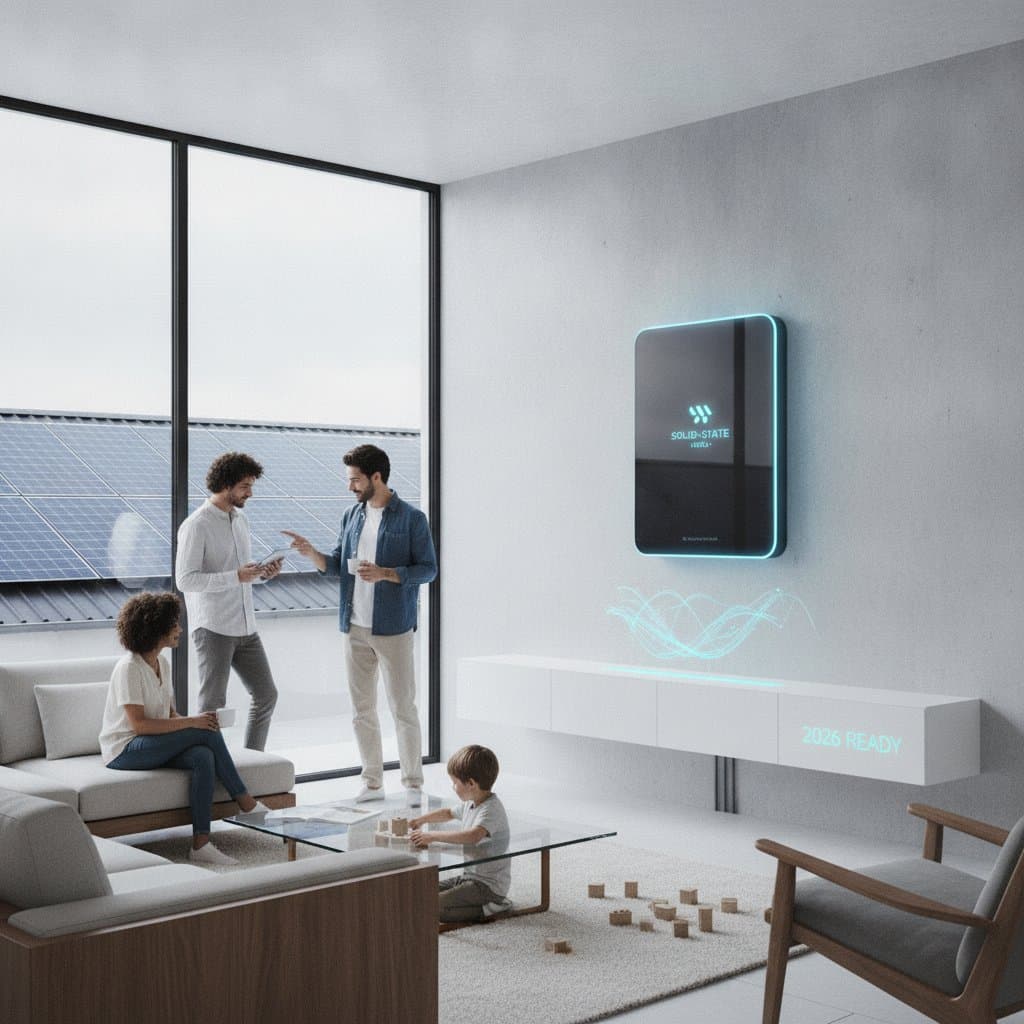
Solid-State Batteries for Home Energy Storage in 2026
Solar research often introduces new options that can confuse homeowners. Solid-state batteries stand apart from existing lithium-ion models because they deliver measurable improvements in safety, lifespan, and charging speed. These changes affect how residential solar systems store and use power.
Core Differences from Lithium-Ion Designs
Lithium-ion batteries rely on a liquid electrolyte to transfer ions. Solid-state versions replace that liquid with a ceramic or polymer layer. The solid material blocks internal shorts while removing flammable components.
This construction also increases energy density. A solid-state cell holds 30 to 50 percent more energy in the same volume. A current 10 kilowatt-hour unit could therefore expand to 13 to 15 kilowatt-hours without growing larger.
How Energy Moves Inside the Cell
Lithium ions pass through the solid separator between electrodes. Charging drives ions to the positive electrode. Discharge returns them to the negative electrode and releases power. The stable separator lowers overheating risks that affect liquid cells.
Without liquid, corrosion and leaks disappear. Manufacturers project more than 10,000 charge cycles before noticeable capacity loss. Typical lithium-ion units reach about 5,000 cycles under similar conditions.
Practical Gains for Solar Households
A 7 kilowatt solar array produces roughly 9,100 kilowatt-hours each year. Storage captures midday output for evening use. A 15 kilowatt-hour solid-state battery can hold more of that production and cut grid purchases.
A household that uses 900 kilowatt-hours monthly can offset 360 kilowatt-hours with daily battery cycling. At 18 cents per kilowatt-hour, monthly savings reach about 65 dollars. Annual totals exceed 750 dollars before incentives.
Cost and Replacement Timeline
Early solid-state units carry higher upfront costs. A 15 kilowatt-hour lithium-ion system installs near 10,000 dollars. A comparable solid-state system starts around 14,000 dollars. The longer cycle life offsets the difference because replacement occurs later.
A 10,000-cycle battery can serve 25 years in daily residential use. Lithium-ion units often require replacement after 12 years. Over the full period, solid-state systems avoid a second purchase and deliver greater cumulative savings.
Safety and Material Advantages
Solid electrolytes remove fire hazards tied to liquids. The batteries also function across wider temperatures and need less active cooling. Homeowners therefore experience quieter operation and fewer service calls.
Material choices reduce cobalt content. Nickel, iron, or manganese substitutes are more widely available. End-of-life recycling improves because solid layers separate cleanly from other components.
Connection to Existing Home Systems
Solid-state batteries link to the same inverters and load controllers used today. Higher density allows greater storage without new wall space or panel upgrades. Faster charge acceptance captures more solar output during brief sunny intervals.
During outages the battery recharges quickly once sunlight returns. This improves backup duration compared with slower-charging alternatives.
Installation and Ongoing Care
Electricians mount the unit, wire it through a hybrid inverter, and tie it to the main panel. Temperature tolerance may allow indoor placement in locations previously restricted. No fluid maintenance or fan replacements are required.
Owners track performance through an app that shows charge state and energy flows. Routine firmware updates and basic ventilation keep the system operating for decades.
Sizing and Transition Steps
Homeowners begin with a site assessment of roof angle and shading. A 10 kilowatt solar array paired with a 20 kilowatt-hour battery typically covers evening loads for medium homes. Existing lithium-ion owners can add solid-state capacity later when prices decline.
Federal and state incentives that apply to current batteries are expected to cover these models as well. Providers can confirm wiring compatibility during initial design.
Choosing the Right Time to Upgrade
First residential solid-state products reach the market soon. Asking installers about future-ready components prevents later changes. Monthly performance reviews and clean airflow around the unit maintain long-term reliability and maximize energy independence.