
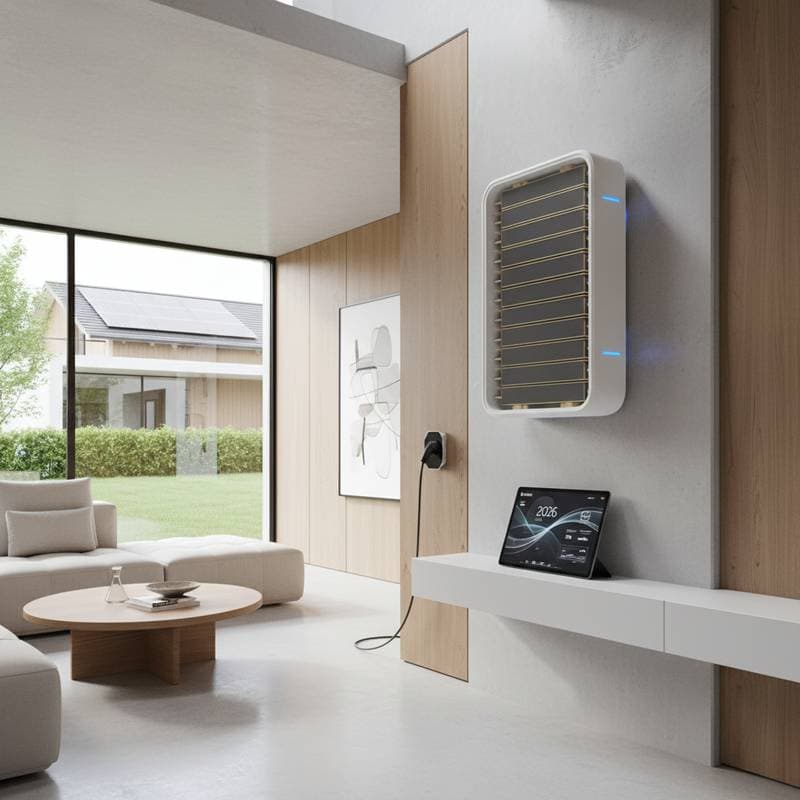
Solid-State Batteries Revolutionize Home Energy in 2026
For many homeowners, solar energy storage still feels limited by bulky lithium-ion batteries that lose capacity over time. Concerns about safety, lifespan, and replacement cost have slowed adoption. Solid-state batteries are changing that picture.
These next-generation storage systems promise longer life, faster charging, and more stable performance. They offer a glimpse of what home energy independence can look like.
What Makes Solid-State Different
A solid-state battery replaces the liquid or gel electrolyte found in traditional lithium-ion cells with a solid ceramic or polymer layer. This solid conductor moves lithium ions between the anode and cathode during charge and discharge. Because the electrolyte is solid, the battery cannot leak or catch fire as easily, and it tolerates higher temperatures.
The key difference lies in how the ions move. In a conventional battery, liquid electrolytes allow fast movement but add risk of overheating. In a solid system, the ions move through a dense material that resists dendrite formation. With fewer dendrites, solid-state batteries hold charge longer and stay safer across many cycles.
Efficiency and Energy Density
Solid-state technology increases energy density by roughly 30 to 50 percent compared to standard lithium-ion cells. That means a home battery unit can store more energy in the same space. A typical 10 kWh wall-mounted system might grow to 13 or 14 kWh without expanding its footprint.
Higher density means fewer batteries are needed to back up a home, reducing installation complexity and cost. Charging efficiency also improves, often reaching 95 percent round-trip efficiency, compared to 88 to 92 percent for liquid-based systems. Over time, this improved efficiency saves kWh that would otherwise be lost to heat or internal resistance.
How Solid-State Batteries Work with Solar Power
Imagine a home with a 7 kW solar array producing about 1,300 kWh per kW each year. That equals roughly 9,100 kWh of production. If the household uses 10,000 kWh annually, the solar system could offset about 91 percent of total consumption.
A lithium-ion battery might allow the home to store 10 kWh for evening use. A solid-state unit of the same size could store 13 kWh, covering more nighttime demand. The extra storage could replace several kilowatt-hours that would otherwise be drawn from the grid.
Cost and Payback Scenarios
Early solid-state systems cost more to manufacture, but production scales quickly once suppliers adopt new materials. A current lithium-ion battery for residential use may cost around 600 dollars per kWh installed. Early projections for solid-state systems suggest initial pricing near 800 dollars per kWh, with costs expected to drop as production grows.
For a 13 kWh system, that equals about 10,400 dollars installed. If the home saves 1,200 dollars in annual electricity costs through better storage and time-of-use shifting, the payback period falls near nine years. With a lifespan exceeding 20 years and a degradation rate under 1 percent per year, the long-term return improves steadily.
Safety and Longevity Gains
Safety is one of the strongest arguments for solid-state batteries. Traditional lithium-ion chemistries rely on flammable liquid electrolytes, which can ignite if punctured or overheated. Solid-state materials do not combust under normal conditions. They also resist swelling, corrosion, and moisture damage.
Cycle life is another major advantage. Many lithium-ion batteries begin to lose noticeable capacity after 3,000 cycles. Solid-state cells can exceed 5,000 cycles while retaining over 90 percent of original capacity. That means more than a decade of daily charging and discharging without significant performance loss.
Environmental and Recycling Benefits
Because solid-state batteries contain less volatile material, they are easier to recycle. The solid electrolyte can be separated and reused, while the lithium and nickel components remain recoverable. Less packaging and fewer cooling systems reduce the total weight of the unit, lowering the embodied carbon of production.
For homeowners committed to sustainable living, this improved lifecycle fits well with the goals of solar adoption. A battery that lasts twice as long reduces the environmental cost of replacement and waste disposal.
Integration and Smart Management
Solid-state batteries pair well with modern inverters and energy management software. Their stability allows deeper discharge levels, often up to 95 percent of capacity, without damaging the cells. That means more usable energy per cycle.
Smart controllers can coordinate charging during solar peaks and discharging during expensive grid hours. With time-of-use rates becoming more common, this flexibility matters. Homeowners can avoid high evening prices by storing solar energy in the afternoon and using it later with minimal loss.
Installation and Compatibility
From an installer perspective, the process looks familiar. Mounting hardware, wiring, and safety disconnects mirror those used for lithium-ion systems. The main difference lies in the internal battery chemistry, not the connection layout.
Permitting follows the same building and electrical codes, though some jurisdictions may update fire safety guidelines as solid-state systems enter the market. Homeowners should confirm compatibility with existing solar arrays and ensure the inverter supports the required voltage range.
Maintenance and Long-Term Care
Solid-state batteries require little maintenance. There are no liquid levels to check or cooling fans to replace. Homeowners can monitor performance through the manufacturer app or inverter interface. Keeping the unit clean and ensuring good airflow around it will maintain efficiency.
If the system includes firmware updates, applying them promptly helps optimize performance. Most manufacturers will offer warranties of 15 to 20 years with guaranteed capacity retention. At end of life, the battery can be returned for recycling or trade-in toward a new model.
Selecting Your Next Storage Upgrade
Homeowners evaluating options should compare usable capacity, cycle ratings, and warranty terms across available chemistries. Solid-state units deliver clear gains in density and safety that support greater self-reliance. Consult a qualified installer to model specific load profiles and confirm inverter compatibility before purchase.