
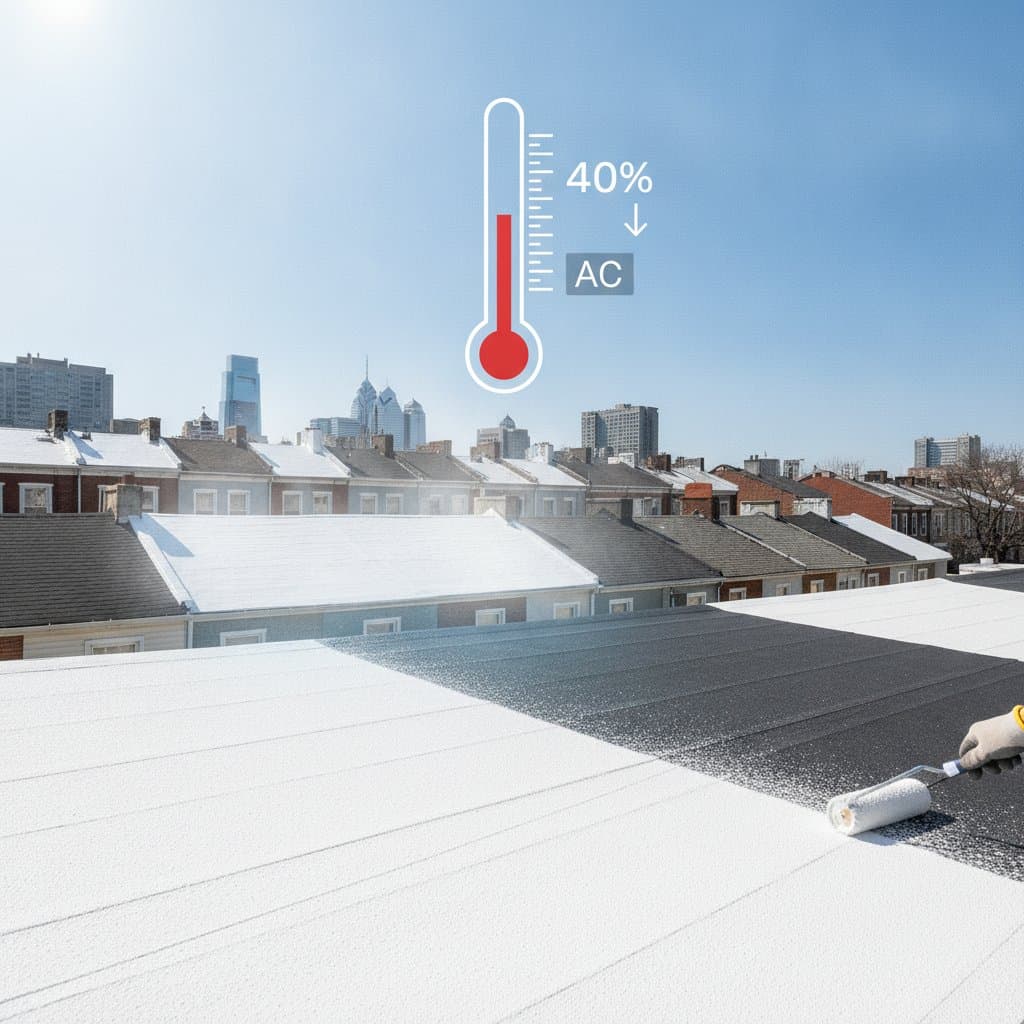
Cool Roof Coatings Reduce Philadelphia AC Costs by Up to 40 Percent
Philadelphia homeowners often watch air conditioners run continuously during summer heat. Roof surfaces can exceed 150 degrees Fahrenheit on sunny afternoons. This heat radiates into living spaces and drives up cooling expenses. Reflective cool roof coatings address the problem directly. They frequently reduce summer air conditioning use by as much as 40 percent.
Benefits of Reflective Roofing
A cool roof reflects sunlight rather than absorbing it. The surface temperature stays lower. Attic and ceiling areas remain cooler as a result. Air conditioning systems operate less often. Indoor temperatures stay more consistent throughout the day.
Widespread use of these coatings also lowers neighborhood temperatures. The urban heat island effect decreases. Reduced electricity demand cuts emissions from power plants. Homeowners gain immediate savings while contributing to community comfort.
Application and Performance Details
Cool roof coatings contain reflective pigments that block ultraviolet and infrared radiation. Applicators use acrylic, silicone, or urethane formulas on asphalt shingles, metal, and flat roofs. These products create a bright surface that reflects up to 80 percent of incoming sunlight.
Standard dark roofs convert most solar energy into heat. A reflective layer prevents this conversion. Surface temperatures drop 50 to 60 degrees Fahrenheit. Attic temperatures fall accordingly. Insulation and ductwork experience less stress. Electricity consumption declines as soon as the air conditioner cycles less frequently.
Investment and Return Analysis
Application costs range from 1.25 to 2.50 dollars per square foot. Preparation work and roof type influence the final price. A typical 2,000 square foot roof requires an investment near 3,000 dollars. Energy savings repay this amount within three to five summers.
A homeowner whose summer electric bill averages 300 dollars can save 120 dollars monthly after installation. Four months of savings total nearly 500 dollars in one season. The coating also protects against ultraviolet damage and thermal movement. Future repair expenses decrease as roof life extends.
Available Incentives
Utility companies and city programs sometimes provide rebates for reflective roofing. Property tax credits and energy efficiency grants may apply as well. Homeowners should contact local energy offices and utility providers before work begins. Certified products and approved contractors are usually required for incentive eligibility.
Installation Process and Upkeep
Work begins with surface cleaning and repair of cracks or loose sections. The coating is sprayed or rolled in one or two layers. Most projects finish in one or two days with minimal household disruption.
Annual spring inspections and post-storm checks maintain performance. Removal of debris prevents moisture retention. Recoating occurs every ten to fifteen years according to manufacturer guidance. Clean surfaces resist mold and dirt, preserving reflectivity over time.
Comfort and Equipment Advantages
A cooler roof lowers attic heat before the air conditioner activates. Upper rooms stay closer to the thermostat setting. Stored items in attics or upper floors receive better protection from extreme temperatures.
Heating and cooling equipment runs more quietly because it cycles less often. Reduced strain lengthens the service life of compressors and fans. Overall system efficiency improves.
Options for Different Budget Levels
-
Apply reflective coating to garage or porch roofs first.
-
Use light-colored sealants during small repairs.
-
Improve attic ventilation to complement the coating.
-
Coat an entire asphalt shingle or metal roof with a certified product.
-
Add attic insulation at the same time.
-
Replace the full roof with ENERGY STAR rated reflective materials.
-
Combine the new roof with solar panels for maximum savings.
Planning a Project
Schedule a professional roof inspection to assess suitability. Request surface temperature readings and attic insulation evaluation. Obtain quotes that specify coating type, reflectivity rating, and warranty terms.
Retain the previous year of energy bills to measure results. After installation, track indoor comfort and air conditioner runtime. Small reductions in household energy use accumulate across the city and support a cooler, cleaner Philadelphia environment.