
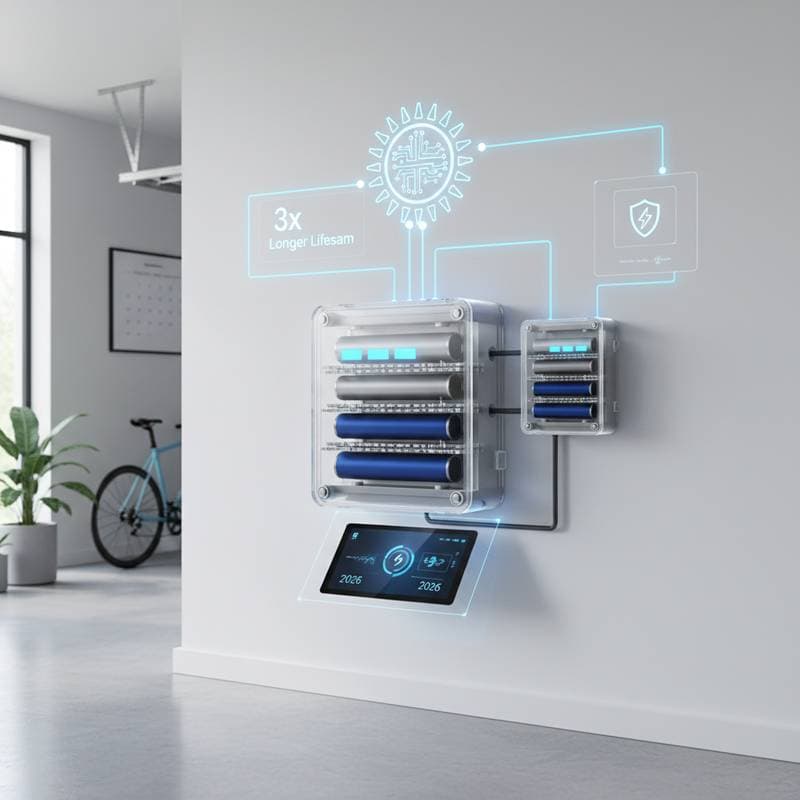
Solid-State Batteries Deliver Three Times the Storage Lifespan
Solar homeowners often wonder whether energy storage will keep pace with their panels. The concern is real. Traditional lithium-ion batteries lose capacity over time, especially under high heat or deep cycling. Many owners find themselves replacing batteries long before their solar panels reach midlife.
Solid-state batteries promise to change that pattern. By replacing the liquid electrolyte with a solid one, these systems last up to three times longer, charge faster, and reduce fire risk. Solid-state storage is not just a lab concept anymore. It is moving into pilot installations and premium energy storage products. For homeowners considering solar plus battery storage, this technology signals a meaningful leap in reliability and long-term value.
Comparing Lifespan and Performance
A standard lithium-ion unit rated for 10 kilowatt-hours usually lasts about 4,000 cycles before dropping below 70 percent usable capacity. A solid-state version rated at the same energy level could last closer to 12,000 cycles. If a homeowner discharges one full cycle per day, the lithium-ion system delivers around 11 years of service before replacement. The solid-state battery could stretch to 30 years under similar conditions.
Cycle life is not the only advantage. Solid-state batteries can safely charge faster because they tolerate higher current without overheating. This allows them to absorb solar energy quickly during peak sun hours. They also perform better in cold weather, which matters for regions with freezing winters.
Safety and Environmental Impact
Safety remains a major advantage. The absence of liquid electrolytes removes the risk of thermal runaway, which is the chain reaction that can lead to fires in lithium-ion systems. Solid-state cells can puncture without igniting. This improves safety in basements, garages, and utility closets.
Environmental impact also improves. Solid electrolytes often use stable ceramics or sulfides that are easier to separate and recycle. With fewer replacements needed, total material use drops significantly. This longer service life reduces waste and transportation emissions tied to manufacturing.
Planning for Adoption
Market adoption will grow as production scales and costs fall. Manufacturers are building pilot lines capable of producing thousands of units per year. As the supply chain matures, prices will likely narrow the gap with lithium-ion systems.
For homeowners planning a solar installation soon, it may not be necessary to wait. Many installers design systems that can accept battery upgrades later. By selecting an inverter that supports both current and next-generation storage protocols, the transition to solid-state can be seamless when prices align.
Early adopters may choose solid-state now for its longevity, safety, and peace of mind. Those focused on lowest upfront cost may start with lithium-ion and upgrade later. The important step is to design the solar system with future storage capacity in mind.
Frequently Asked Questions
-
What makes a solid-state battery different from a lithium-ion battery?
It replaces the liquid electrolyte with a solid ceramic or polymer layer. This structure improves safety, energy density, and lifespan. -
How long do solid-state batteries last?
Many designs can exceed 12,000 full cycles, which equals roughly three times the life of a comparable lithium-ion system. -
Are solid-state batteries safe for home use?
Yes. Without flammable liquid electrolytes, they are much less likely to overheat or catch fire. -
Can solid-state batteries work with existing solar systems?
Most modern inverters can integrate with them, especially if they follow common communication standards. Always confirm compatibility before installation. -
Do they charge faster than regular batteries?
They can accept higher charge rates thanks to better thermal stability, which helps capture more solar output during short peak windows. -
How much do they cost compared to lithium-ion batteries?
They currently cost more upfront, but their long lifespan and higher efficiency often result in lower lifetime costs. -
Are there any recycling programs for solid-state batteries?
Yes, several manufacturers and recycling firms are developing recovery methods for the solid electrolytes and electrode materials. -
Do they perform well in cold climates?
They handle low temperatures better than liquid-based systems, which makes them suitable for northern regions.