Solar Panels and Crops Share Land for Double Harvest
Agrivoltaics enables farmers to generate solar power and grow food on shared land. The approach raises income, improves soil conditions, and strengthens resilience against weather extremes.
Loading...
Articles tagged with sustainable-farming
Agrivoltaics enables farmers to generate solar power and grow food on shared land. The approach raises income, improves soil conditions, and strengthens resilience against weather extremes.
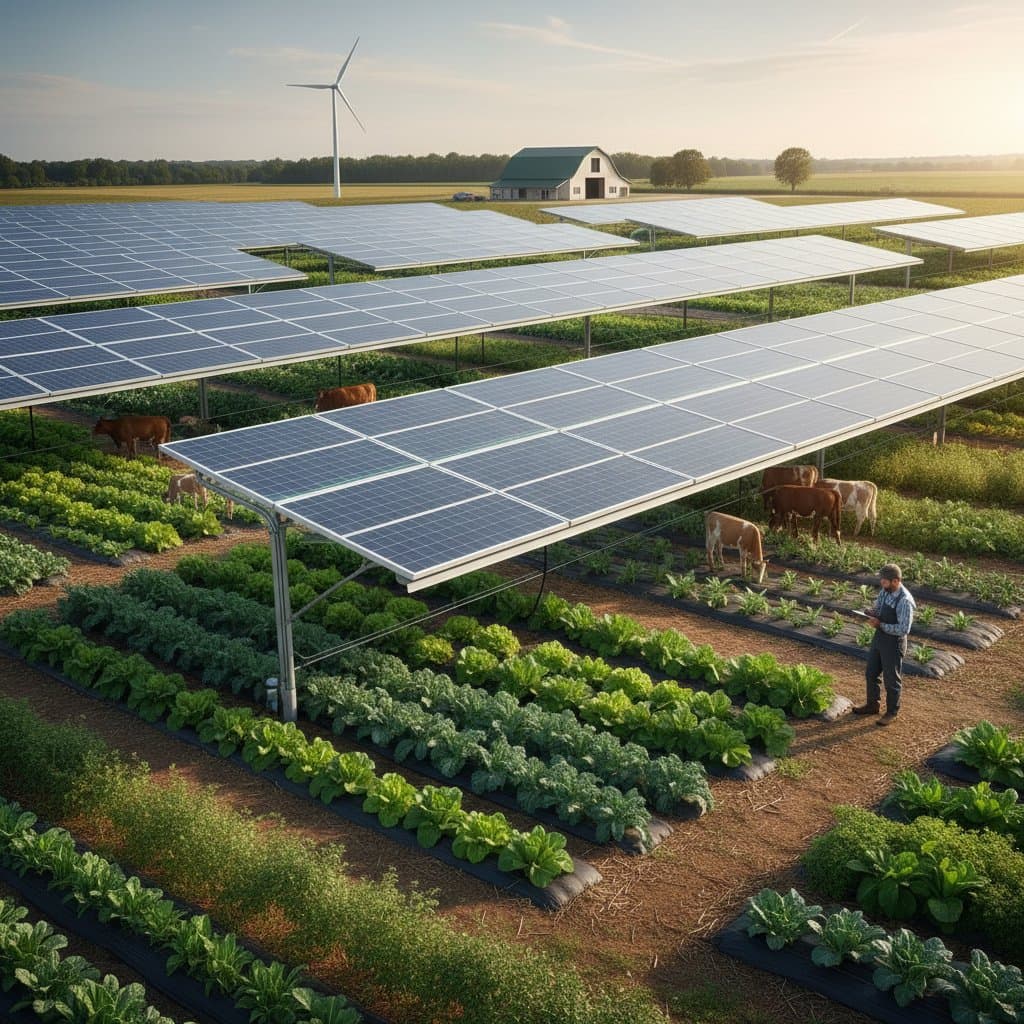
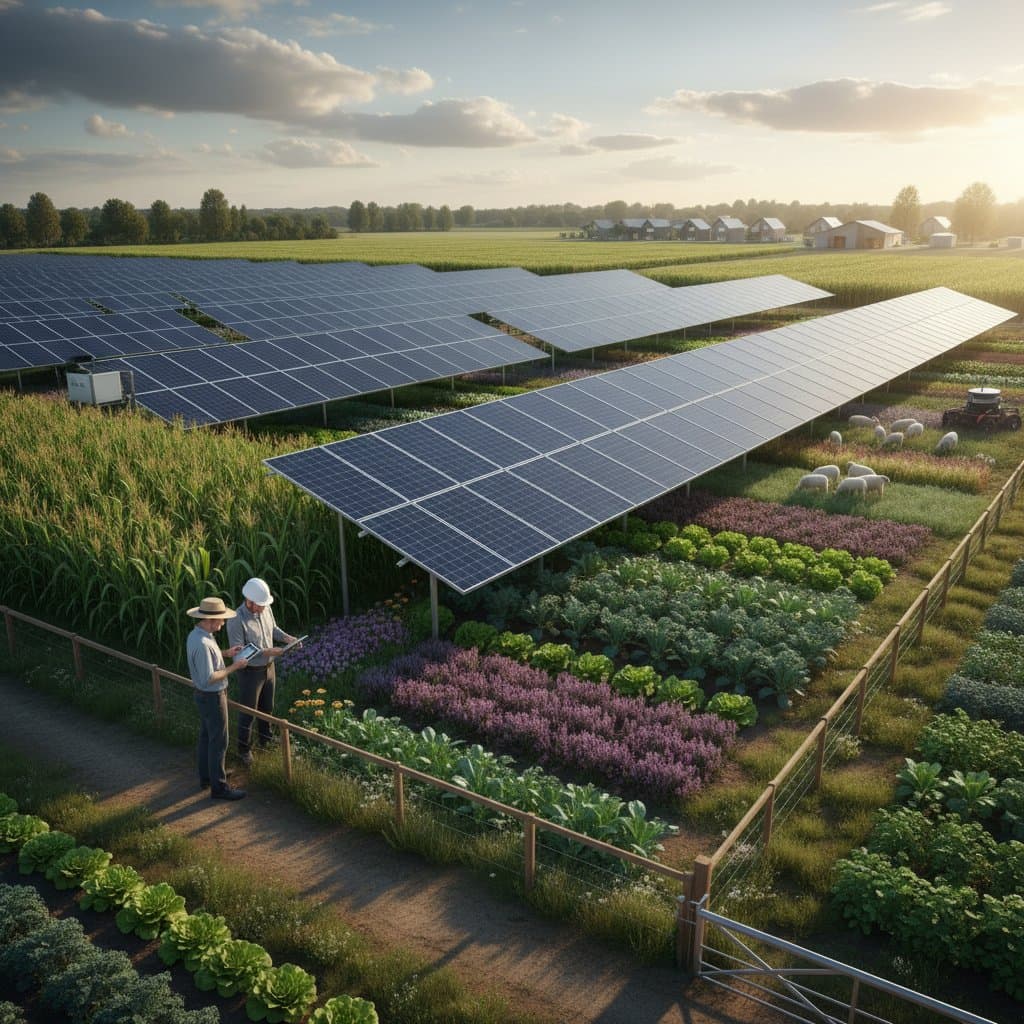
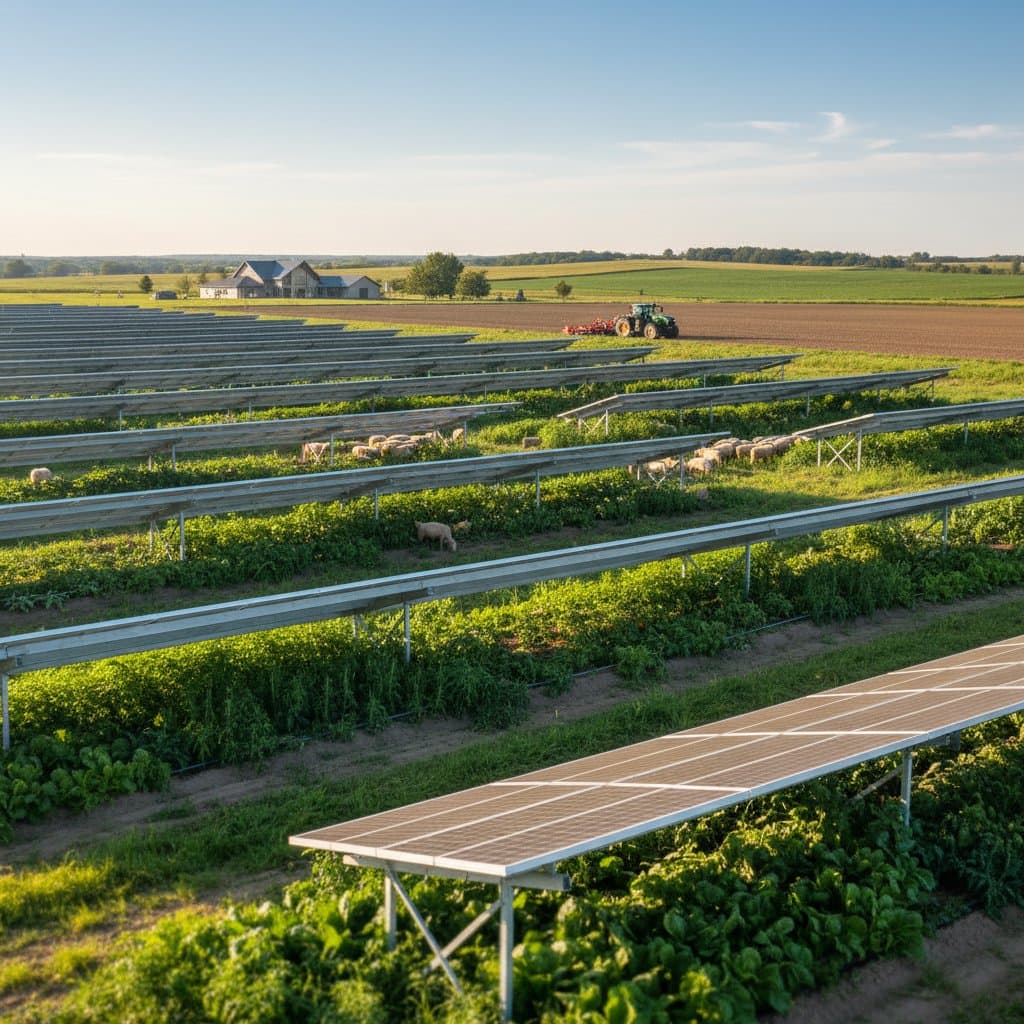
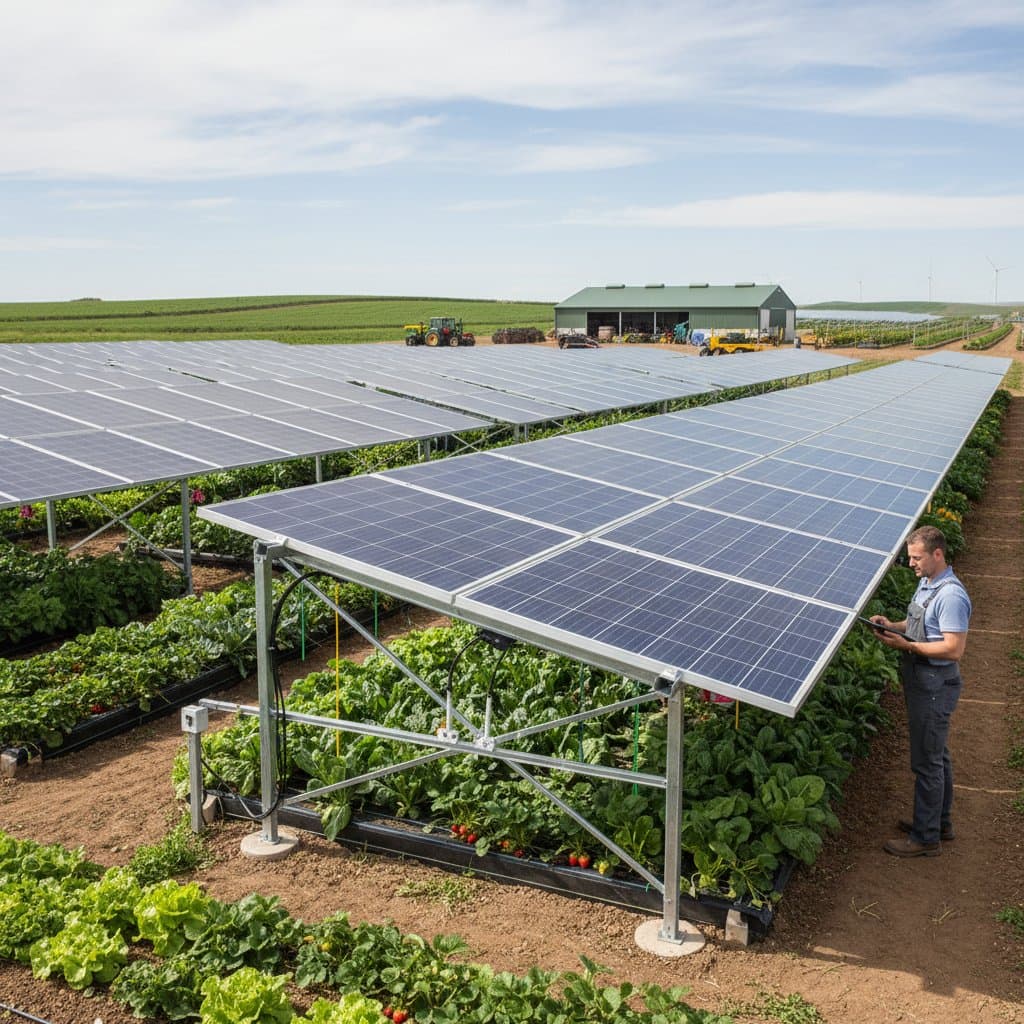
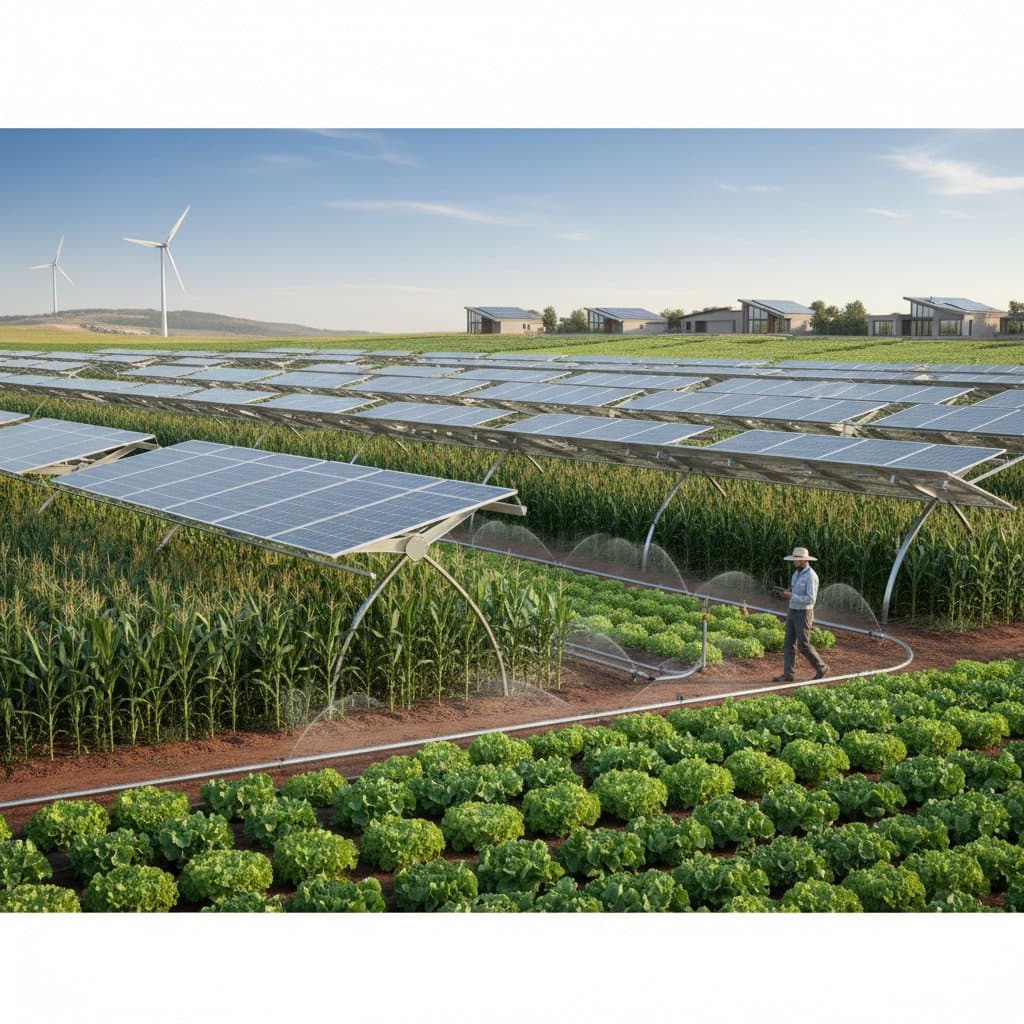
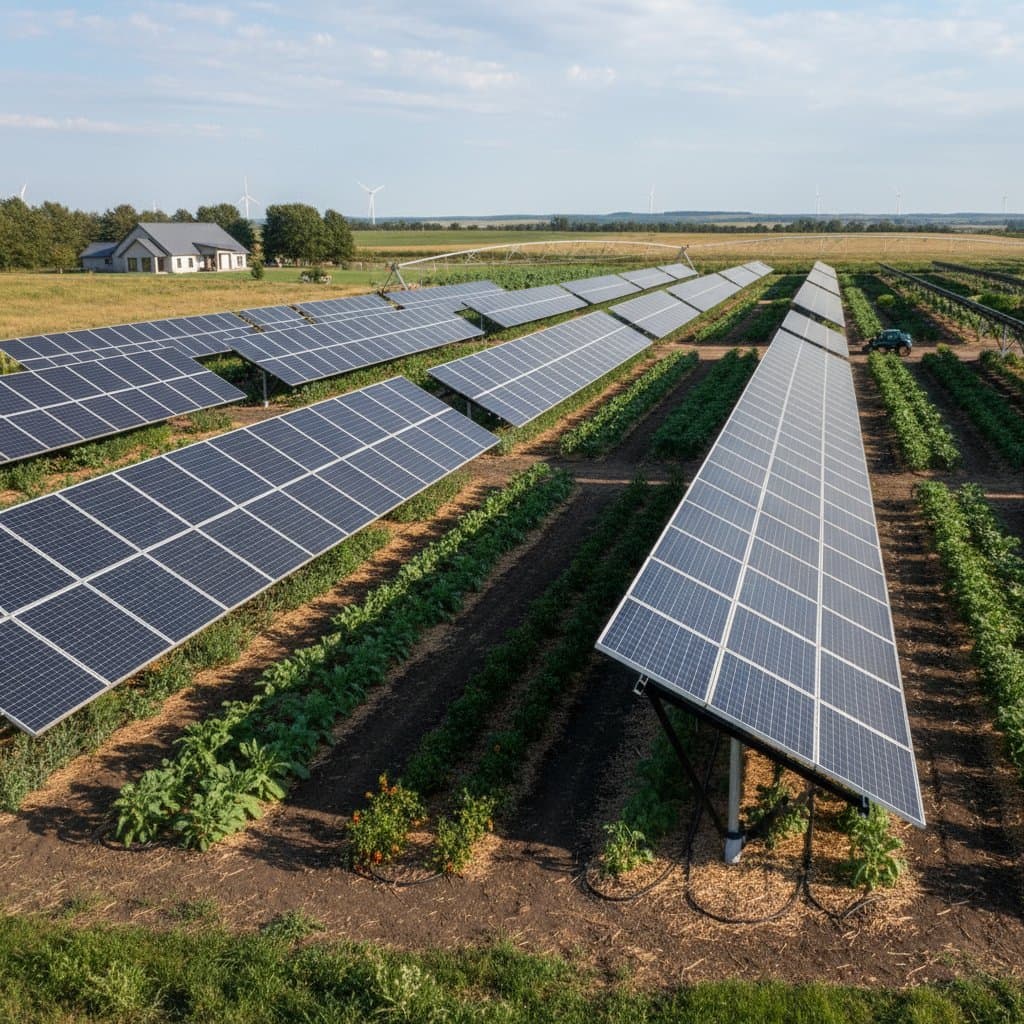
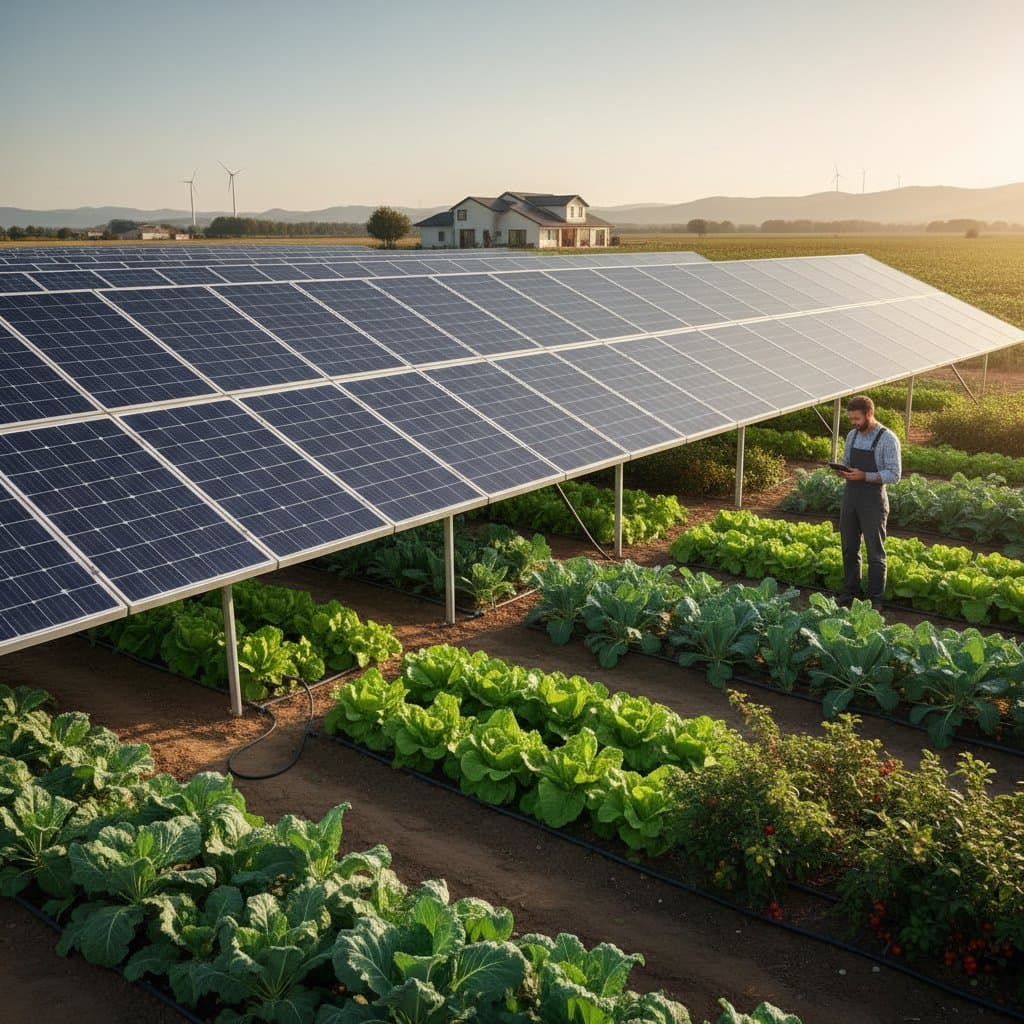
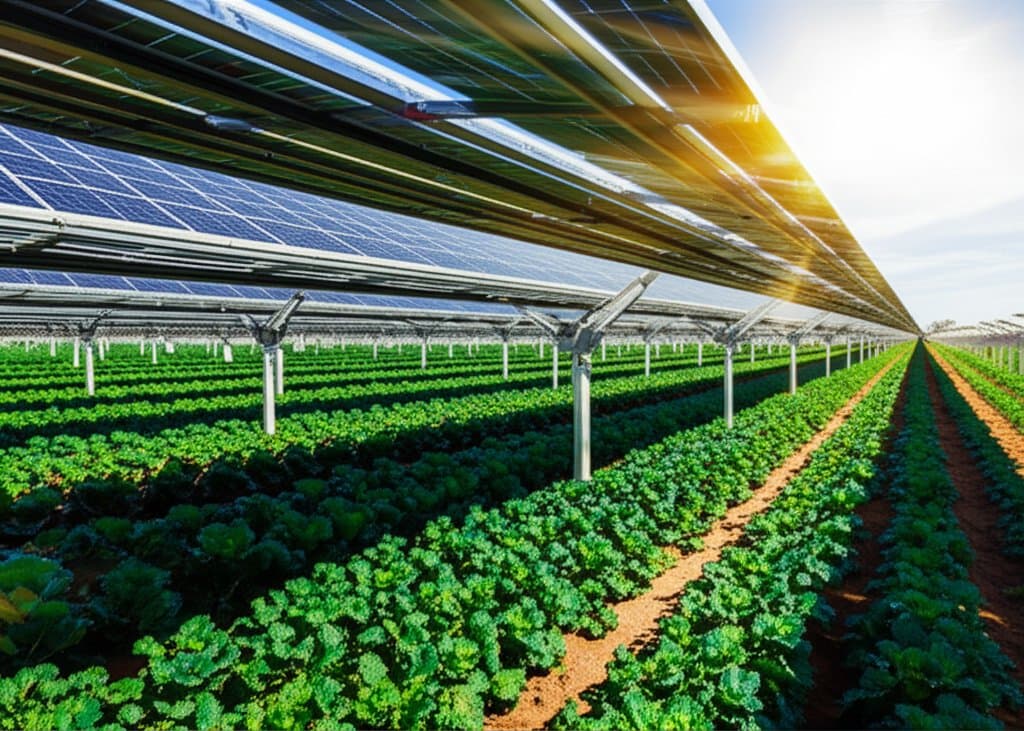
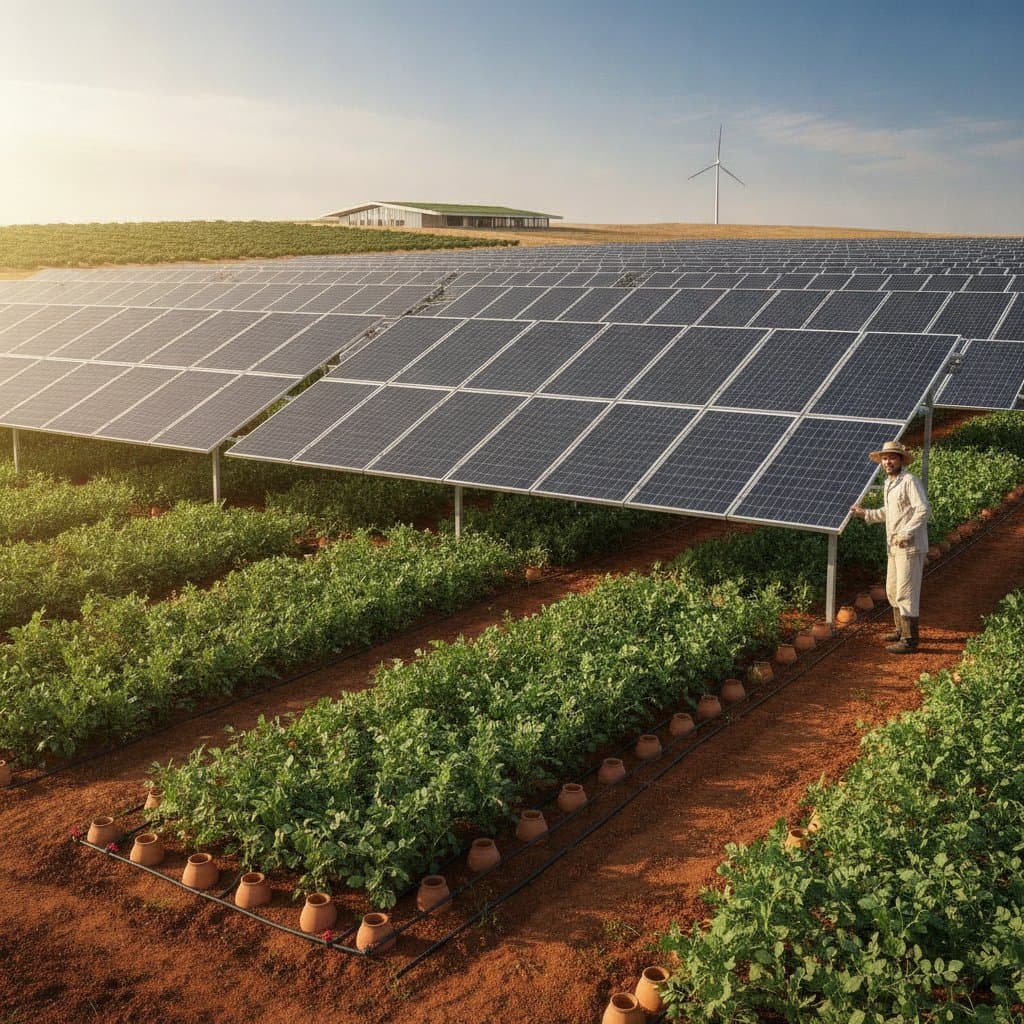
Agrivoltaics integrates solar energy generation with agriculture, allowing farms to yield both food and electricity from the same land. Elevated panel designs accommodate crops and livestock below, improving yields, water efficiency, and financial security. This emerging practice in 2026 bolsters local economies, safeguards farmland, and promotes sustainable harmony between renewables and farming.
Agrivoltaics integrates solar energy production with agriculture, enabling farmland to yield both crops and electricity. Elevated panels provide shade for plants and animals, reduce water evaporation, and foster biodiversity. Through collaboration among farmers, engineers, and regulators, this practice builds resilient agricultural systems while meeting renewable energy objectives in Pennsylvania.
Agrivoltaics revolutionizes farmland by combining solar energy production with agriculture. Elevated panels provide shade that cools soil, increases crop yields, and supports grazing animals. Backed by incentives and dual revenue streams, this model ensures profitability, environmental gains, and food security through 2026 and beyond.
Agrivoltaics integrates solar energy production with agriculture, turning farmland into efficient dual-use spaces that generate electricity and cultivate crops. This method optimizes sunlight exposure, reduces water consumption, and promotes healthier soil, driving greater sustainability and economic viability. Through thoughtful design, rigorous safety measures, and adherence to permitting standards, agrivoltaics paves the way for resilient local production of both food and power.
By 2026, agrivoltaic systems will enable shared land for solar energy and crop farming. Raised panels produce electricity while providing shade that saves water and boosts yields. This innovation offers farmers dual revenue, supplies communities with clean power, and promotes environmental sustainability through integrated agriculture and renewables.
Agrivoltaics combines solar power generation and agriculture on shared land, allowing panels and crops to coexist productively. Strategic design optimizes light exposure, panel elevation, and plant varieties to yield both electricity and harvests. This method diversifies farm revenue, improves resource use, and advances eco-friendly practices for enduring energy and food security.
Agrivoltaics integrates solar energy with agriculture, allowing panels and crops to flourish together. This innovative system strengthens food security, reduces water use, increases earnings for farmers, and advances renewable objectives. Thoughtful design, safety measures, and strategic planning convert fields into robust platforms for energy and food production.
Agrivoltaics innovates by combining solar energy generation with agriculture, using elevated panels to shade crops, reduce water needs, and create dual revenue streams. This approach enhances farm resilience, supports biodiversity, and aligns with sustainable energy goals for the future.
Agrivoltaics represents a forward-thinking fusion of agriculture and solar technology in 2025. Elevated solar panels provide shade that conserves water, mitigates heat stress, and elevates crop productivity. This dual-use strategy delivers clean energy generation, cost savings, and long-term farm resilience, positioning fields as efficient, sustainable assets.