
- De-energize the entire system before handling, rewiring, or cleaning any solar modules.
- Avoid contact with junction boxes, conduits, or inverters.
- Refrain from using metal ladders or conductive irrigation tools in proximity to live electrical elements.
Qualified electricians alone perform inspections, testing, and repairs on electrical features. All systems comply with the National Electrical Code and applicable local building codes. The relevant authority, often a local electrical inspector, verifies adherence. Permits prove essential for any modifications involving wiring, structural additions, or expansions.
Balancing Sunlight for Panels and Plants
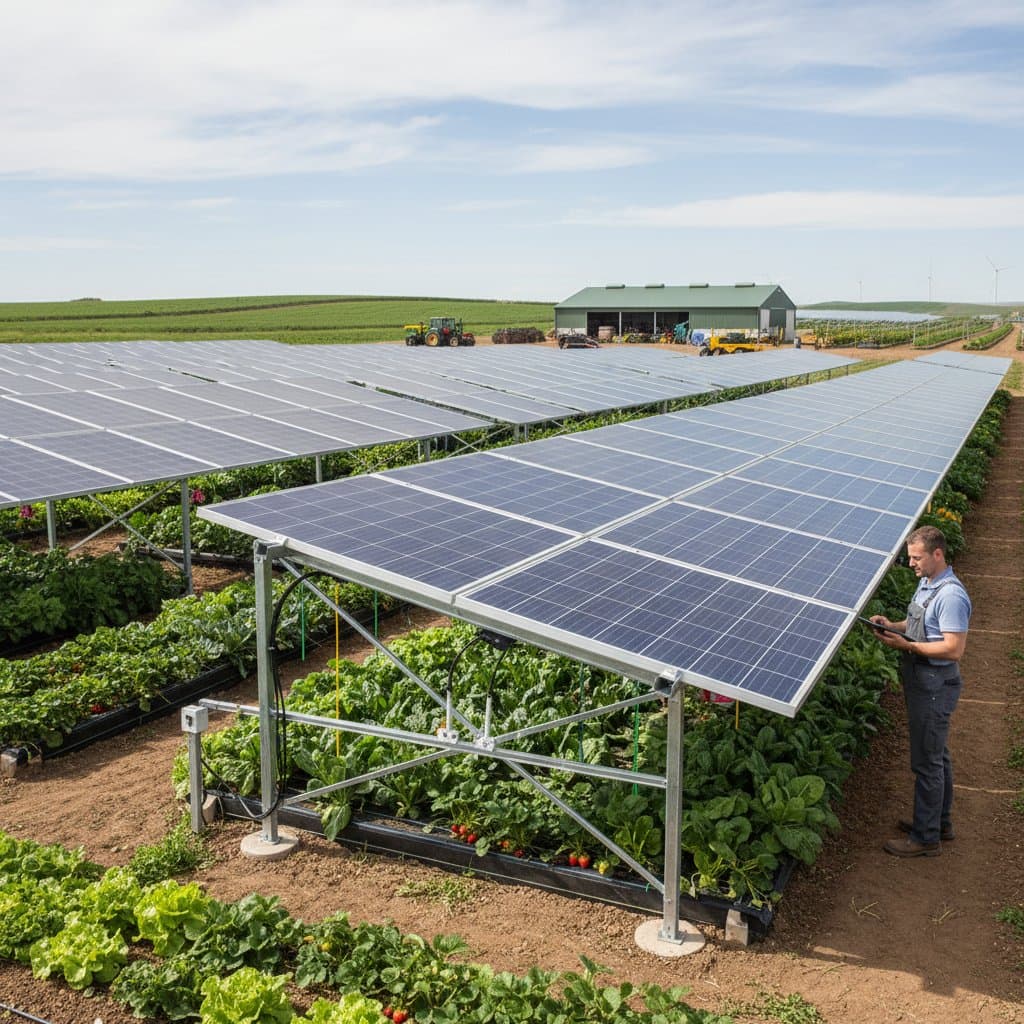
Effective agrivoltaics hinges on precise sunlight allocation between elevated panels and underlying vegetation. Design professionals employ simulation software to determine optimal panel elevation, orientation, and row spacing, tailored to specific crops and regional climate patterns.
Consider these crop-specific adaptations:
- Leafy greens, such as kale or lettuce, tolerate partial shade and gain from moderated temperatures.
- Root crops like carrots require greater direct light and suit placement along panel perimeters.
- Pasturelands for grazing flourish beneath taller structures, allowing safe livestock movement.
Advanced configurations feature tilt-adjustable mounts that shift panel angles throughout the day or season. These mechanisms optimize energy capture while ensuring adequate light for plant development, aligning with agricultural calendars.
Environmental Gains and Financial Advantages
By merging energy and crop production, agrivoltaics elevates land efficiency through diversified income sources. Solar output yields consistent revenue, complemented by periodic harvests, often surpassing the returns of dedicated single-purpose operations.
Key ecological benefits encompass:
- Decreased water requirements, as shaded earth loses less moisture to evaporation.
- Enhanced soil integrity, with ground cover preventing erosion and sustaining nutrient levels.
- Diminished carbon emissions, as on-site power displaces reliance on fossil fuels.
Economic analyses indicate that agrivoltaic ventures sustain employment in farming, installation, and upkeep sectors. They empower smaller operations to thrive economically while advancing community renewable energy objectives.
Integrating Farm Operations with Electrical Infrastructure
Proximity of machinery, irrigation, and animals to solar arrays demands careful management of electrical-agricultural interactions. Protective measures safeguard circuits, joints, and grounds against physical harm and environmental exposure.
Essential safeguards involve:
- Burying conduits to prescribed depths to avoid disruption from plowing.
- Installing durable, weather-resistant disconnects in reachable spots.
- Marking cable routes with clear labels and hazard signs.
- Conducting thermal scans periodically to identify overheating or faulty connections.
In cases of breaker trips, unusual odors, or sparking sounds, isolate power via the primary disconnect immediately. Licensed professionals diagnose and resolve issues; operators should not cycle breakers or access enclosed components.
Navigating Regulations and Permitting
Agrivoltaic initiatives navigate a blend of electrical and agricultural oversight. Solar aspects align with the National Electrical Code, zoning ordinances, and utility protocols, while farming elements may require evaluation from conservation or planning bodies.
Prior to groundbreaking, confirm compliance in these areas:
- Panel configurations meet safety and accessibility norms.
- Wiring employs certified materials suited for rural, exposed conditions.
- Grounding systems fulfill code standards to avert electrical dangers.
- Barriers or fences shield animals from live apparatus.
Neglecting permits invites penalties or operational halts. Partnering with solar experts versed in agrivoltaic configurations guarantees regulatory alignment and enduring reliability.
Microclimate Impacts on Crop Yields
The partial shading from panels generates distinct microclimates, influencing temperature, humidity, and hydration levels. These alterations benefit some species while challenging others, contingent on varietal traits.
Field experiments demonstrate varied outcomes:
- Shade boosts production for heat-sensitive crops like tomatoes and peppers.
- Low-water greens such as lettuce preserve freshness with minimal supplemental irrigation.
- Staples like wheat benefit from wider gaps or light-reflecting mulches to sustain productivity.
Optimal panel height strikes a balance: sufficient clearance for machinery without excessive wind vulnerability or escalated construction expenses. This requires coordinated input from engineers and agronomists.
Leveraging Technology for Enhanced Performance
Contemporary agrivoltaics incorporate monitoring tools to gauge soil conditions, ambient temperatures, and illumination. Collected data informs precise irrigation schedules and panel adjustments, streamlining resource use.
Intelligent inverters interface with agricultural software, enabling unified oversight of power and water systems. Aerial drones survey vegetation vitality under arrays, pinpointing shade imbalances, infestations, or soil issues. Such integrations transform static plots into adaptive, high-performing ecosystems.
Broader Community and Policy Considerations
Agrivoltaics aligns with municipal sustainability strategies and regional energy frameworks. Dual-function solar sites foster community buy-in by delivering tangible local advantages beyond remote grid contributions.
Supportive policies, including incentives for multifunctional land use, motivate adoption without compromising farming viability. Ongoing research from academic institutions and extension services refines best practices, guiding stakeholders toward effective implementations.
Essential Maintenance Routines
Consistent upkeep sustains safety and output for both energy and crop components. Electrical checks encompass torque verification, dielectric testing, and gentle cleaning using insulated implements. Weed management avoids interference with wiring or panel faces.
Follow this inspection cadence:
- Examine cabling for abrasion or wildlife interference.
- Test ground integrity with appropriate meters.
- Clean panels using mild brushes and purified water.
- Evaluate plants for shading effects or infestations.
Upon detecting rust, fading, or insulation breaches, halt activities and summon certified technicians. Avoid directing water streams toward powered enclosures.
Advancing Sustainable Land Use Through Agrivoltaics
Agrivoltaics exemplifies the harmony between renewable power and agriculture, fostering community strength via integrated food and energy yields. Emerging innovations in dynamic mounting, battery integration, and automated watering promise further gains.
In areas like Pennsylvania, site assessments evaluating terrain, suitable crops, and power setups initiate viable projects. Engage experienced installers for evaluations, yield projections, and compliant execution. Through strategic planning and expert collaboration, agrivoltaics propels collective progress in eco-friendly agriculture and energy independence.