
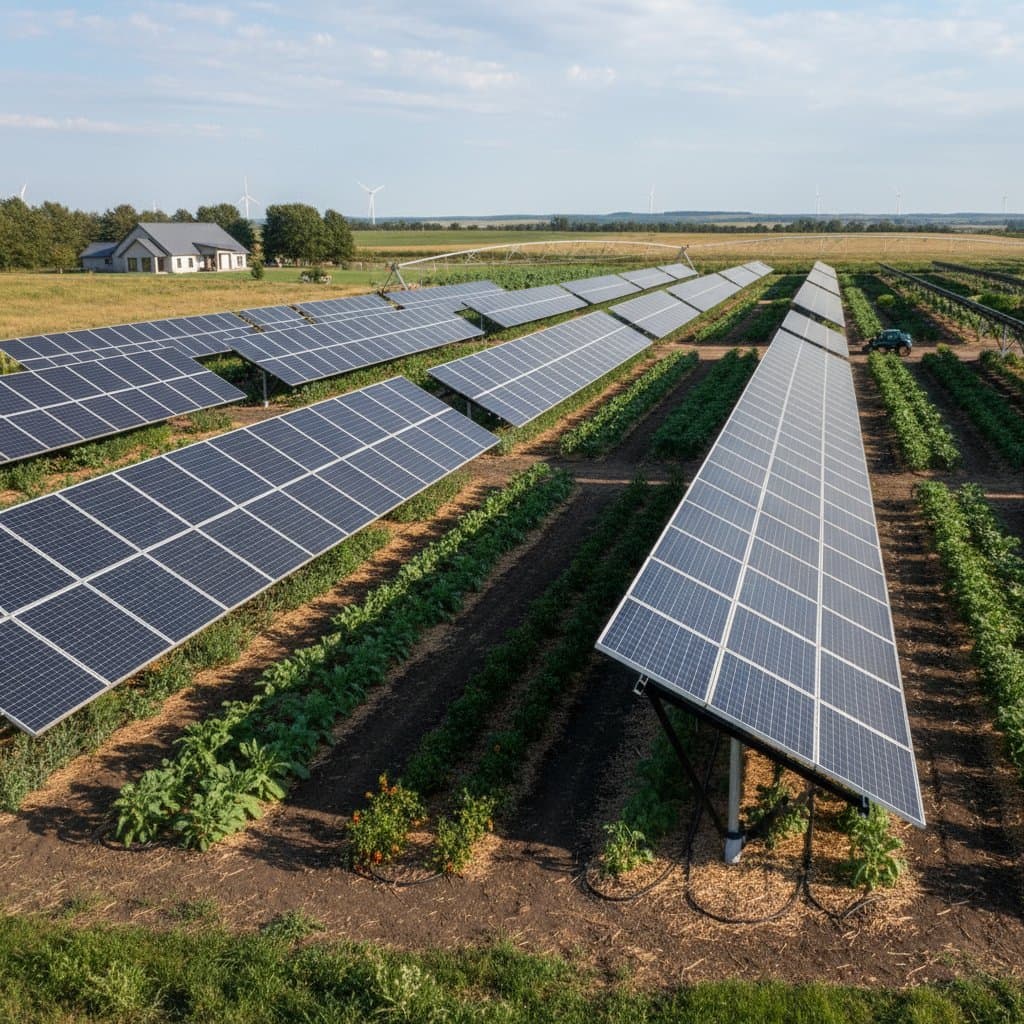
Solar Panels and Crops Share Land Without Competing
Agrivoltaics integrates solar energy production with agriculture, enabling the same plot of land to generate both electricity and food. This approach addresses the tension between expanding renewable energy and preserving farmland by designing solar installations that support crop growth beneath or around panels. Farmers select shade-tolerant plants, adjust panel heights, and optimize spacing to maximize dual benefits.
Sunlight management plays a central role. Panels capture direct rays for power while allowing diffused light to reach crops below. In regions with intense summer heat, this setup reduces evaporation and protects sensitive plants from scorching. Studies show yield improvements for certain vegetables and berries under partial shade, turning potential conflict into synergy.
Each variable influences the return on investment. Factors such as local sunlight hours, crop choices, and government incentives determine outcomes. A thoughtfully planned agrivoltaic system typically achieves payback within eight to twelve years, varying by energy prices and harvest productivity.
Economic and Environmental Value
This model opens fresh opportunities for rural areas. Property owners lease portions of their land for solar arrays while retaining agricultural zoning benefits and tax advantages. The additional revenue from energy sales provides a buffer against fluctuating crop prices or adverse weather.
Solar panels influence local conditions in beneficial ways. They form shaded zones that lower soil temperatures by up to 10 degrees Fahrenheit in arid areas, preserving moisture and extending harvest periods. In cooler climates, panels trap warmth during nights, minimizing frost damage and stabilizing yields across seasons.
Beyond economics, agrivoltaics enhances ecosystems. Elevated panels reduce soil disturbance, curbing erosion and improving water infiltration. Many operations plant cover crops, native grasses, or wildflower strips underneath to attract pollinators like bees and butterflies. These strategies align with state initiatives that offer grants for eco-friendly practices and collaborative research efforts.
Real-World Performance and Savings
Quantifiable data underscores the viability. Consider a 10-acre agrivoltaic installation supporting 3 megawatts of solar capacity. Such a system produces approximately 3.9 million kilowatt-hours annually. Valued at an average rate of 14 cents per kilowatt-hour, this translates to around $546,000 in yearly energy revenue.
Pair this with agriculture: if the site yields crops valued at $15,000 per acre, total income surpasses $690,000 per year. Initial costs exceed those of conventional solar farms because of raised mounting systems, yet sustained dual outputs justify the investment over time.
Operations remain straightforward. Solar components require routine cleaning and checks, similar to standard photovoltaic maintenance. Crops follow usual cultivation routines. Shared elements like perimeter fencing and drip irrigation systems streamline management for both.
Getting Started with Agrivoltaic Planning
Small-scale enthusiasts can begin modestly. A residential setup with elevated panels over a garden bed powers a home while nurturing herbs or greens. Larger operations start with a comprehensive assessment, including solar irradiance analysis, soil composition evaluation, and simulations of shade patterns.
Consult certified solar professionals to engineer supports compatible with specific crops. Verify utility policies on grid connections and compensation for excess power. Agricultural extensions in your state provide resources on eligible demonstration areas and financial supports.
Post-installation, vigilance ensures success. Deploy intelligent inverters to monitor output and sensors for soil metrics like humidity and temperature. Insights from this data allow adjustments to panel tilt for optimal light distribution or irrigation schedules for peak efficiency.
Uphold cleanliness to sustain performance. Accumulated debris can cut energy generation by as much as 5 percent. Use low-pressure rinses with collected rainwater to clean panels without stressing underlying vegetation.
Long-Term Outlook
Agrivoltaics paves the way for integrated, durable systems that secure food and energy supplies. It reframes solar development as a partner to agriculture rather than a rival. Tailored implementations promise to sustain productivity on finite land resources.
In the Philadelphia region, this strategy advances objectives for clean energy and resilient agriculture. It fosters employment in installation and maintenance, safeguards rural landscapes, and bolsters local food networks. Pursue initial trials and collaborations to implement these innovations effectively.
FAQ
What is agrivoltaics?
Agrivoltaics combines solar photovoltaic systems with agricultural activities on shared land to produce energy and crops simultaneously.
Do crops grow well under solar panels?
Yes, shade-tolerant varieties such as lettuce, berries, and grasses often thrive, gaining from moderated temperatures and retained soil moisture that mitigate heat stress.