
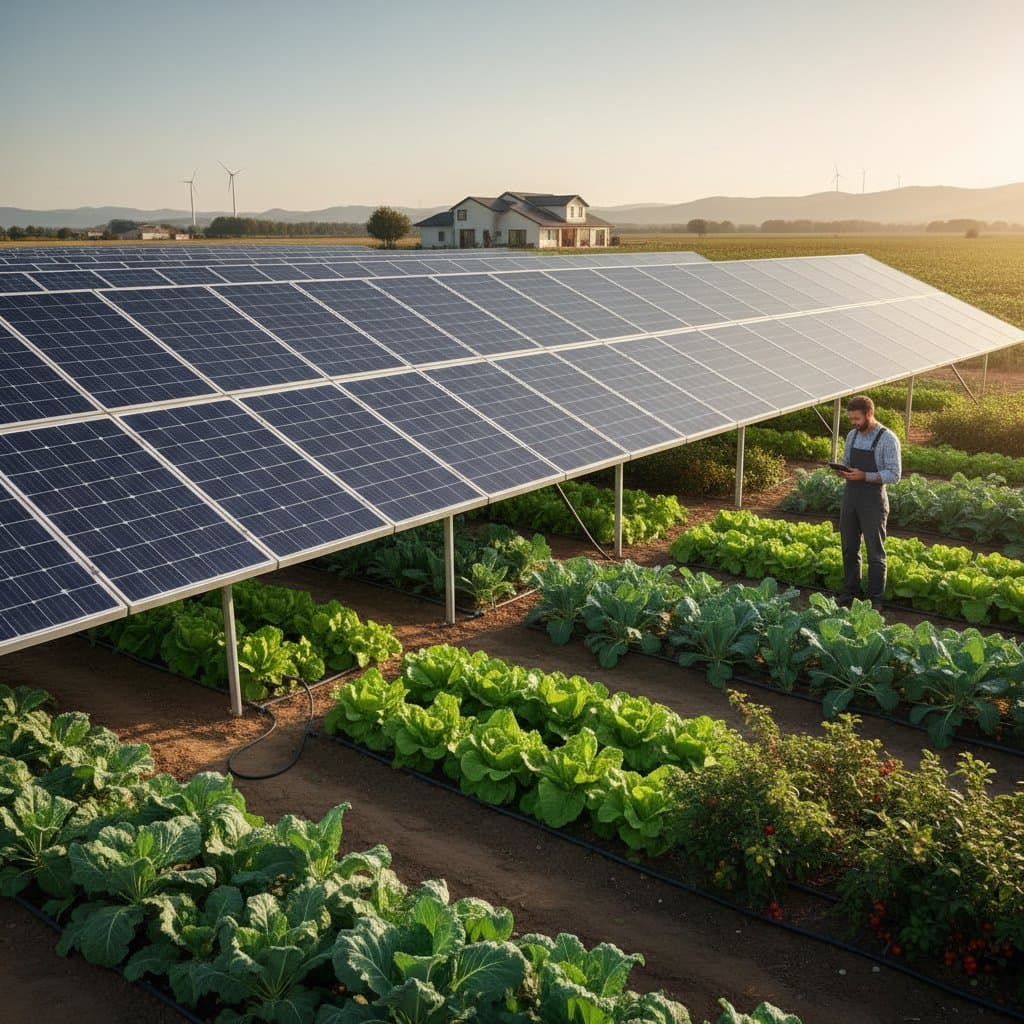
Agrivoltaics: Solar Panels Boosting Food Production
Agrivoltaics enables farmland to generate both energy and crops simultaneously. This approach integrates photovoltaic panels with ongoing agricultural activities, fostering a dual-use system that bolsters food security and renewable energy output. Farmers in Pennsylvania and surrounding areas gain opportunities to enhance income stability and build climate resilience while preserving essential soil resources.
The concept proves straightforward yet impactful. Installers position solar panels at sufficient heights or with adequate spacing to accommodate crop growth below. Such configurations alter sunlight exposure, temperature levels, and soil moisture dynamics. When designed appropriately, these modifications benefit plant health, decrease irrigation demands, and produce electricity for on-site use or grid sales.
Understanding the Dual-Use Approach
Conventional solar farms claim expansive land areas suitable for food production. Agrivoltaics eliminates this conflict. Energy generation and agriculture function in synergy rather than opposition. Panels offer partial shading that mitigates heat stress on plants during arid or intense heat episodes. In exchange, underlying vegetation cools the panels via evapotranspiration, thereby elevating their energy conversion efficiency.
This interplay forms a beneficial cycle sustaining both elements. Studies indicate that crops like lettuce, tomatoes, peppers, and berries adapt effectively to the diffused light beneath solar arrays. Legumes and leafy greens frequently excel under moderate shading, whereas root vegetables might require tailored panel elevations or intervals.
Safety and Structural Integrity
Solar setups on agricultural sites adhere to identical electrical and structural standards as other installations. Systems demand proper grounding, weather-resistant wiring, and robust mounting components. Farmers avoid handling electrical installations personally; licensed electricians manage all such tasks. Damage to panel frames or junction boxes risks exposing live wires, endangering workers or livestock through electrical shocks.
Select equipment certified for outdoor applications and suited to farm environments. Elements like moisture, dust, and animal interactions introduce distinct hazards. Professional installers verify that connections align with the National Electrical Code and local regulations. The relevant authority, typically a township or county electrical inspector, reviews and authorizes designs prior to system activation.
Planning the Layout
Agrivoltaic site design balances crop requirements, sunlight trajectories, and equipment arrangements. Panel angles and elevations dictate ground-level light penetration. Support frameworks accommodate safe passage for tractors, irrigation setups, and personnel underneath. Standard configurations elevate panels eight to twelve feet above ground to accommodate typical farm machinery.
Adopt these planning steps:
- Evaluate site conditions. Analyze soil quality, drainage patterns, and terrain gradients. Note current irrigation systems or boundary features.
- Choose suitable crops. Opt for varieties resilient to partial shading and fluctuating moisture levels.
- Collaborate with a solar engineer. This specialist determines array dimensions, inverter placements, and cabling paths.
- Engage a licensed electrician. This expert confirms adherence to grounding protocols, overcurrent safeguards, and disconnection mechanisms.
- Liaise with the utility provider. For grid-tied systems, secure interconnection protocols and metering approvals before proceeding.
Managing Light and Water
Light regulation forms the core of agrivoltaics. Panels filter direct sunlight and scatter indirect rays, yielding uniform illumination across the area. Plants prone to scorching in unobstructed sun often achieve superior yields in these moderated settings.
Water consumption typically declines as shaded soils experience reduced evaporative loss. Position drip irrigation beneath panels to supply steady hydration without excess surface wetting. Farmers in certain locales achieve water reductions of up to 30 percent through this method. Such efficiencies prove vital amid droughts or limitations on groundwater extraction.
Electrical Integration on Farms
Agrivoltaic electrical components address fluctuating power output and integrate securely with farm infrastructure. Licensed electricians link arrays to inverters, grounding systems, and accessible disconnect switches adjacent to primary panels. Encase all wiring in approved conduits or raceways to shield against exposure risks to machinery and animals.
When connecting to structures like barns or offices, electricians assess capacity for additional loads. Overburdened circuits risk overheating or frequent interruptions. Incorporate ground-fault and arc-fault protection devices to minimize fire and shock dangers.
Avoid altering solar wiring independently. Minor adjustments may invalidate warranties and breach codes. For cleaning or repositioning, deactivate all disconnects first and use non-contact testers to ensure de-energization.
Economic and Environmental Benefits
Agrivoltaics converts marginal land into dependable income sources. Farmers lease portions to developers, profit from power sales, or lower personal energy expenses. This integrated strategy advances ecological objectives by minimizing land disputes and upholding rural landscapes.
Collaborative initiatives promote adoption. Academic institutions and extension services evaluate crop responses under diverse panel configurations. Initial findings reveal that shade-adapted varieties match or exceed traditional yields, while conserving soil hydration and stabilizing local climates.
In southeastern Pennsylvania, where preserving farmland and advancing clean energy align with priorities, agrivoltaics advances communal aims. It fortifies local food networks, curtails emissions, and sustains agricultural viability.
Maintenance and Monitoring
Regular oversight maintains agrivoltaic productivity and security. Accumulations of dust, pollen, or droppings diminish panel performance. Employ soft brushes and gentle water streams for cleaning, avoiding abrasives or intense pressures. Isolate power sources and confirm deactivation before any upkeep.
Monitor for these indicators:
- Unsecured conduit joints or visible wiring
- Scorching near terminals
- Abnormal inverter sounds or alerts
- Recurrent breaker activations or output drops
- Plant stress or uneven shading patterns
Upon detecting issues, halt operations and summon a licensed electrician or solar specialist. Professionals conduct insulation checks, secure fasteners, and validate grounding. They also review operational records to ensure inverter functionality.
Policy and Permitting Considerations
Regulations differ across counties and townships. Certain jurisdictions recognize agrivoltaics as standard farming, others mandate special approvals. Consult planning departments early to avert redesign expenses. Soil conservation bodies may advise on erosion control, drainage, and ground cover beneath arrays.
Systems on easement-protected land comply with the Agricultural Conservation Easement Program. These protections emphasize productive use, which agrivoltaics fulfills. Record harvest data and land practices to affirm continued agricultural engagement.
Training and Workforce Development
Agrivoltaics growth spurs needs for hybrid expertise in electrical and farming domains. Field staff require instruction on hazard zones, grounding, and response protocols. Installers gain from education in crop care and terrain preservation.
Community colleges and vocational programs incorporate agrivoltaic topics into energy curricula. These efforts ensure installation durability and empower rural areas in the sustainable energy sector.
Implementing Agrivoltaics Successfully
Prospective adopters initiate with expert site evaluations. Solar engineers and electricians gauge viability and regulatory needs. Extension specialists guide crop choices and shaded soil strategies.
Post-installation, conduct seasonal reviews of energy production, harvests, and earth health. Maintain detailed records of upkeep, output, and resource use. Agrivoltaics reimagines fields as durable hubs of power and provision, securing livelihoods, resources, and ecological balance.