
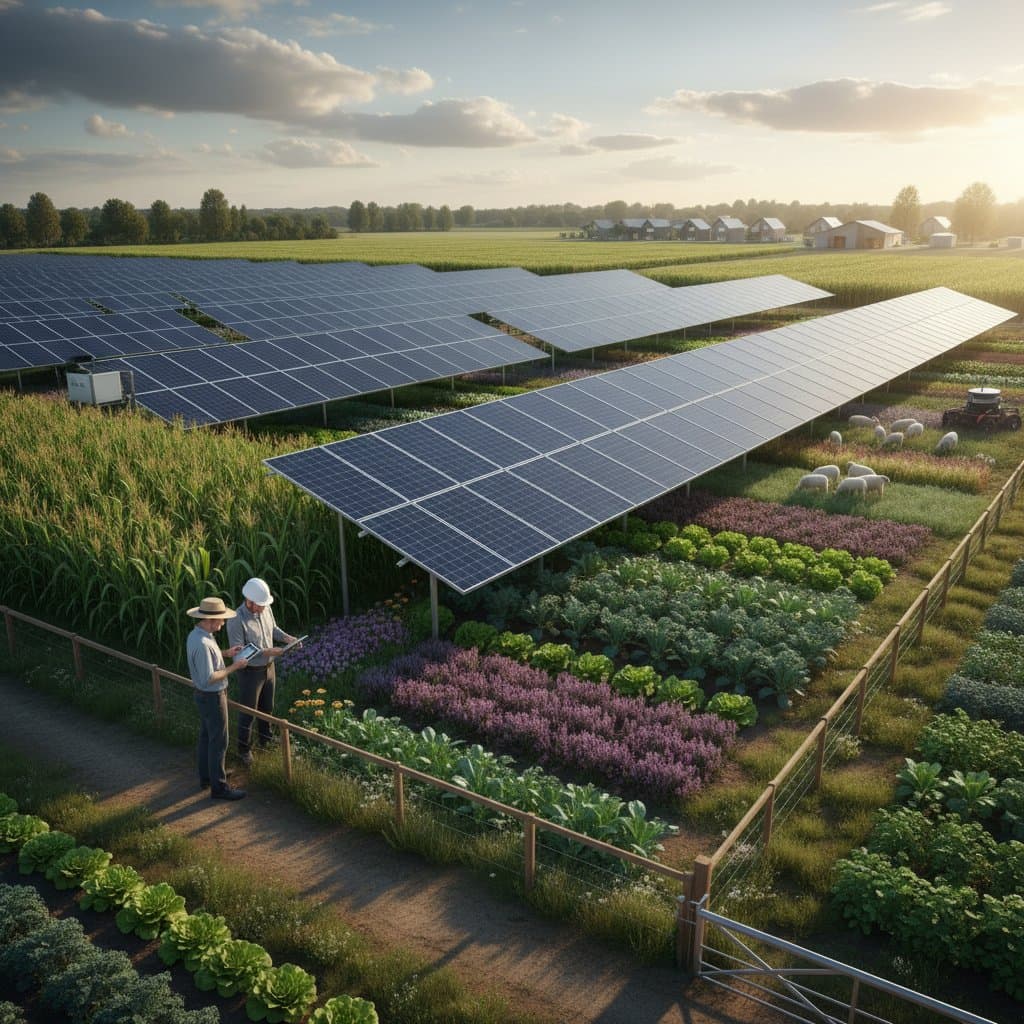
Agrivoltaics: Integrating Solar Energy and Agriculture
Solar energy and agriculture share a common foundation: the land. Agrivoltaics, or dual-use solar, allows photovoltaic systems to coexist with crop cultivation or livestock grazing. This integration optimizes land resources, mitigates climate risks for farmers, and contributes to regional clean energy targets.
In Pennsylvania, where farmland conservation intersects with renewable energy mandates, agrivoltaics emerges as a practical solution. Projects must navigate agricultural preservation regulations alongside solar development incentives. Effective implementation demands precise planning and partnerships among farmers, engineers, and municipal officials.
Safety Considerations in Dual-Use Systems
Agrivoltaic installations merge farming activities with electrical systems, creating unique safety challenges. Only certified electricians may handle installation or maintenance of electrical elements. Farmers and support staff must refrain from accessing junction boxes or altering connections without proper qualifications.
Primary Electrical Risks
- Electric shock and arc flash: Direct contact with live components can result in severe or fatal injuries. Personnel should always confirm power isolation using a non-contact voltage tester prior to adjacent work.
- Ground faults: Compromised insulation on cables or fittings may direct current into the ground or conductive surfaces. Systems require ground fault circuit interrupters, tested on a scheduled basis.
- Inadequate bonding: Metal frameworks, barriers, and housings demand secure connections to the grounding system. Deficient bonds heighten the risk of electrical hazards.
- Unapproved alterations: Modifications to cabling, panel angles, or inverters compromise safety certifications and breach regulatory standards.
To minimize risks, delineate responsibilities clearly. Farmers oversee planting, watering, and animal care. Electricians manage electrical inspections and repairs. Schedule activities to prevent overlap near active electrical zones.
Optimizing Energy Output and System Configuration
Unlike conventional solar arrays, agrivoltaic designs prioritize harmony between energy generation and agricultural productivity. Factors such as panel elevation, angle, separation, and alignment influence both electricity yield and crop health. Engineers balance these elements to support sustainable operations.
Essential Design Elements
- Raised mounting structures: Panels typically elevate to 8 through 12 feet to accommodate machinery or grazing. Engineers recalibrate for wind and weight stresses at increased heights.
- Flexible panel angles: Mechanisms enable seasonal adjustments to maximize sunlight for plants and panels alike. Options range from manual repositioning to automated controls.
- Cable safeguarding: Secure wiring beyond reach of livestock and shield from physical wear. Employ approved conduits and tension-relief hardware.
- Water management: Panel overhangs alter drainage; site grading ensures even flow to avoid water accumulation or soil loss.
Compliance with local codes, zoning rules, and electrical standards remains essential. The relevant authority, such as the township building department, oversees permitting and verification processes.
Applications and Examples in Pennsylvania
Pennsylvania's rich farming tradition aligns well with agrivoltaics, offering a pathway to honor preservation efforts while expanding solar capacity. In areas with strict limits on solar installations, dual-use approaches satisfy requirements by sustaining crop or pasture activities and retaining scenic views.
Pilot initiatives illustrate diverse applications. Certain projects feature tall panel arrays over forage crops. Others incorporate grazing sheep beneath partially elevated setups. Initial findings indicate consistent power generation alongside simplified weed management. Participants note decreased thermal stress for livestock and savings on equipment fuel for field maintenance.
These demonstrations highlight the potential for scaled adoption, provided stakeholders adhere to established guidelines and foster developer-farmer alliances.
Daily Operations and Maintenance Procedures
Successful agrivoltaic sites rely on structured collaboration between agricultural and energy teams. Develop a formal operations manual that assigns duties and outlines safety verification steps.
Standard Monitoring Tasks
- Examine fasteners, rust, and cable integrity regularly.
- Review ground connections at least quarterly.
- Wash panels using plain water and soft implements; select cleaning agents that pose no risk to surrounding vegetation.
Managing Vegetation and Animals
- Establish buffer areas free of growth around electrical panels.
- Install tailored barriers to deter livestock from cables.
- Restrict equipment operation near buried or exposed lines.
Adapting to Seasons
Adjust panel orientations or introduce new crops as needed. Record all updates to support regulatory adherence and efficiency analysis. Electrical adjustments require oversight from licensed specialists.
Broader Impacts on Environment and Communities
Agrivoltaics advances environmental and social priorities simultaneously. It cuts greenhouse gases, bolsters food security, and safeguards countryside aesthetics. Planting native flowers beneath panels enhances pollination and habitat diversity. Panel shade mitigates temperature extremes for field workers and herds.
This model proves renewables can complement rather than displace farming. Engaging communities through site visits, performance reports, and shared equity arrangements builds support. Visible examples of productive land under panels often dispel initial doubts.
Guidance for Prospective Implementers
Individuals with land suitable for agrivoltaics should start with an assessment of site potential. Evaluate energy demands, land size, and intended uses like row crops or pastures. Consult county agricultural extensions or conservation offices for expert advice. Select installers experienced in dual-use configurations.
Prior to agreements, verify alignment with zoning and secure approvals from local enforcers. Request documentation on required distances, permits, and end-of-life protocols.
Agrivoltaics demands integrated planning across disciplines. Ensure all electrical parts carry approvals, connections undergo testing, and personnel follow isolation protocols. Commissioning requires electrician confirmation of grounding and protective devices.
Properly executed, agrivoltaics yields dependable electricity and robust yields. It harnesses sunlight for dual purposes, illustrating how innovation sustains both energy and agriculture on shared terrain.