
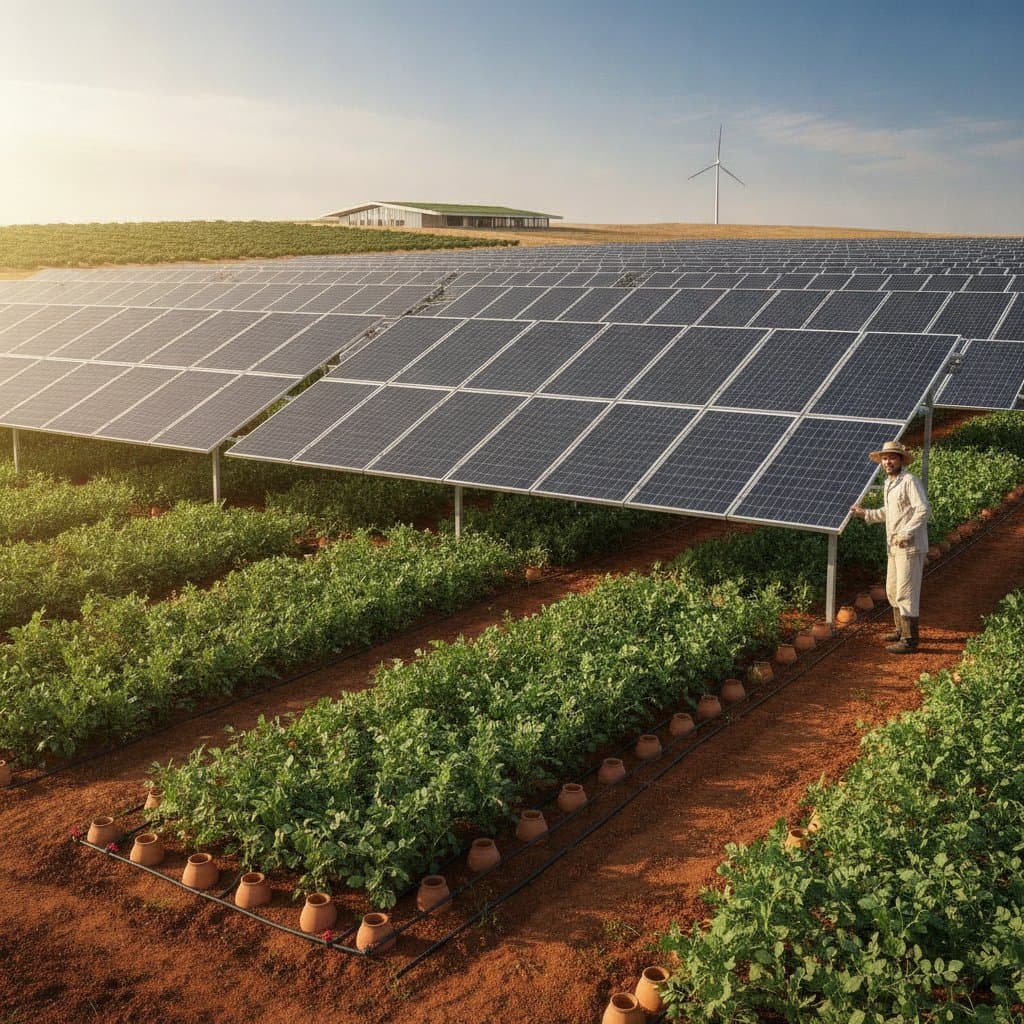
Future of Farming: Solar Panels That Grow Food Too
Many farmers seek ways to increase income while protecting soil and managing weather risks. Agrivoltaics, also known as dual-use solar, allows solar panels and crops to occupy the same land. This method produces electricity and food from a single area.
Panels mounted six to twelve feet high with appropriate spacing permit sufficient light and airflow for plants below. Crops such as lettuce, spinach, kale, and peppers often thrive in the partial shade. The arrangement creates cooler microclimates that reduce water loss.
Benefits of Dual-Use Solar Systems
Solar arrays deliver steady revenue through power generation or lease payments. Land that continues to yield crops increases overall returns per acre. This approach avoids full conversion of farmland to energy production alone.
Local communities retain productive open space and support pollinator habitats. Reduced reliance on fossil fuel plants follows from on-site clean energy. Regions facing land constraints gain both food security and electricity capacity.
Technical Design Elements
Elevated racks hold panels at angles that alternate sunlight and shade zones. Inverters convert direct current from the panels into grid-compatible alternating current. Soil moisture levels rise under the arrays because evaporation decreases.
Designers calculate panel height, row spacing, and tilt using local solar data and crop requirements. Single-axis trackers can further adjust angles throughout the day. These choices maintain energy output while supporting plant growth.
Financial Considerations and Support
Installation costs range from 2.50 to 3.25 dollars per watt because of taller structures and reinforced foundations. Federal tax credits and state programs frequently offset 30 to 50 percent of expenses. Payback periods typically fall between six and ten years when electricity savings and crop revenue combine.
On-site power use for irrigation or cooling accelerates returns. Battery storage integration reduces dependence on backup generators during outages.
Implementation Process
Successful projects follow a clear sequence of steps. Site assessment evaluates sunlight patterns, soil conditions, and machinery access. Energy analysis reviews prior utility bills to determine system size.
Detailed design matches panel layout to crop light needs. Permitting and utility interconnection follow. Installation protects soil structure and drainage. Ongoing monitoring tracks both power production and crop performance.
Ecological and Community Outcomes
Shaded soil preserves organic matter and limits erosion. Native plantings between rows attract beneficial insects. Sheep grazing manages vegetation without mechanical equipment.
Local employment grows in installation, maintenance, and agricultural roles. Schools gain living laboratories for renewable energy and farming studies.
Addressing Common Concerns
Equipment clearance improves when rows receive adequate spacing and panel height matches machinery needs. Pilot installations of limited size demonstrate results before full commitment. Partnerships with experienced developers shift initial costs through lease arrangements.
Demonstration sites help growers observe actual crop quality and energy data. Record keeping of yields and output supports adjustments in spacing or crop selection.
Starting an Agrivoltaic Project
Collect twelve months of electricity data and identify full-sun field sections. Consult designers familiar with agricultural installations. Request specifications that include panel height, tilt, and coverage ratios.
Review available incentives in your state. Compare combined energy and crop scenarios. Visiting operating systems provides practical insight into daily management.
Individual projects that pair food production with clean energy strengthen local economies and environmental resilience.