
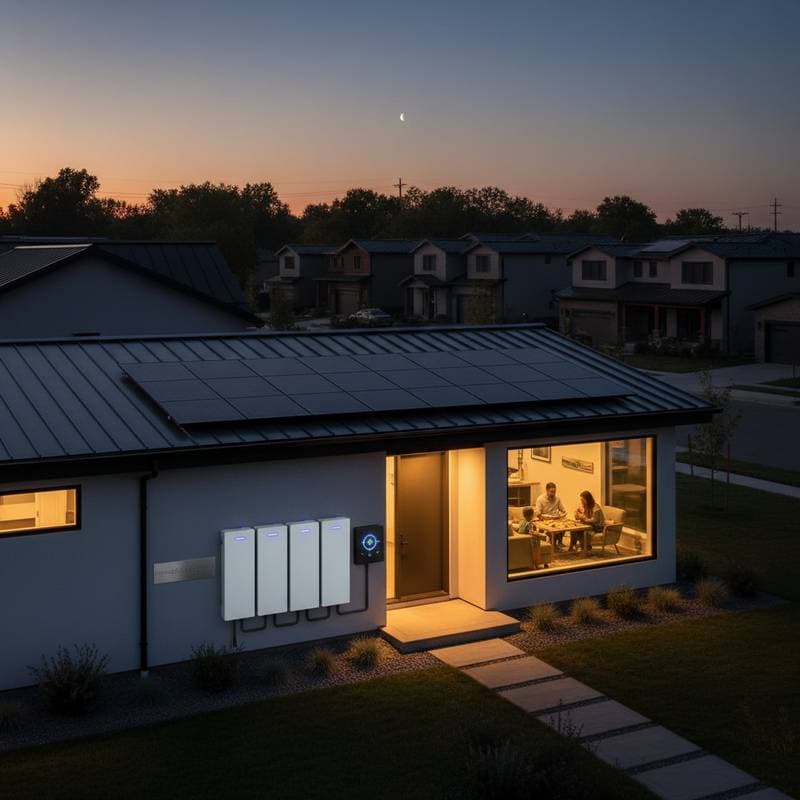
2025 Blackouts Fueling Home Backup Surge
Homeowners increasingly prioritize power security in light of recent blackouts. These events, triggered by extreme heat, severe storms, or infrastructure failures, reveal the vulnerabilities of local grids. Power loss disrupts safety, food preservation, remote work, and daily comfort, prompting a widespread shift toward resilient energy solutions.
Reliable backup power no longer requires extensive property or high costs. Advances in battery storage, intelligent controls, and renewable integration enable essential appliances to operate during outages. Beyond emergency preparedness, these systems promote energy autonomy, reduced utility bills, and environmental benefits through decreased fossil fuel reliance.
How Backup Systems Work
Backup systems rely on stored electricity to sustain household needs when the grid fails. Typical configurations feature a battery bank charged by solar panels or the utility grid. An automatic transfer switch detects outages and seamlessly redirects power to critical circuits within seconds.
Basic Components
- Battery pack. Lithium iron phosphate batteries offer safety and longevity, while nickel manganese cobalt variants provide higher energy density.
- Inverter. This device transforms the battery's direct current into alternating current compatible with standard home appliances.
- Transfer switch. It isolates the home from the grid and activates battery power to prevent backfeeding and ensure safety.
- Monitoring software. Real-time dashboards display energy consumption, battery charge levels, and predictive alerts for optimal management.
- Optional solar panels. These enable off-grid charging, extending system independence during prolonged blackouts.
Consider a practical scenario: A 10-kilowatt-hour battery supports a 1-kilowatt load for approximately 10 hours. Essential devices such as a 150-watt refrigerator, 100-watt lighting setup, and 75-watt fan total 325 watts, allowing the battery to sustain them for over 30 hours. Integrating solar panels harnesses sunlight to recharge continuously, potentially eliminating recharge limitations on clear days.
Incentives and Rebates
Available incentives vary by region, yet several programs ease the financial burden of installation.
- Federal tax credits. Systems incorporating solar charging qualify for up to 30 percent credit on costs, applied directly to federal taxes.
- State rebates. Many states offer fixed rebates, such as $200 per kilowatt-hour of battery capacity, to offset initial expenses.
- Utility incentives. Programs reward smart batteries that export excess energy to the grid during peak demand, providing bill credits.
- Low-interest loans. Green banks and energy efficiency initiatives supply financing at rates below 4 percent, often with flexible repayment terms.
Verify installer certification before commitment to ensure smooth incentive processing. Request details on qualification criteria and required paperwork, such as energy audits or system specifications, to maximize savings.
Performance and Longevity
Contemporary batteries endure extensive use with warranties spanning 10 years or 6,000 charge cycles. Annual capacity loss averages 2 to 3 percent under normal conditions. Optimal performance demands temperature control between 32 and 95 degrees Fahrenheit; built-in software regulates charging to minimize wear.
Unlike gas generators, solar-battery setups operate silently without emissions or mechanical noise, ideal for enclosed spaces like garages. Maintenance involves quarterly inspections: clean surfaces, update firmware, and confirm ventilation paths remain unobstructed.
High Impact Upgrades for Energy Resilience
Targeted enhancements yield substantial efficiency gains and outage preparedness.
- Roof-mounted solar with battery integration. Generates daily savings while safeguarding against blackouts.
- Heat pump heating and cooling. Delivers three times the efficiency of traditional systems, conserving battery life.
- Heat pump water heater. Cuts energy use for hot water by at least 60 percent compared to electric resistance models.
- Advanced insulation and sealing. Stabilizes indoor climates, reducing load on backup power.
- Expandable battery storage. Enhances capacity for growing needs, bolstering overall grid independence.
Implementing these upgrades can halve reliance on grid power, sustain comfort through extended outages, and elevate property value by 5 to 10 percent in energy-conscious markets.
Mid-Tier and Starter Actions
Incremental changes build resilience without immediate large investments.
Medium Impact Options
- Install a smart thermostat to automate temperature adjustments and avoid peak-hour surges.
- Upgrade attic insulation to R-49 levels, minimizing heat loss by up to 20 percent.
- Seal ducts and apply window films to enhance thermal efficiency and comfort.
- Switch to variable-speed pumps for pools or wells, drawing 50 percent less power.
Low Cost Starters
- Convert to LED bulbs, which use 75 percent less energy than incandescents.
- Deploy smart power strips to eliminate phantom loads from idle devices.
- Opt for cold-water laundry cycles to save 90 percent of washing energy.
- Replace HVAC filters monthly and add weatherstripping to doors.
- Caulk gaps around windows and outlets to prevent drafts.
These measures reduce overall consumption, enabling smaller, more affordable backup systems to meet essential demands effectively.
Everyday Habits for Reliable Power
Pair advanced equipment with disciplined practices to optimize performance. During outages, deactivate unnecessary items to conserve battery reserves. Minimize refrigerator openings and align high-energy tasks, like cooking, with solar production windows.
With grid access restored, consult your system's dashboard to pinpoint usage spikes. Reschedule loads such as dishwashing to off-peak periods, potentially qualifying for time-of-use discounts that lower monthly bills by 15 to 20 percent.
Maintenance and Long-Term Care
Conduct seasonal reviews to sustain system reliability. Scan the monitoring interface for error codes and ensure dust-free operation. Professionally test transfer switches annually by inducing a controlled outage.
For solar-equipped setups, wash panels biannually and prune overhanging branches. Log monthly production data to identify trends, such as a 5 percent output drop signaling cleaning needs. Subscription services from installers often include automated diagnostics and on-site support.
Next Steps for Homeowners
- Analyze bills. Compile 12 months of utility statements to map peak usage and average daily kilowatt-hours.
- Conduct shade analysis. Hire a professional to evaluate roof suitability for solar, factoring in seasonal sun paths.
- Solicit quotes. Obtain at least three proposals specifying identical system sizes, incentive applications, and warranty coverage.
- Review utility policies. Confirm net metering rules and explore time-of-use tariffs for cost optimization.
- Anticipate growth. Design for scalability to accommodate future additions like electric vehicles or induction stoves.
These preparations ensure precise system sizing, preventing inefficiencies and supporting a pathway to sustained energy security.
FAQ
How long can a battery backup sustain my home? Duration varies by capacity and consumption. A 10-kilowatt-hour unit powers critical loads for 10 to 30 hours, based on selected appliances.
Is it possible to retrofit batteries onto existing solar panels? Affirmative. Compatible inverters facilitate additions; consult an installer for compatibility checks and necessary upgrades.
What maintenance do batteries demand? Requirements remain minimal: ensure cleanliness, adequate ventilation, and regular software updates per manufacturer guidelines.
Are backup systems safe for indoor use? Lithium systems pose low risk when professionally installed, featuring sealed designs that eliminate fire hazards.
Can batteries charge from the grid? Yes, they draw power from the grid during low-rate periods or solar during daylight, discharging as needed for outages or peak pricing.