
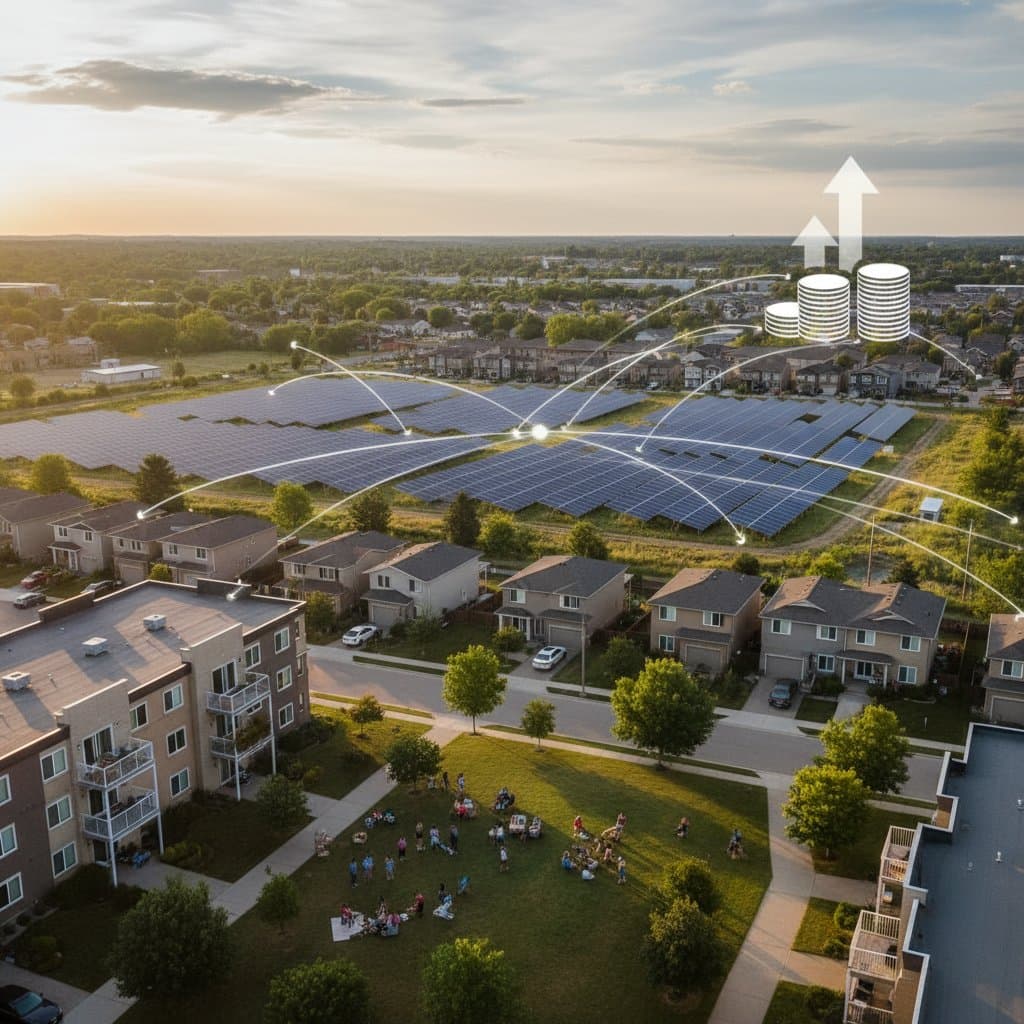
Understanding Community Solar
Community solar programs offer a practical solution for individuals seeking the advantages of solar energy without the need for personal installations. These initiatives allow subscribers to access clean power -site solar arrays. Participants receive credits on their utility bills, making renewable energy available to renters, homeowners in shaded areas, or those with unsuitable roofs.
This approach democratizes solar benefits, ensuring that more people contribute to a sustainable energy future. Local solar farms or rooftops host the panels, and the energy produced feeds into the grid. Subscribers share in the output proportional to their participation level.
How Community Solar Operates
Utility companies partner with solar developers to establish community projects, often on unused land or commercial buildings. Once operational, the array generates electricity that the utility purchases and distributes. Subscribers sign up through their provider and receive monthly bill credits based on a percentage of the system's production.
For example, a household might subscribe to a 100-kilowatt share in a larger array. This share entitles them to credits equivalent to the energy that share produces, typically offsetting 5 to 10 percent of their annual electricity use. The utility handles all metering and credit application automatically.
Programs vary by state, with some offering virtual net metering to ensure fair allocation. Participants do not own panels but enjoy similar financial perks. Maintenance falls to the project operator, freeing subscribers from upkeep responsibilities.
Key Benefits for Participants
One primary advantage lies in cost savings. Subscribers often see reductions of 10 to 20 percent on their electricity bills, depending on local rates and program terms. These credits provide predictable savings, shielding against rising energy prices.
Accessibility stands out as another benefit. Renters and apartment dwellers, who represent a significant portion of the population, gain entry to solar without landlord approval or capital investment. Upfront costs remain minimal, with subscriptions functioning like a utility add-on service.
Environmental impact proves substantial. By supporting solar development, participants reduce reliance on fossil fuels and lower greenhouse gas emissions. A single community project can offset thousands of tons of carbon annually, equivalent to planting extensive forests or removing numerous vehicles from roads.
Economic ripple effects include job creation in installation, operations, and maintenance. Local economies benefit from these positions, which often pay above-average wages in the renewable sector.
Steps to Join a Community Solar Program
First, check availability in your area by contacting your utility provider or visiting state energy office resources. Many regions, including parts of the Northeast and Midwest, host active programs. Confirm eligibility, as some utilities limit participation to specific customer classes.
Next, review subscription options. Programs typically offer shares sized to match average household consumption, with contracts spanning 10 to 20 years. Evaluate the expected savings using online calculators provided by developers, which factor in your usage history.
Sign up through the utility's portal or by phone. Provide basic account information, and select your desired share size. The process mirrors adding a new service, with credits appearing on your first bill cycle after enrollment.
Monitor your participation via annual statements that detail energy production and credits earned. Some programs allow adjustments if your needs change, ensuring flexibility over time.
Long-Term Value of Community Solar Participation
Engaging in community solar fosters energy independence and resilience. As solar technology advances, production efficiency improves, potentially increasing credit values for existing subscribers. This model scales easily, enabling broader adoption of renewables without widespread infrastructure changes.
Participants contribute to grid stability by diversifying energy sources. Solar output peaks during daylight hours, aligning with high demand periods and reducing strain on traditional power plants. Over time, this integration supports lower overall system costs for all utility customers.
Ultimately, community solar bridges the gap between individual action and collective impact. Households secure financial relief while advancing clean energy goals. This shared approach ensures equitable access, empowering diverse communities to embrace sustainability.