
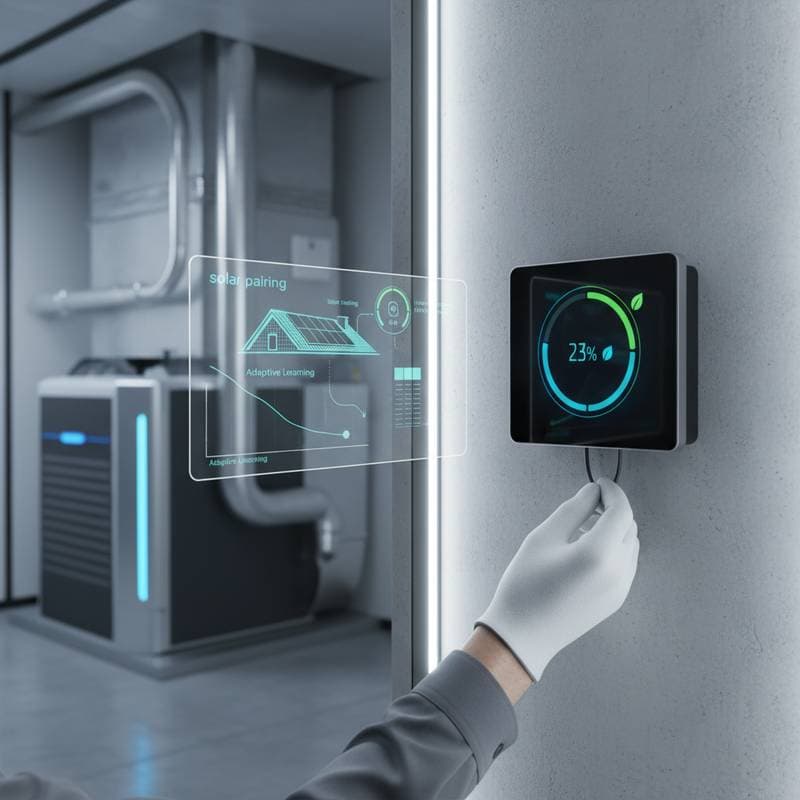
Achieve 23 Percent Energy Savings with Leading 2025 Smart Thermostats
Homeowners often question whether smart thermostats deliver substantial energy savings. The prospect of reducing heating and cooling costs by nearly one-quarter proves attractive, yet concerns about installation, system compatibility, and dependability frequently deter adoption. The newest smart thermostats address these issues through advanced adaptive learning, accurate sensors, and integration with real-time utility information, minimizing energy waste while maintaining optimal indoor comfort.
Core Mechanisms of Smart Thermostats
Smart thermostats rely on integrated sensors and sophisticated algorithms to align heating and cooling operations with actual occupancy patterns. Temperature sensors track indoor conditions continuously, while motion and humidity detectors assess activity and environmental factors. Through Wi-Fi connectivity, these devices access current weather forecasts and preemptively adjust settings to respond to external changes.
Machine learning enhances performance significantly. Within the initial days of operation, the thermostat identifies routines such as wake-up times, departures, and returns. It generates a dynamic schedule that predicts these behaviors. Geofencing technology activates energy-conservation modes when a smartphone leaves a predefined area, and restores preferred temperatures upon approach.
Such automation eliminates inefficient operation during unoccupied periods. Additionally, the system refines settings according to humidity levels, sunlight exposure, and equipment response times. Consequently, operational hours decrease, and comfort levels stabilize without abrupt fluctuations.
Quantifying Tangible Energy Savings
Heating and cooling account for approximately half of a typical household's energy consumption. For a home with an electricity rate of 18 cents per kilowatt-hour and monthly usage of 900 kilowatt-hours, monthly costs reach 162 dollars. A 23 percent efficiency gain translates to roughly 37 dollars in monthly savings, or 444 dollars annually.
Savings arise from multiple optimized functions:
- Adaptive scheduling that curtails unnecessary system runtime.
- Weather forecasting integration that moderates adjustments ahead of temperature shifts.
- Occupancy sensing that reduces output in vacant spaces.
- Demand response features that secure utility rebates during peak demand periods.
Utility incentive programs commonly provide 50 to 100 dollars in rebates for eligible installations. Combined with yearly reductions, these devices often offset initial expenses within the first year of use.
Key Features in 2025 Smart Thermostat Models
Leading 2025 models offer enhanced energy analytics and broader system integration. Homeowners evaluating options should prioritize these three attributes.
-
Broad HVAC System Compatibility
Traditional thermostats occasionally required additional wiring or adapters for legacy setups. Current designs incorporate advanced power management to support diverse configurations, including variable-speed heat pumps and dual-fuel systems, with minimal modifications. -
Advanced Learning Algorithms
Earlier generations depended on static schedules. Newer algorithms process ongoing sensor data to improve forecast accuracy, enabling precise pre-heating or pre-cooling and reducing the need for manual interventions. -
Seamless Utility Data Integration
Numerous utilities now transmit pricing information directly to thermostat applications. Users gain visibility into time-of-use rates and can automate shifts to off-peak periods. Certain models execute these optimizations independently, maximizing savings with minimal user input.
Detailed Savings Example for a Standard Home
Examine a 2,100-square-foot residence in a temperate climate, consuming 12,000 kilowatt-hours annually, with 50 percent allocated to climate control.
- Climate control usage: 6,000 kWh
- Rate: 18 cents per kWh
- Yearly HVAC expense: 1,080 dollars
A 23 percent reduction conserves 1,380 kWh annually. At the prevailing rate, this yields 248 dollars in savings per year.
Assuming a device cost of 180 dollars plus 50 dollars for installation, the total investment amounts to 230 dollars. Payback occurs in under one year, calculated as investment divided by annual savings. Subsequent years yield unencumbered financial benefits from sustained efficiency.
Step-by-Step Installation Process
Contemporary smart thermostats facilitate self-installation for most users. Begin by disconnecting power at the breaker. Label existing wires meticulously, attach them to the new baseplate, and secure the unit. Connect to Wi-Fi via the companion mobile application, which prompts entry of system details, fan settings, and initial preferences.
Complex wiring or high-voltage systems, such as baseboard heaters, warrant professional assistance to ensure safety. HVAC technicians frequently bundle thermostat installation with scheduled service appointments.
Post-installation, allow several days for calibration. The device analyzes usage habits, establishes baseline temperatures, and initiates automated adjustments. Position sensors away from obstructions and verify robust Wi-Fi coverage for optimal functionality.
Synergies with Solar Systems and Smart Home Ecosystems
Smart thermostats complement solar installations effectively. During peak solar generation in midday hours, the device precools interiors using surplus renewable energy, avoiding grid reliance during evening peaks. Reduced solar output from overcast conditions prompts conservative settings to preserve resources.
Compatibility with broader smart home networks expands capabilities. Voice-activated assistants enable on-demand modifications. Paired with intelligent vents and room sensors, the system achieves zoned precision. Comprehensive energy interfaces merge thermostat metrics with solar production data, providing holistic consumption insights.
Ensuring Durability and Ongoing Performance
Maintenance demands remain minimal for smart thermostats. Regularly update firmware via the application to access enhancements and optimizations. Wipe sensors lightly to preserve sensor precision. Swap batteries in auxiliary wireless components as indicators signal depletion.
Manufacturers typically extend warranties from three to five years. With minimal mechanical elements, reliability proves high. Protect against electrical surges by incorporating safeguards for connected HVAC components.
Strategies to Maximize Thermostat Efficiency
Evaluate your utility's pricing structure first. For time-of-use plans, configure the thermostat to prioritize operations during lower-rate windows. Implement setbacks of four to six degrees during absences. Review application-generated energy reports to assess pre- and post-installation consumption patterns and refine settings accordingly.
Smart thermostats provide an accessible route to diminished energy expenses. By merging analytical prowess, seamless automation, and intuitive interfaces, these tools elevate home efficiency. When integrated with solar arrays or upgraded HVAC systems, benefits accumulate progressively over time.
Frequently Asked Questions
How much monthly savings can households anticipate?
Most users realize 15 to 25 percent reductions in heating and cooling expenses, influenced by regional climate and behavioral patterns.
Do smart thermostats support legacy furnaces or air conditioning units?
Compatibility extends to the majority of systems. Antiquated setups might require a simple power adapter, obtainable through installation specialists.
Is installation of a smart thermostat challenging?
Standard low-voltage configurations install in approximately 30 minutes, aided by wire labeling and application tutorials.
Does a smart thermostat require Wi-Fi connectivity?
Wi-Fi enables remote access, usage tracking, and adaptive weather responses. Absent connectivity, basic programmable functions persist.
Can several thermostats coordinate in one home?
Multi-zone configurations link multiple units via a unified application, synchronizing settings across areas like floors or wings.