
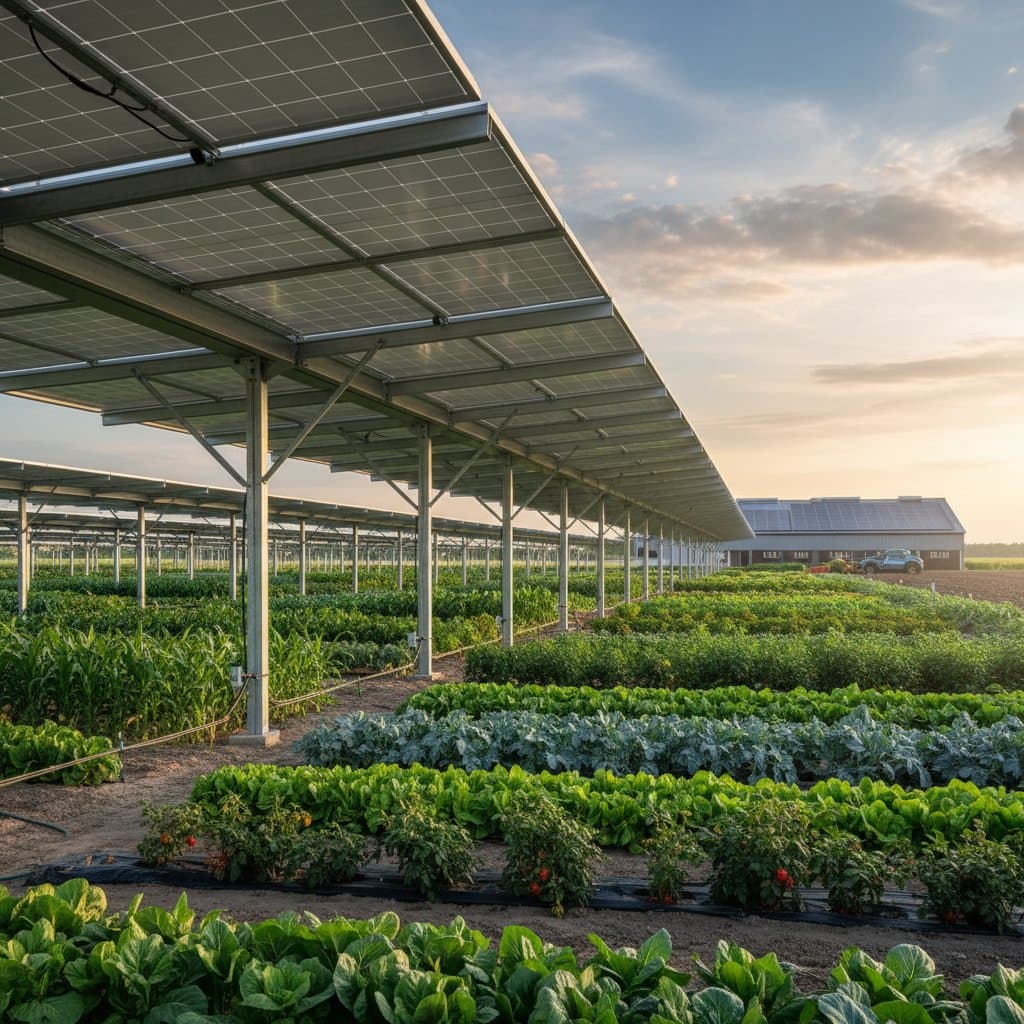
Solar Panels Enhance Farm Yields: A 2025 Breakthrough
Farmers traditionally viewed solar panels as competitors for valuable farmland. The prospect of installing equipment over open fields appeared to conflict with the essential need for unobstructed sunlight. However, numerous farms now demonstrate a contrasting reality. Thoughtfully spaced and elevated solar panels shield plants, preserve soil moisture, and elevate yields. This revelation shifts perspectives within agricultural communities toward embracing renewable energy.
Integrating Solar Energy with Agriculture
Agriculture depends on solar energy for growth. Harnessing sunlight to generate both food and electricity aligns seamlessly with this foundation. The practice, termed agrivoltaics or dual-use solar, enables farmers to produce clean power while sustaining land productivity. Elevated solar arrays permit sunlight to penetrate to the crops beneath.
Advantages extend past energy efficiency. Farmers secure additional revenue, mitigate risks from fluctuating fuel costs, and provide steadier growing conditions. As climate variability intensifies, this integrated method delivers durability without sacrificing arable land.
The Mechanics of Dual-Use Solar Systems
Solar panels transform sunlight into electricity through a process where photons strike the silicon surface, dislodging electrons that flow through circuits to generate current. In agrivoltaic setups, panels receive strategic tilting and spacing to optimize energy production alongside crop illumination requirements.
Consider a 250-kilowatt system, which generates approximately 1,300 kilowatt-hours per kilowatt annually, yielding about 325,000 kilowatt-hours total. Valued at 18 cents per kilowatt-hour, this translates to roughly 58,500 dollars in savings or income, prior to fixed charges.
Installations feature panels mounted eight to ten feet above ground level, higher than typical rooftop configurations. This elevation accommodates tractor passage and worker access. Inverters manage voltage regulation and performance tracking, complemented by sensors that oversee crop health and energy metrics.
Research-Backed Evidence of Yield Improvements
Initial research indicates that partial shading from solar panels alleviates plant stress. Crops such as lettuce, spinach, and peppers experience reduced water loss under diffused light. Soil temperatures remain cooler, slowing evaporation rates. One study reported shaded areas requiring 14 percent less irrigation while sustaining or exceeding yields.
Forage crops exhibit comparable outcomes. Clover and alfalfa beneath solar canopies show modest yield gains and improved post-harvest recovery. Panels function as microclimate moderators, diminishing peak heat and wind impacts.
Outcomes vary by location. Factors including latitude, terrain slope, and soil composition dictate the ideal shade-to-light ratio. Nonetheless, consistent trends prompt broader adoption among farms.
Investment, Incentives, and Return on Investment
Dual-use solar installations incur higher expenses than conventional ground-mounted systems due to reinforced elevated structures. Costs typically fall between 2.20 and 2.80 dollars per watt. For a 250-kilowatt array, upfront investment ranges from 550,000 to 700,000 dollars before incentives.
Government programs, including federal tax credits, state grants, and renewable energy certificates, cover 30 to 50 percent of expenses. Certain utilities provide payments based on kilowatt-hour production.
Combining energy offsets with crop enhancements, payback periods average seven to ten years. Thereafter, electricity becomes cost-free for the system's lifespan, often surpassing 20 years. Ongoing maintenance remains minimal following initial setup and inspections.
Additional Benefits for Farms and Ecosystems
Agrivoltaic adopters observe enhancements exceeding yield and utility savings. Cooler soils and diminished evaporation reduce irrigation demands, conserving water and fuel for pumping. Shaded areas benefit livestock by alleviating heat stress during grazing.
Panels shield soil from intense rainfall, curbing erosion on inclined terrains. Decreased dust and wind preserve organic soil content. Such ecological improvements promote sustained fertility and enhance biodiversity.
Financially, diversified income sources buffer against variable crop performance. Revenue from electricity offsets shortfalls during challenging seasons, providing stability for family-operated farms reliant on steady finances.
Launching a Dual-Use Solar Initiative
Initiate with a comprehensive shade and site evaluation to pinpoint optimal panel locations without compromising prime crop areas. Gather 12 months of utility statements to gauge energy demands accurately. Solicit bids from several solar installers to verify competitive pricing and uniform projections for solar exposure, inverter performance, and grid connection protocols.
Engineers simulate light penetration for crops, targeting at least 70 percent of full sunlight for optimal growth. Selectable systems incorporate panels that adjust angles seasonally to accommodate planting and harvesting.
Permitting coordinates agricultural and energy authorities, streamlined by increasing agrivoltaic acceptance. Post-installation, remote monitoring tracks operations. Routine upkeep entails annual panel cleaning, post-storm mount inspections, and vegetation control to prevent shading.
Broader Impacts on Rural Life and Economies
Agrivoltaic projects influence farm operations and community dynamics. They illustrate the compatibility of renewable energy and agriculture, inspiring local adoption. Rural areas benefit from employment in installation, electrical work, and upkeep roles. Educational visits to sites connect energy and farming concepts for students.
This model suits diverse farm scales. Small-scale vegetable operations may begin with 20-kilowatt installations, whereas expansive enterprises expand to megawatt capacities. All configurations maintain land utility and output.
Practical Steps for Agrivoltaic Adoption
Farmers interested in agrivoltaics benefit from methodical preparation. Key actions include:
- Arrange a professional assessment of sun paths and soil viability.
- Investigate regional incentives via energy departments or extension services.
- Evaluate funding through leases, loans, or power purchase agreements.
- Consult neighboring farmers with solar setups for insights on successes and challenges.
- Assign personnel for ongoing system oversight and maintenance planning.
Strategic implementation yields dependable revenue, resilient crops, and reduced emissions. Collective efforts strengthen rural networks and advance sustainable energy frameworks.
Frequently Asked Questions
What defines agrivoltaics?
Agrivoltaics involves utilizing land simultaneously for solar electricity generation and agricultural activities, such as crop cultivation or livestock rearing.
Do solar panels obstruct excessive sunlight?
Panels receive precise spacing and orientation to permit sufficient light passage. Crops generally access 70 to 90 percent of typical sunlight levels.
Are panels compatible with farm machinery below?
Structures elevate above standard heights, ensuring safe clearance for tractors and harvesting equipment.
Which crops thrive under solar panels?
Leafy greens, berries, forage varieties, and herbs adapt well to partial shade. Regional conditions determine the most suitable selections.
What is the typical installation timeline?
Following permit approval, medium-sized systems complete in several months.
Does maintenance pose significant challenges?
Tasks include panel washing, wiring inspections, and plant trimming. These integrate readily into standard farm schedules.