
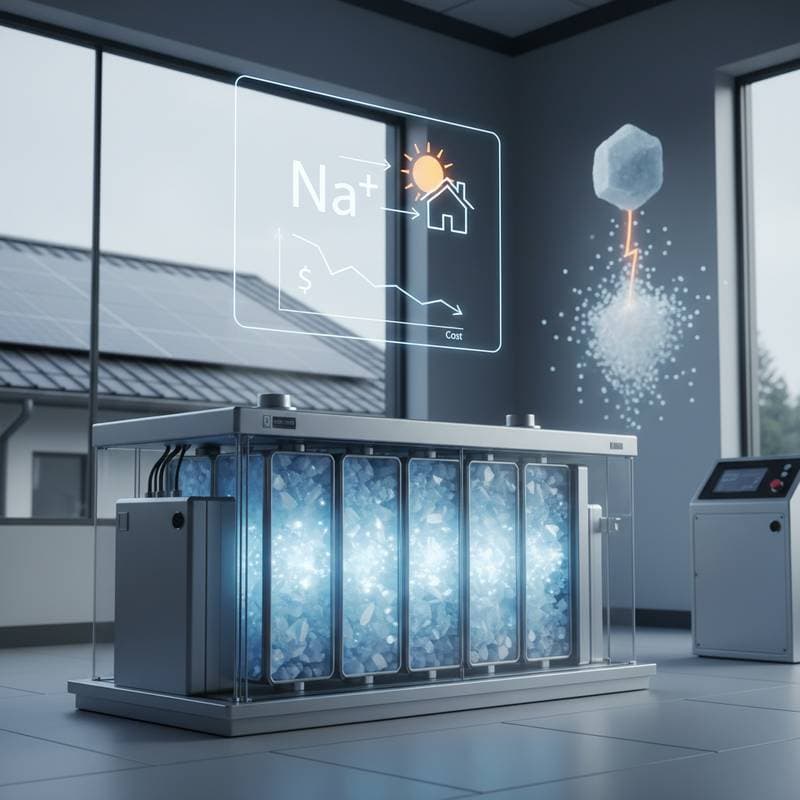
Sodium-Ion Batteries: A Cost-Effective Alternative to Lithium for Solar Storage in 2025
Homeowners increasingly explore sodium-ion batteries as a potential replacement for lithium-ion systems in solar energy storage. This technology presents an appealing option for those seeking to reduce expenses while adopting renewable energy. Sodium-ion batteries stand poised to transform residential and community-level clean energy storage, transitioning from research phases to widespread commercial availability.
Sodium-ion batteries differ from lithium-ion ones by relying on sodium, a plentiful element sourced from salt deposits worldwide. This accessibility contrasts with lithium's dependence on scarce minerals and intricate global supply chains. Consequently, sodium-ion batteries could decrease overall costs, bolster energy security, and broaden access to home storage solutions. To evaluate their suitability, consider their operational principles, performance metrics, and implications for solar-equipped homes.
Principles of Operation in Sodium-Ion Batteries
Sodium-ion batteries operate on principles akin to those of lithium-ion batteries. Ions shuttle between a positive cathode and a negative anode through an electrolyte medium. During charging, sodium ions migrate from the cathode to the anode; during discharge, they return, generating electrical power.
A primary engineering hurdle involves the larger size of sodium ions compared to lithium ions, which influences electrode material compatibility. This size disparity impacts energy density, defined as the energy capacity per unit of weight. Current sodium-ion batteries achieve 100 to 150 watt-hours per kilogram, whereas lithium-ion batteries attain 200 to 250 watt-hours per kilogram. As a result, sodium-ion units may require more space or weight to match equivalent storage volumes.
In fixed residential settings, such as garages or utility rooms, these dimensions pose minimal concerns. The economic advantages, including lower cost per kilowatt-hour, often offset any bulkiness, particularly in homes with ample installation area. Ongoing innovations in cathode materials, like layered oxides, and anode designs, such as hard carbon, enhance charging speeds and durability. Prototype evaluations indicate over 3,000 charge-discharge cycles, aligning with reliable lithium-ion performance and supporting approximately 10 years of daily use before significant degradation.
Evaluating Costs, Efficiency, and Longevity
Homeowners comparing sodium-ion and lithium-ion batteries must examine factors beyond initial pricing, including efficiency, cycle endurance, and upkeep requirements, to determine total ownership expenses.
Lithium-ion batteries typically exhibit round-trip efficiency of 95 percent, meaning nearly all input energy becomes usable output. Sodium-ion batteries operate at 90 to 92 percent efficiency, a modest reduction that may slightly elevate long-term energy expenditures. However, their substantially lower upfront costs frequently balance this trade-off.
Cycle life serves as a critical benchmark for durability. A sodium-ion battery with a 3,000-cycle rating, cycled daily, endures 8 to 10 years before capacity falls to 80 percent of original levels. Lithium-ion batteries often exceed 4,000 to 5,000 cycles, extending service to 10 to 12 years. If sodium-ion systems cost half as much, the additional longevity of lithium may not warrant the premium.
Consider a scenario where electricity rates average 24 cents per kilowatt-hour. A 10-kilowatt-hour lithium-ion battery, fully utilized daily, yields annual savings of about 870 dollars, totaling 8,700 dollars over 10 years. A comparable sodium-ion setup, despite minor efficiency losses, delivers similar net benefits with payback periods under 8 years, influenced by regional pricing and available rebates.
Practical Installation and Upkeep Considerations
The installation process for sodium-ion batteries mirrors that of lithium-ion systems closely. Professionals evaluate household energy patterns, verify electrical infrastructure, and scale the battery array to cover typical daily needs and emergency durations. Compatible inverters, cabling, and safety measures integrate seamlessly with existing solar setups.
Upkeep demands remain low for both technologies. Sealed units necessitate only routine firmware updates and diagnostic reviews. Optimal performance requires maintaining temperatures within specified ranges; positioning in shaded, ventilated areas prevents thermal stress.
Integrated monitoring applications provide real-time insights into charge status, usage patterns, and system vitality. Sodium-ion batteries demonstrate resilience across broader temperature variations, potentially reducing maintenance interventions in non-climate-controlled environments relative to lithium-ion alternatives.
Strategies for Maximizing Solar and Storage Benefits
High-Impact Measures
- Deploy a solar panel system calibrated to offset annual electricity consumption.
- Integrate a sodium-ion or lithium-ion battery for continuous power during evenings and blackouts.
- Transition to electric appliances, such as heat pump water heaters or HVAC units, to achieve comprehensive home electrification.
Medium-Impact Enhancements
- Incorporate a smart thermostat that aligns battery usage with peak solar generation.
- Bolster attic insulation to minimize demands on heating and cooling systems.
- Install an electric vehicle charger programmed to draw power during high solar output periods.
Accessible Low-Cost Initiatives
- Swap out incandescent lighting for energy-efficient LEDs throughout the home.
- Apply weatherstripping to windows and doors to prevent air infiltration.
- Employ smart power strips to eliminate phantom energy draw from idle devices.
These steps collectively foster energy efficiency and resilience. Sodium-ion batteries enhance this framework by providing economical storage that amplifies solar investments.
Frequently Asked Questions
What advantages do sodium-ion batteries offer over lithium-ion for solar storage?
Sodium-ion batteries provide lower costs due to abundant raw materials, improved safety with reduced fire risks, and enhanced cold-weather operation. They also support easier recycling, aligning with sustainable practices.
When will sodium-ion batteries become widely available for home use?
Commercial production ramps up in 2025, with initial deployments targeting residential solar integrations. Availability depends on manufacturer scaling and regional supply chains.
Are sodium-ion batteries suitable for all home solar systems?
Most modern solar inverters accommodate sodium-ion batteries with standard adaptations. Consult a certified installer to confirm compatibility with specific setups.
How do sodium-ion batteries impact solar payback periods?
By cutting storage costs by up to 50 percent, sodium-ion batteries shorten return-on-investment timelines to 6 to 8 years, varying by local incentives and usage patterns.
Can sodium-ion batteries handle extreme temperatures better than lithium-ion?
Yes, they perform reliably from -20 degrees Celsius to 60 degrees Celsius, making them ideal for diverse climates without additional cooling systems.
Unlocking Greener, More Affordable Energy Futures
Adopting sodium-ion batteries alongside solar panels positions households for substantial savings and environmental gains. This technology democratizes access to reliable clean energy, paving the way for widespread renewable adoption. As 2025 approaches, proactive planning ensures homes benefit from these advancements early.