
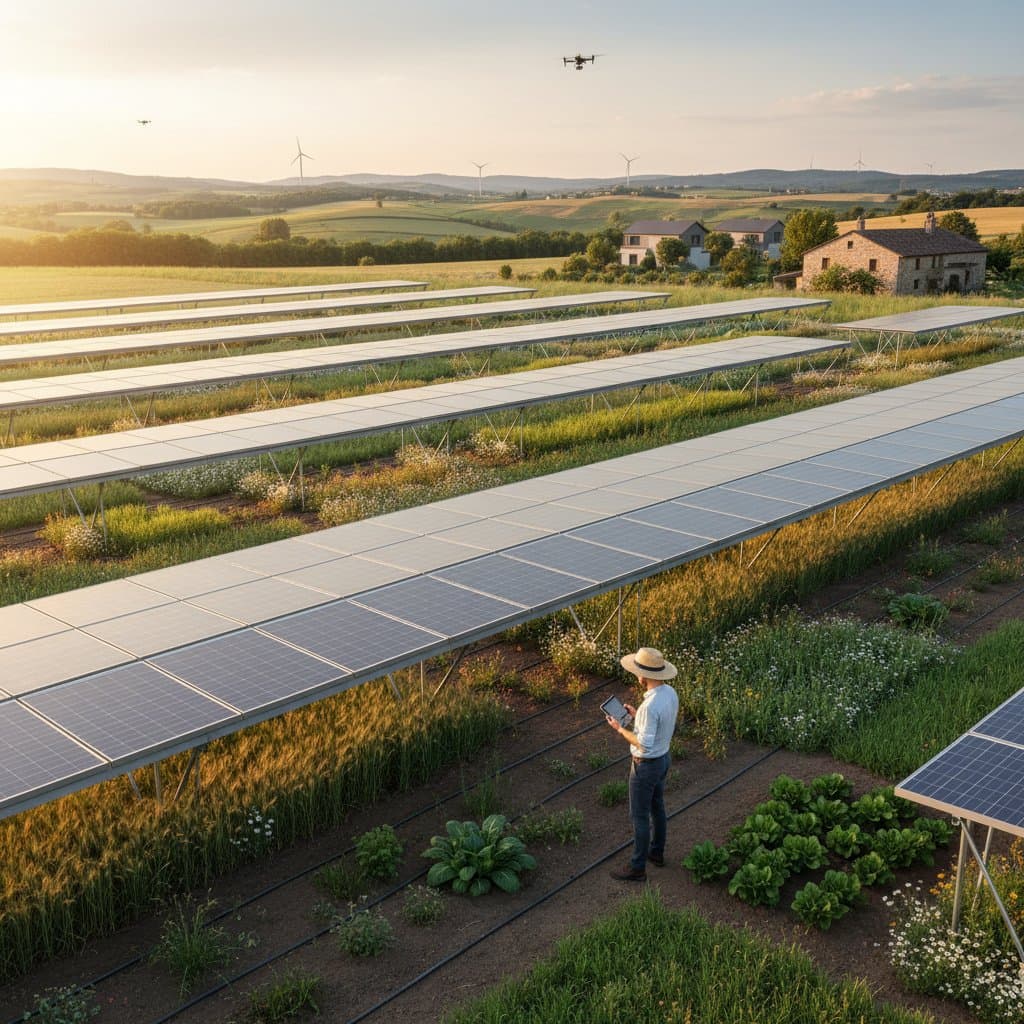
Integrating Solar Energy with Agriculture
Solar installations extend beyond rooftops and dedicated fields into rural and suburban areas. Emerging projects blend energy generation with farming practices in a model known as agrivoltaics. In this approach, solar panels coexist with crops on the same plot, advancing clean energy objectives while preserving soil fertility and farmer livelihoods.
This guide details the mechanics of agrivoltaic systems, highlights their advantages and potential obstacles, and outlines safe participation options for homeowners and communities. Although the idea appears straightforward, success hinges on precise engineering, electrical compliance, and agricultural expertise.
Prioritizing Safety in Electrical Systems
All solar setups carry inherent electrical risks. Landowners or participants in dual-use initiatives must recognize their boundaries to avoid hazards.
Professionals must handle all wiring, reconfiguration, or repairs of solar components.
Common electrical dangers encompass:
- Electric shock from exposed wires or degraded insulation.
- Arc faults resulting from insecure connections.
- Ground faults triggered by water infiltration in junction boxes.
- Overheating due to inadequate wiring size or insufficient airflow.
Homeowners may conduct basic visual checks for structural integrity, shading issues, or encroaching vegetation. However, electrical panels require sealing at all times. Certified electricians or solar specialists should assess grounding integrity, connection tightness, and inverter performance during operation.
The National Electrical Code mandates comprehensive grounding and bonding for photovoltaic arrays, including those in agrivoltaic configurations. Certain areas also demand emergency disconnect switches reachable by responders. Verify all local mandates with the authority having jurisdiction prior to any installation.
Accessing Solar Power Through Community Programs
Numerous agrivoltaic sites function as community solar ventures. Subscribers claim a share of the system's output, earning credits that offset utility costs. This arrangement benefits those without ideal rooftop space for personal panels.
Energy delivery involves these core processes:
-
Generation: Photovoltaic panels transform sunlight into direct current.
-
Inversion: Devices convert direct current to grid-compatible alternating current.
-
Metering and Delivery: Output passes through monitoring tools to integrate with the utility grid or a localized network.
Advanced metering enables subscribers to access real-time production metrics via online portals. Users track their allocations, calculate bill reductions, and confirm reliable energy flow.
Safety features at interconnection sites include circuit breakers, clear labeling, and emergency shutoffs. Only qualified electricians, approved by local authorities, perform these integrations.
Enhancing Environmental Sustainability and Resilience
Agrivoltaics fulfills diverse ecological aims simultaneously. Vegetated ground beneath panels fosters soil vitality and sequesters carbon. Crops capture atmospheric carbon dioxide, complemented by panels that displace fossil fuel use.
Key ecological gains feature:
-
Cooler ground surfaces relative to exposed-soil installations.
-
Minimized soil erosion from persistent vegetation.
-
Heightened biodiversity via habitats for pollinators.
-
Microclimate cooling that optimizes panel efficiency.
During droughts or intense rainfall, this land-sharing design mitigates stresses. Shaded areas conserve soil moisture, and directed panel drainage supports targeted watering setups.
Navigating Community Support and Regulations
Municipalities and farm bureaus increasingly back agrivoltaics via demonstration initiatives, funding opportunities, and land-use policy revisions. These measures clarify dual-purpose classifications and tax implications for involved properties.
Homeowners engage through subscriptions to community arrays or shared ownership models. Prior to commitment, evaluate:
-
Agreement details, such as duration and termination clauses.
-
Provider credentials, including licenses, coverage, and compliance history.
-
Protocols for ongoing care of plants, barriers, and electrical checks.
Inquire about adherence to National Electrical Code provisions and the role of external auditors in pre-launch validations.
Defining Homeowner Responsibilities
Individuals in community or adjacent solar efforts should grasp their duties and constraints.
Permissible homeowner tasks:
-
Track account statements and credit applications.
-
Examine perimeter fences, warning signs, and plant overgrowth.
-
Promptly notify operators of any impairments, odd sounds, or visible wire exposure.
Tasks reserved for experts:
-
Diagnostic electrical evaluations.
-
Adjustments to frameworks or mounting systems.
-
Configuration of inverters or synchronization with the grid.
Avoid tampering with protective mechanisms or accessing sealed units. In case of suspected issues, contact the site coordinator or a certified electrician without delay.
Insights from Specialists and Real-World Examples
Dr. Emily Foster, a researcher in agricultural energy systems, describes agrivoltaics as a vital link between renewables and food production. Her research indicates that combined land uses achieve crop outputs comparable to traditional methods, while supplying electricity for hundreds of households.
Licensed solar engineer David Ruiz stresses the need for embedded safety measures. He notes that every structural element and pathway in dual systems demands vigilant fault prevention through bonding and clear markings, which eases upkeep and averts incidents.
These perspectives underscore the importance of meticulous engineering and collaborative strategies in effective implementations.
Advancing Participation with Expert Guidance
Agrivoltaics promises expanding opportunities, yet participants, farmers, and technicians must uphold safety protocols and aligned objectives. When executed with accuracy, this fusion yields profound ecological and financial rewards.
To initiate involvement or host a site:
-
Engage a licensed electrician to scrutinize electrical schematics and earthing techniques.
-
Collaborate with an agricultural advisor to select crops suited to partial shade.
-
Secure approvals and inspections from the authority having jurisdiction to ensure code conformity.
This structured path empowers communities to harvest energy and sustenance from the same vital landscapes.