Solar Panels and Crops Share Land for Double Harvest
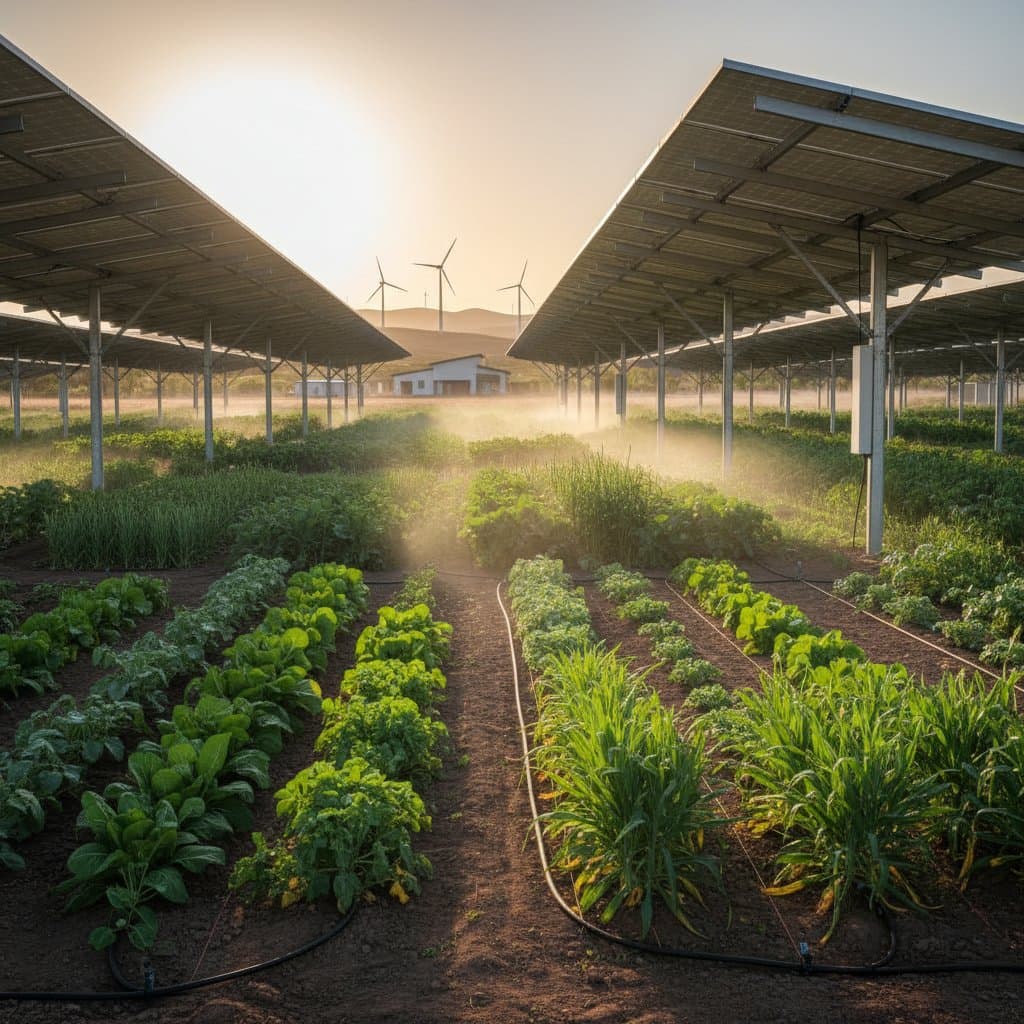
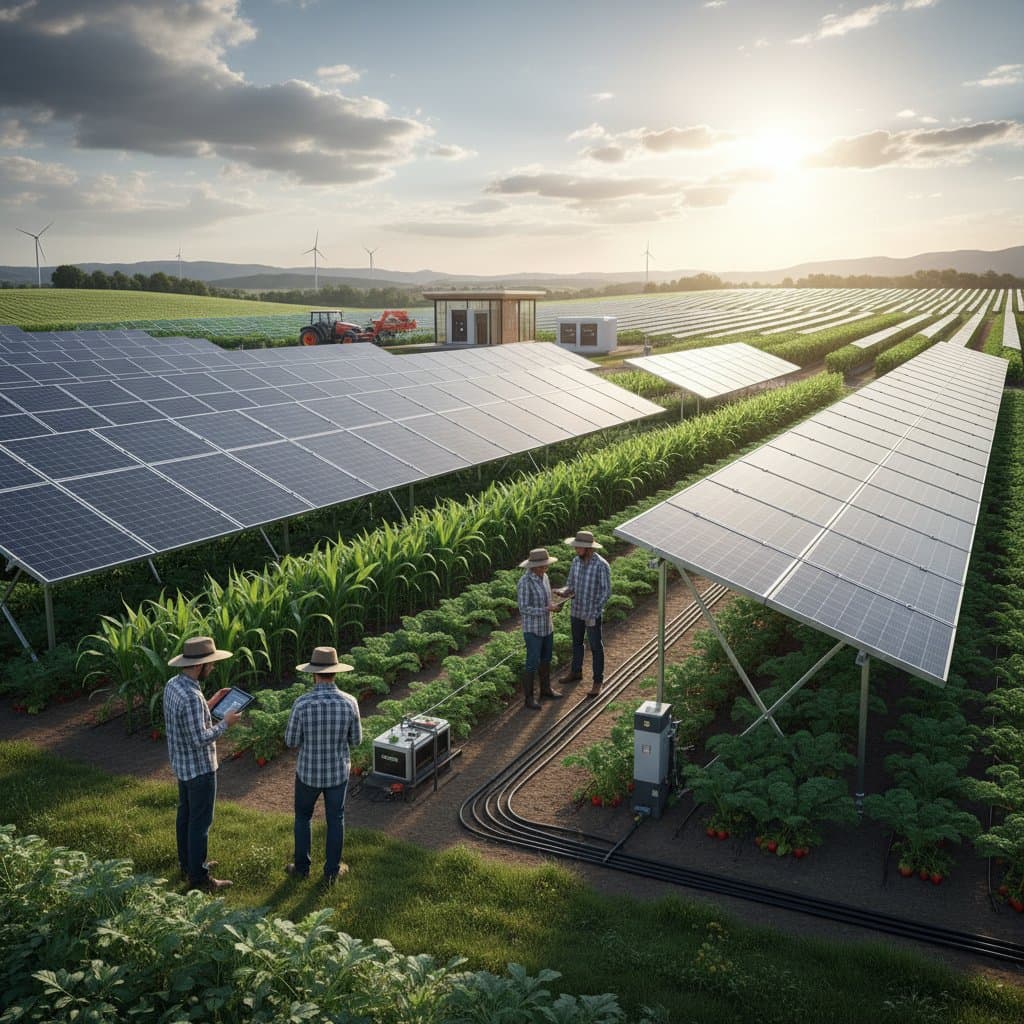
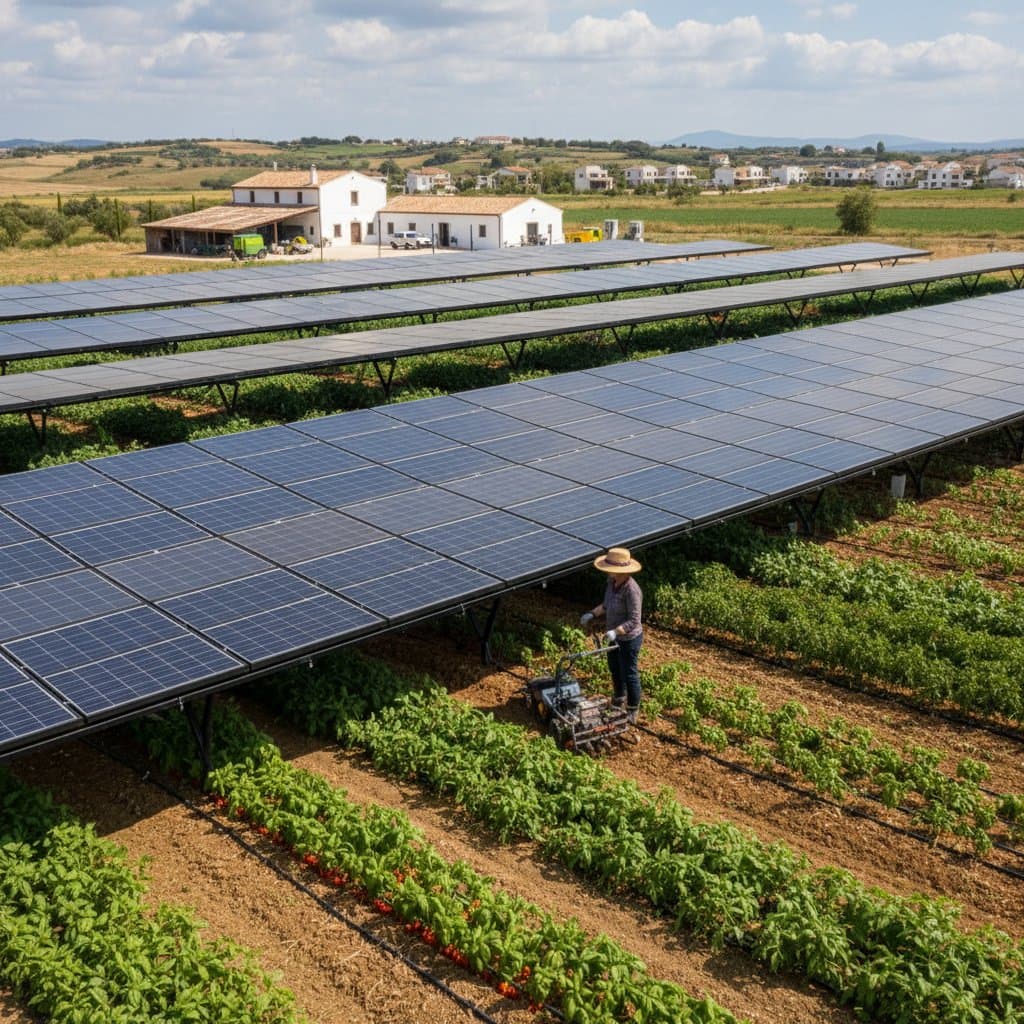
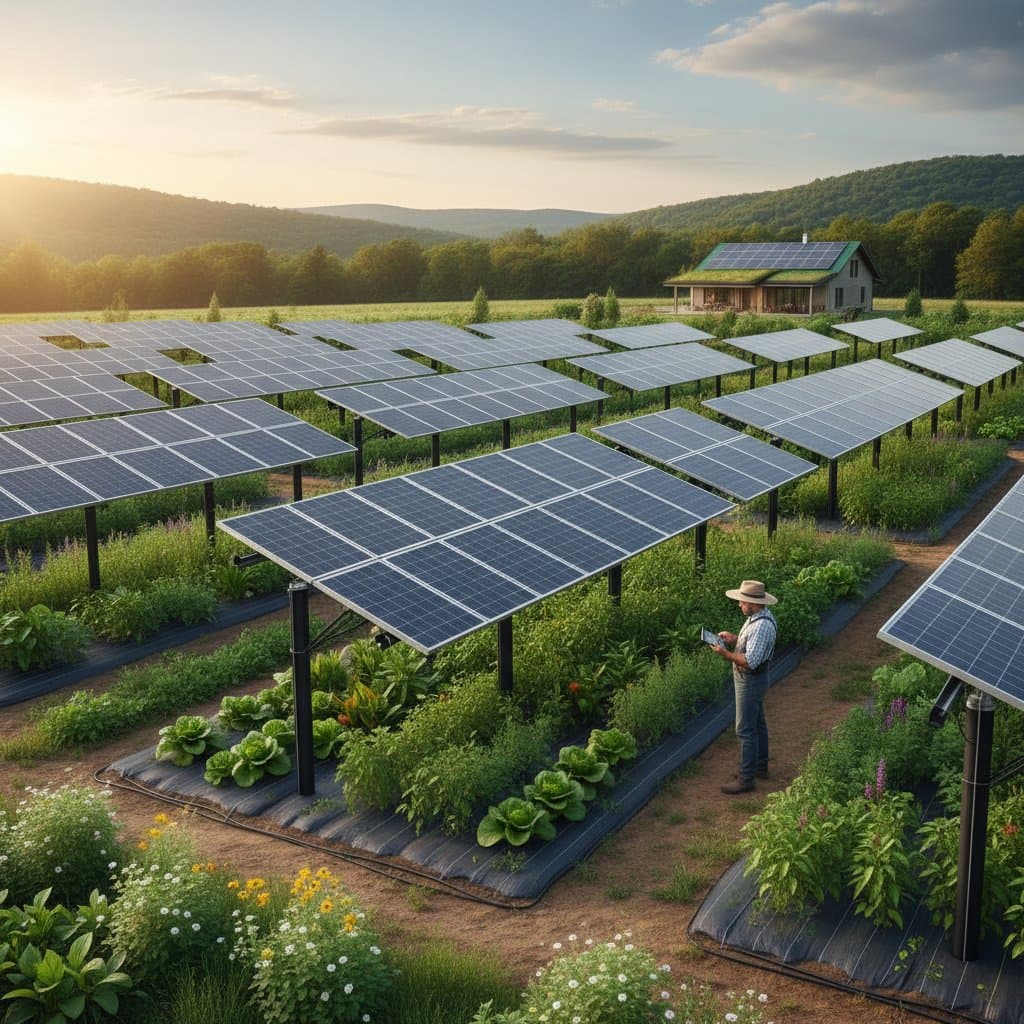
Agrivoltaics enables farmers to generate solar power and grow food on shared land. The approach raises income, improves soil conditions, and strengthens resilience against weather extremes.
Loading...
Articles tagged with farming
Agrivoltaics enables farmers to generate solar power and grow food on shared land. The approach raises income, improves soil conditions, and strengthens resilience against weather extremes.
Agrivoltaics merges solar energy and agriculture so crops and panels share the same land. Optimized designs let farmers generate power, maintain soil health, and increase income while incentives lower upfront costs.
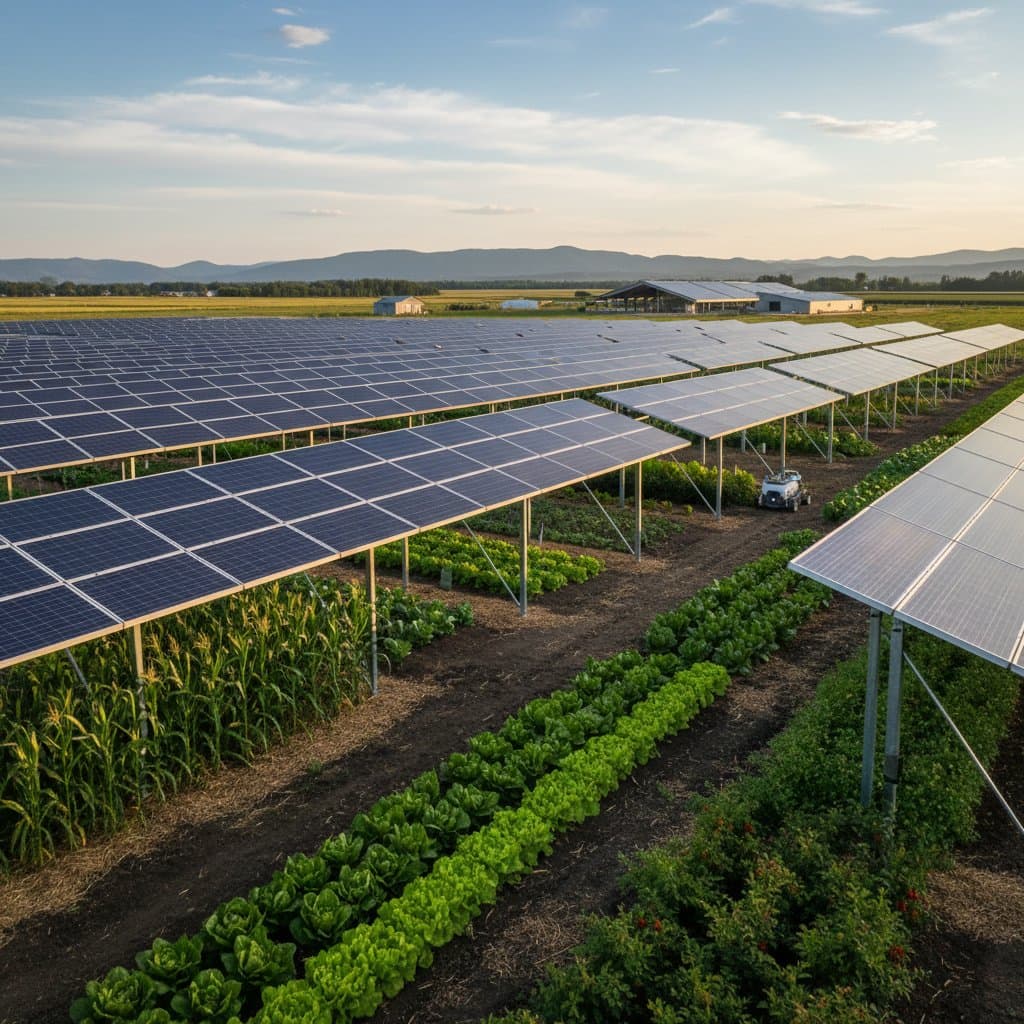
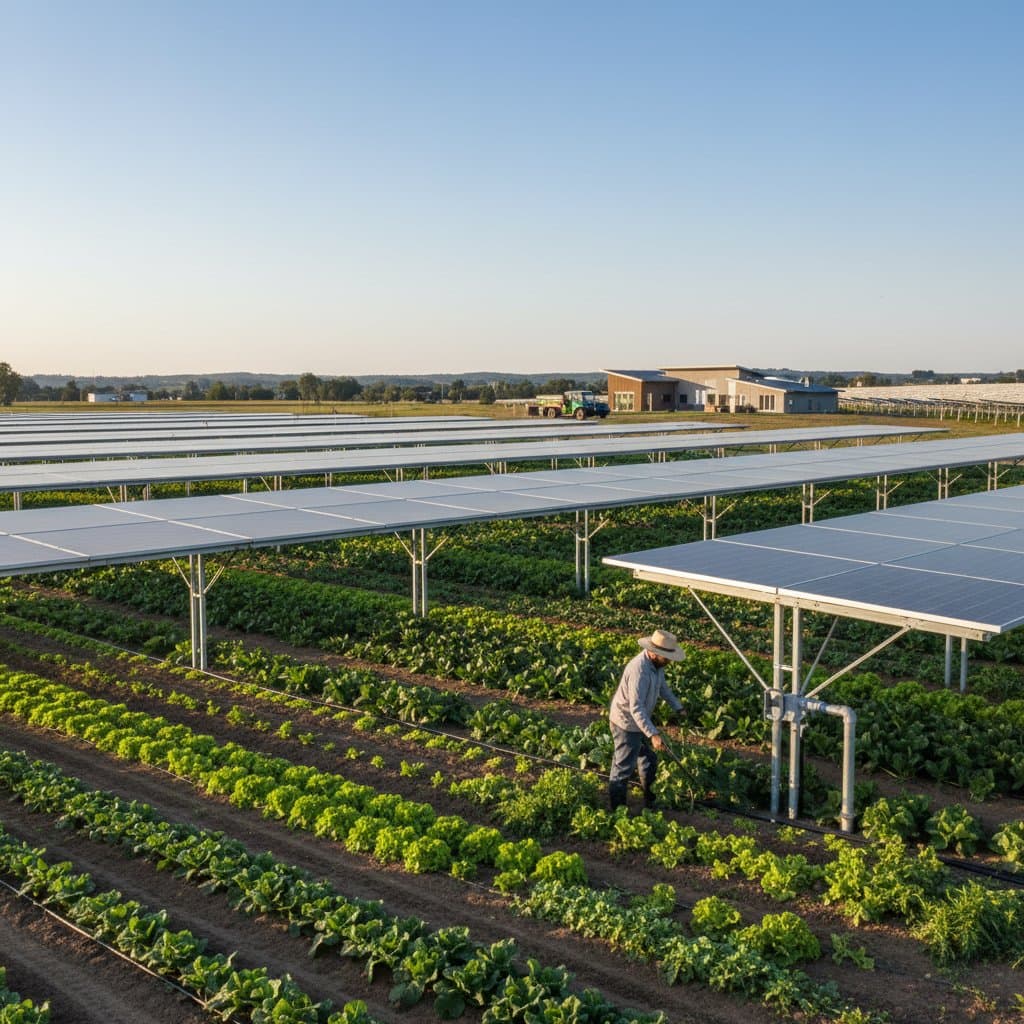
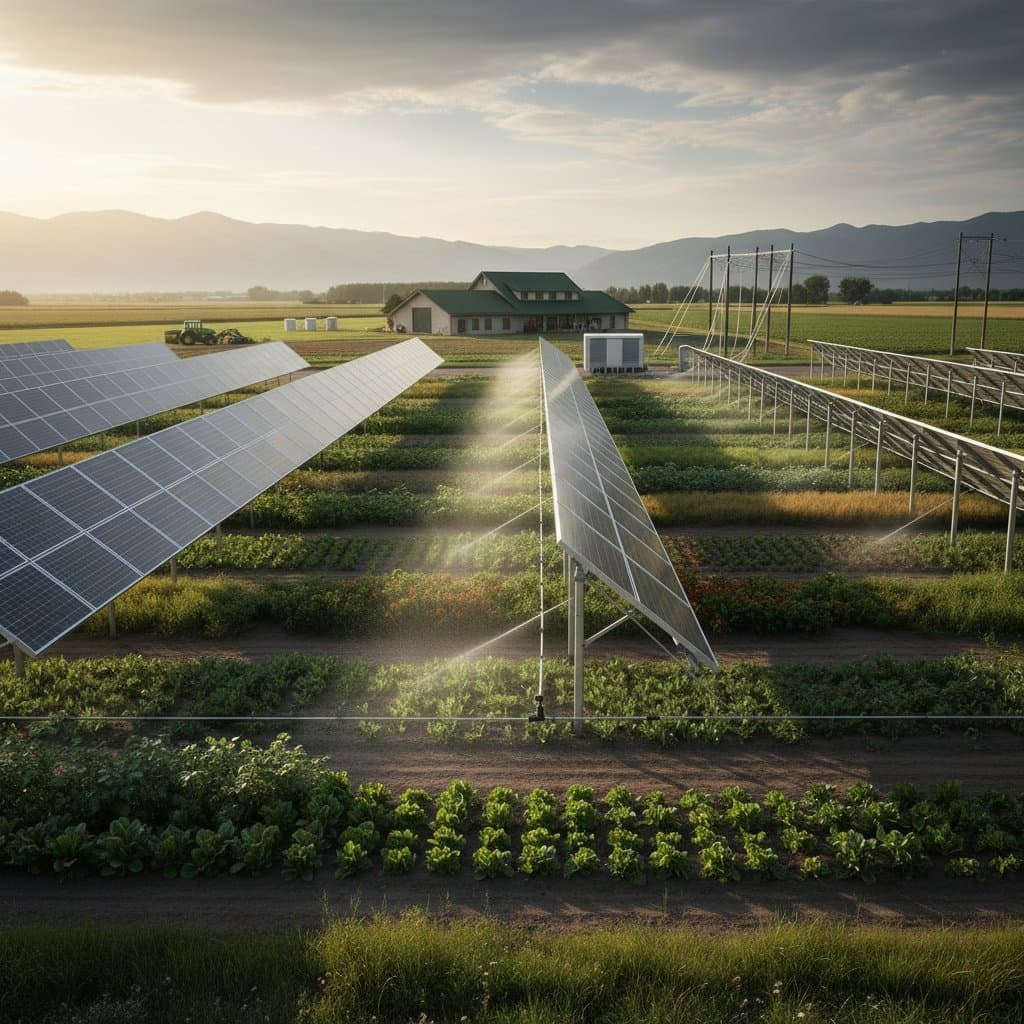
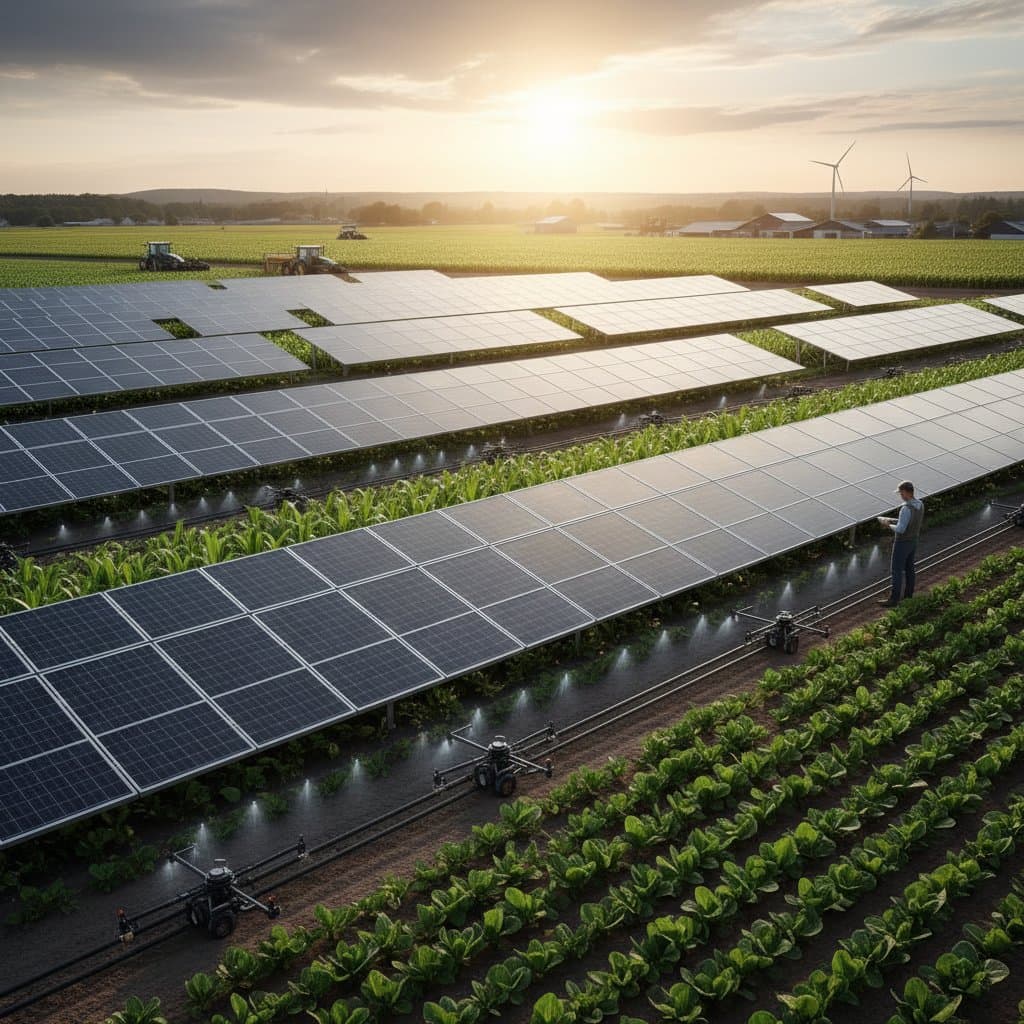
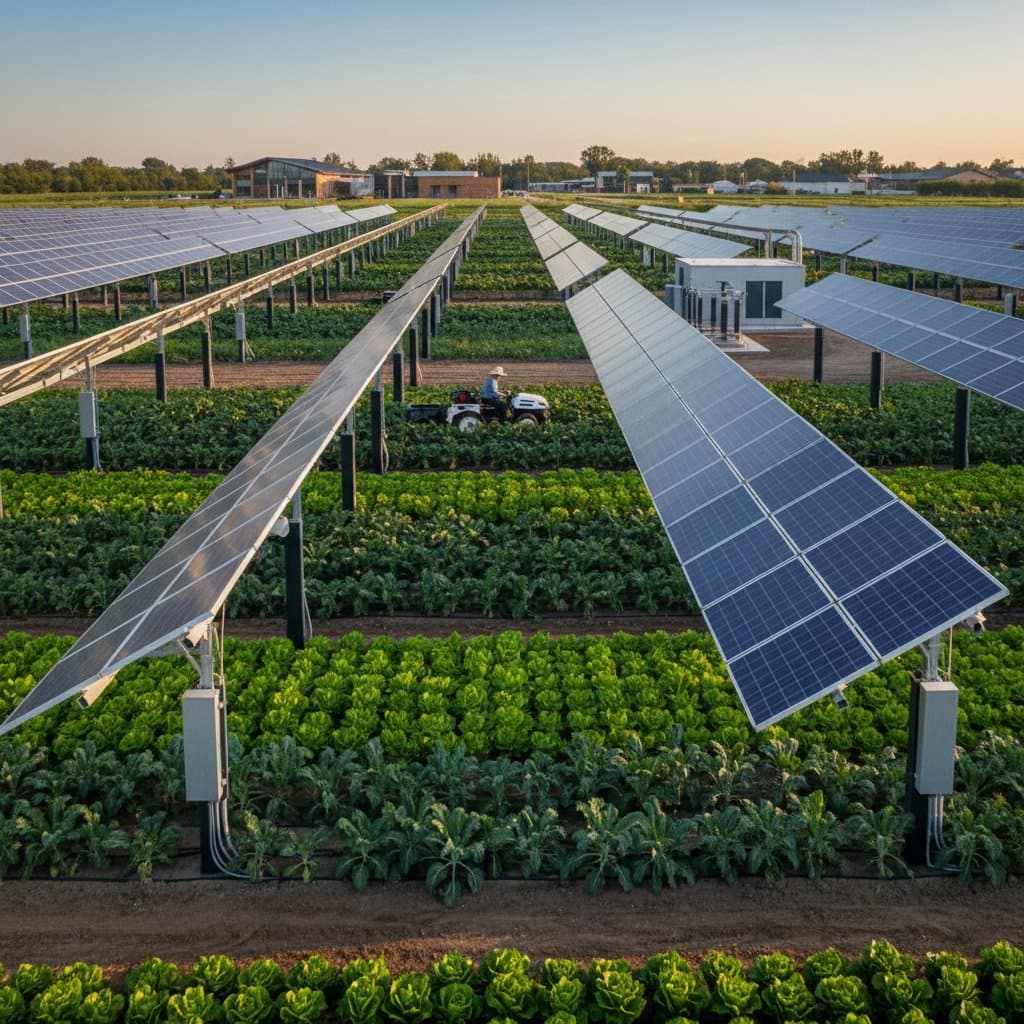
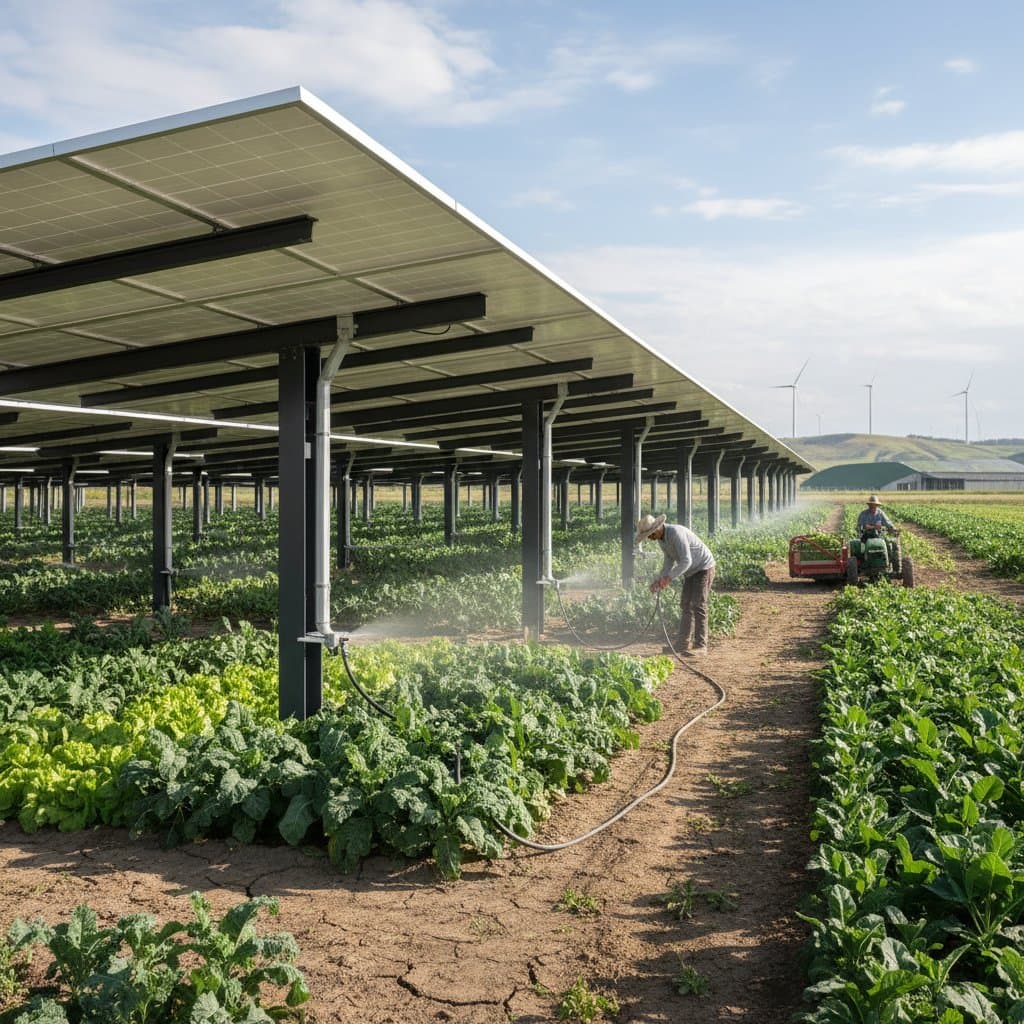
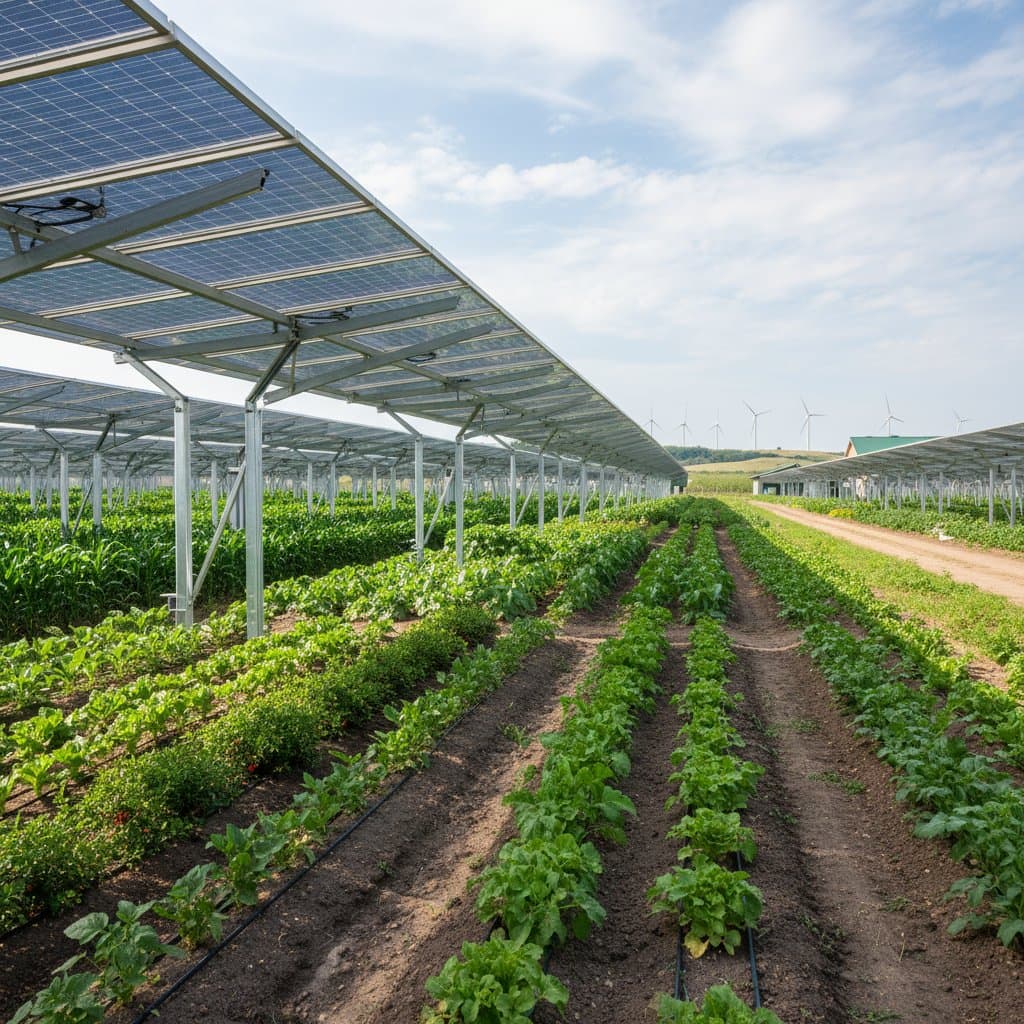
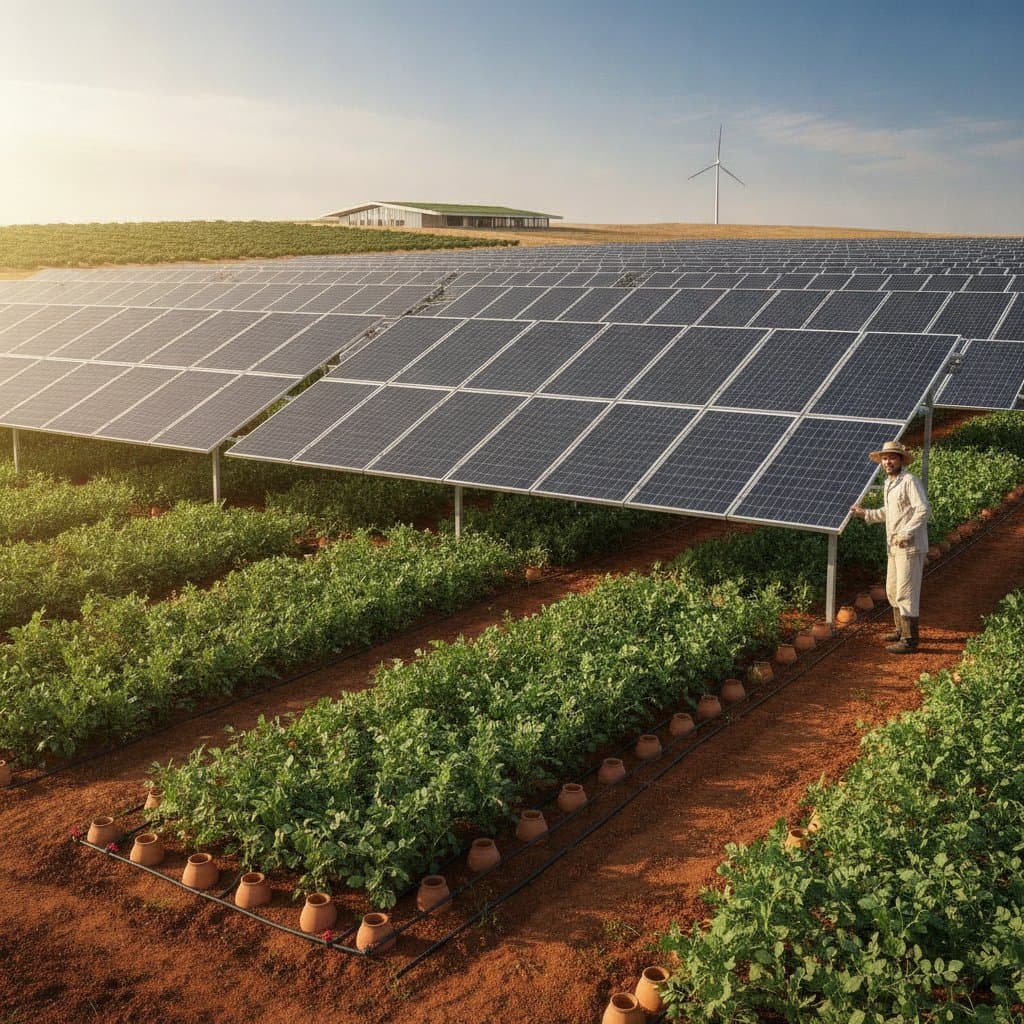
Agrivoltaics places elevated solar arrays above active farmland so growers produce food and electricity on the same acres. Partial shade lowers irrigation needs while lease payments or power sales strengthen farm finances.
Agrivoltaics merges farming and solar power on the same land. Farmers gain extra income, conserve water, and stabilize yields while generating electricity. Incentives and advancing technology make 2026 a pivotal year for this dual-use approach.
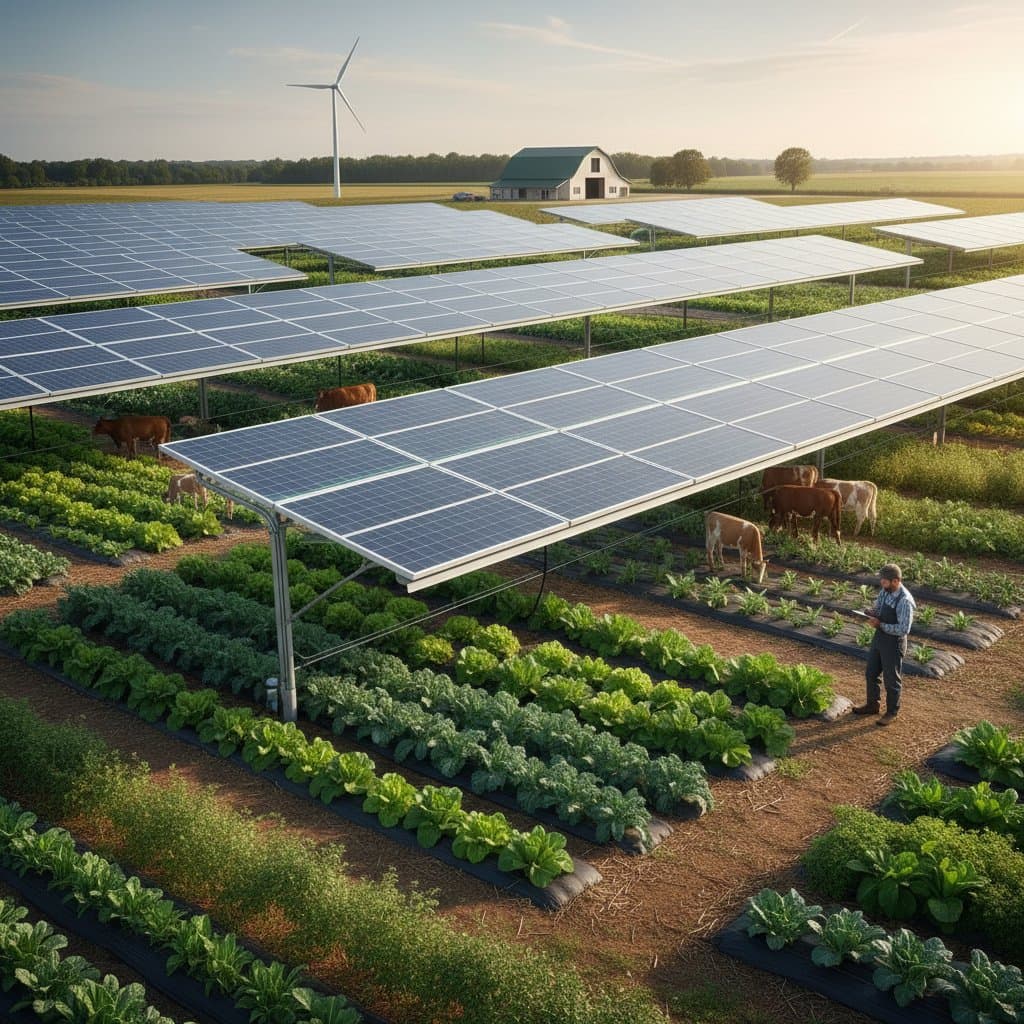
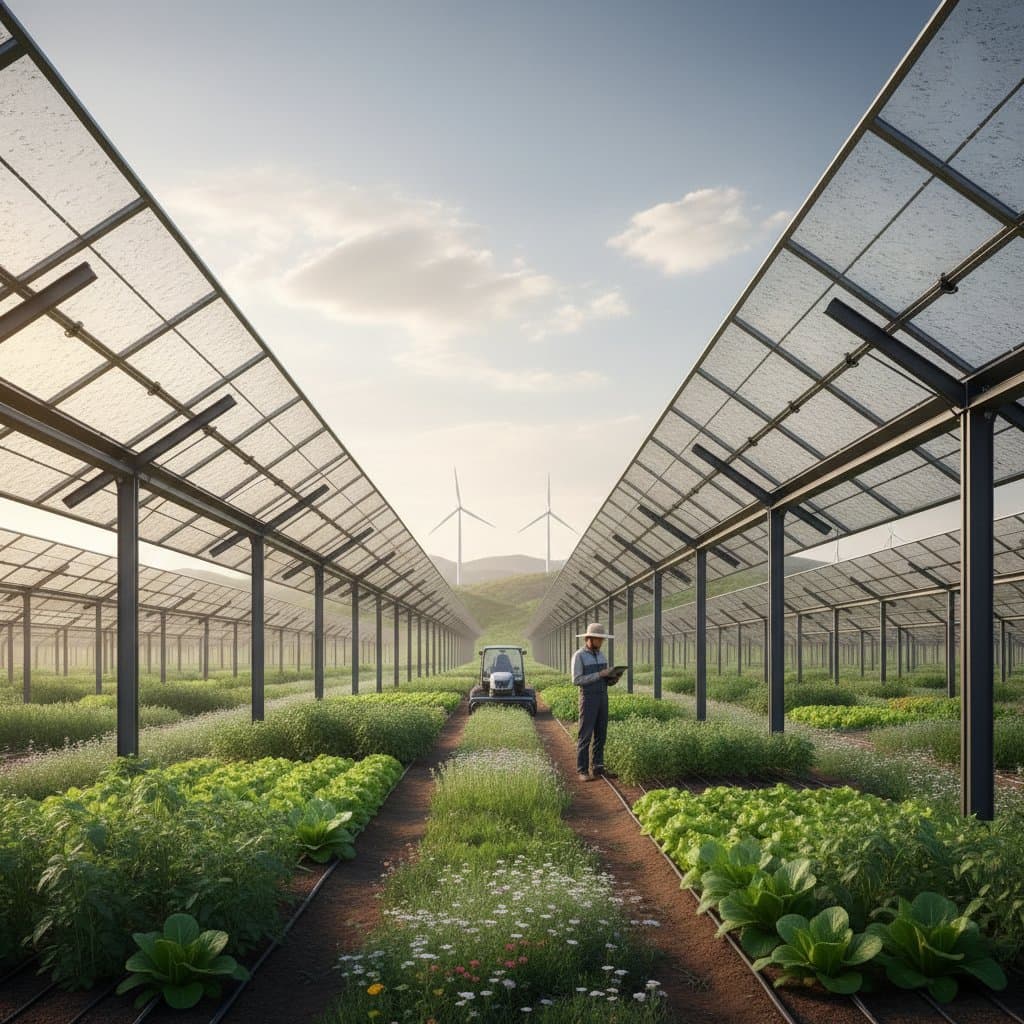
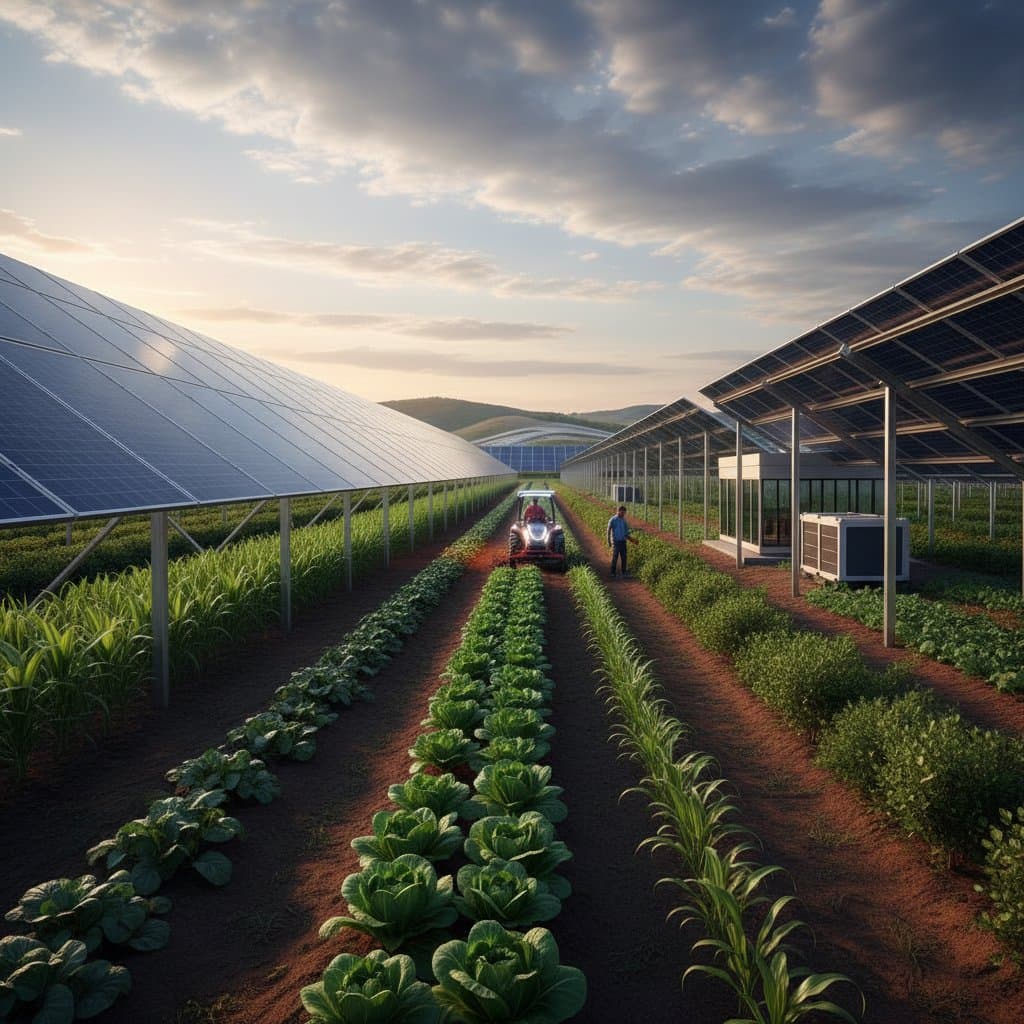
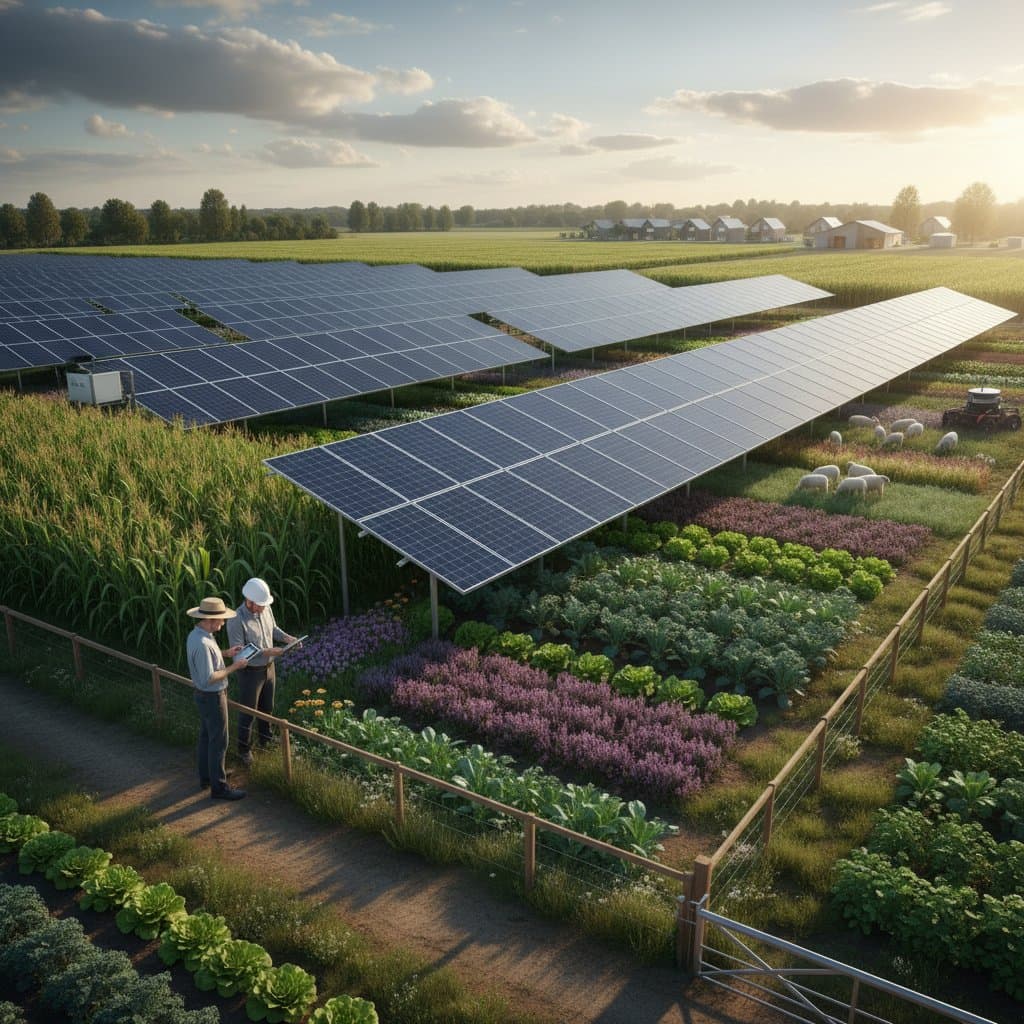
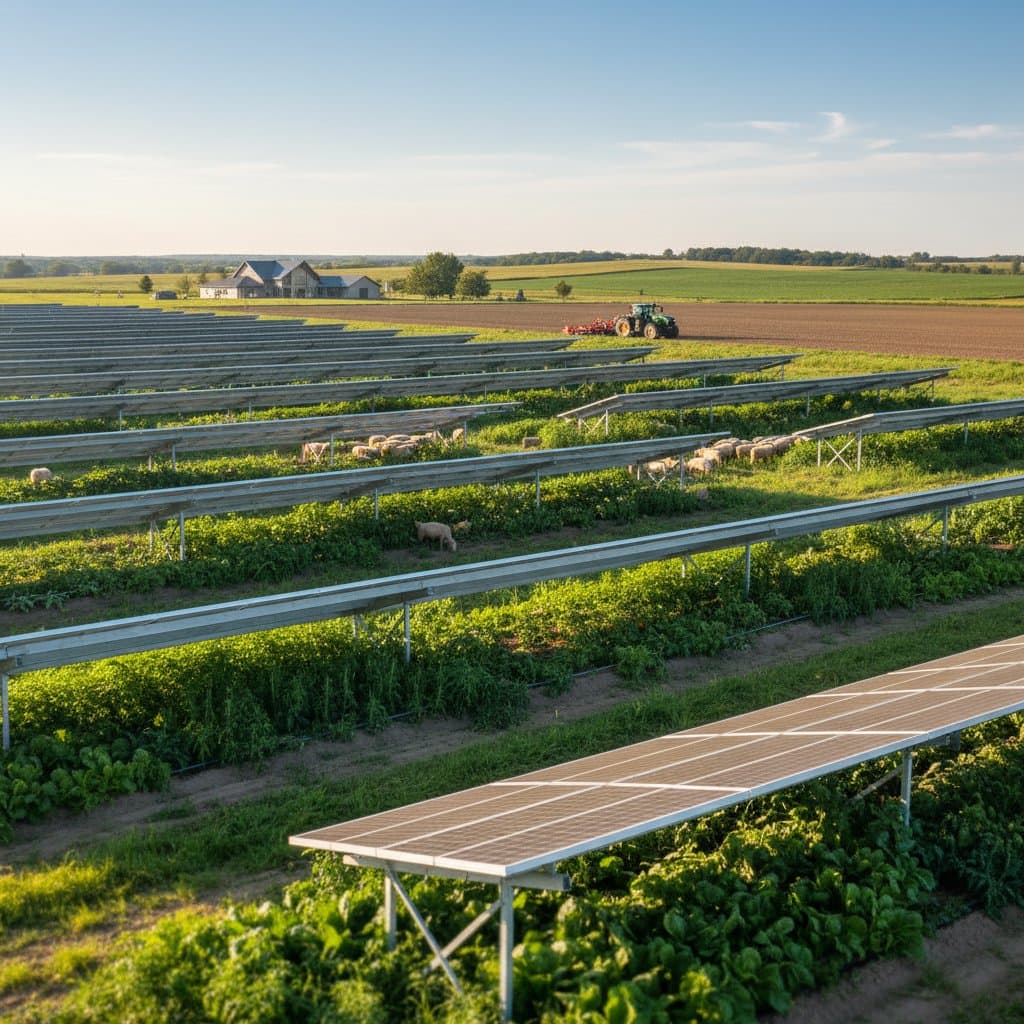
Agrivoltaics integrates solar energy generation with agriculture, allowing farms to yield both food and electricity from the same land. Elevated panel designs accommodate crops and livestock below, improving yields, water efficiency, and financial security. This emerging practice in 2026 bolsters local economies, safeguards farmland, and promotes sustainable harmony between renewables and farming.
Agrivoltaics merges crop farming with solar energy production across American landscapes. By 2026, technological innovations, policy support, and financial benefits will accelerate this practice. Farmers gain reduced operational costs, enhanced crop resilience, and access to renewable power, fostering stronger rural economies and innovative land use.
Agrivoltaics represents a transformative strategy for 2026, allowing farmers to cultivate crops beneath elevated solar panels while producing clean electricity. This dual-use model delivers diversified revenue streams, bolsters farm resilience, optimizes water conservation, and promotes sustainable land management for future generations.
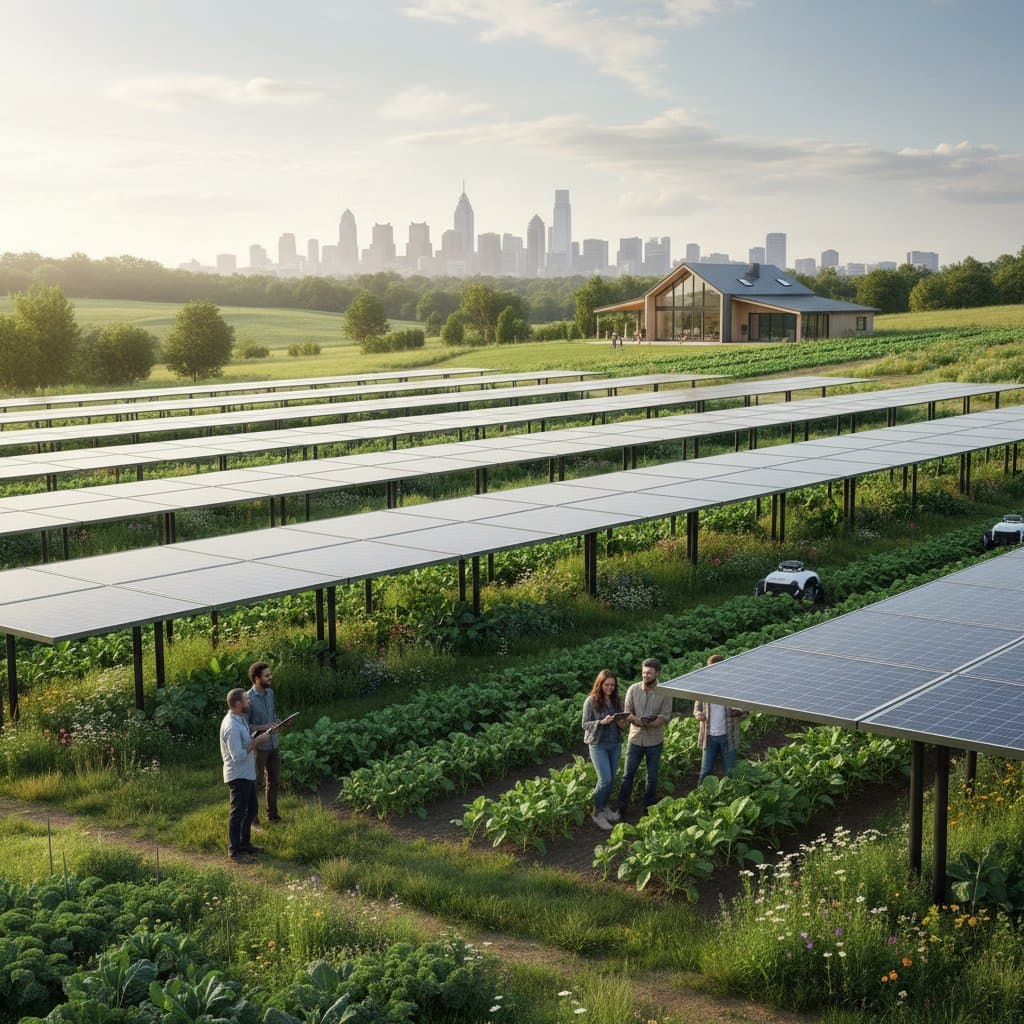
Agrivoltaics innovates land use by integrating solar panels with crop farming, allowing dual revenue from energy and agriculture. Near Philadelphia, this approach conserves water, supports biodiversity, and complies with updated safety regulations for reliable food and power in 2026.
Agrivoltaics revolutionizes agriculture by merging solar energy generation with crop farming on the same fields. This innovative practice increases productivity, reduces water use, and creates additional revenue for farmers. Through safe, compliant designs, it powers communities while sustaining local food sources and reshaping rural landscapes.
Agrivoltaics integrates solar energy generation with agriculture, enabling crops and panels to share the same field productively. Elevated structures offer shade that reduces water needs, enhances soil health, and preserves yields. Farmers benefit from diversified income, lower operational risks, and contributions to sustainable practices that advance the renewable energy landscape in farming.
Dual-use solar, also known as agrivoltaics, enables farmers to produce both food and renewable energy on the same plot of land by growing crops beneath raised solar panels. This method diversifies revenue, enhances soil moisture retention, and contributes to grid stability. Discover practical designs, financial incentives, and steps to implement this approach for long-term farm viability.
Agrivoltaics integrates solar energy with agriculture, enabling one plot of land to produce both food and power. Elevated panels provide shade that conserves water and enhances crop growth, while generating electricity. This strategy bolsters food security, rural economies, and sustainable profits in the face of climate and energy demands.
Agrivoltaic systems integrate solar panels with crop production to increase yields by up to 30 percent by 2026 while generating renewable energy. This approach conserves water, stabilizes farm income, and builds resilience against climate challenges. From small-scale operations to large estates, dual-use solar redefines land productivity by harnessing sunlight for both food and power.
Agrivoltaics, or dual-use solar farming, integrates solar panels with crop growth or grazing, maximizing land for energy and food. This practice elevates productivity, fortifies farm incomes, improves soil conditions, and bolsters rural sustainability amid climate challenges.
By 2026, agrivoltaic systems integrate solar energy with agriculture, yielding food and electricity from unified land. These setups elevate farm revenues, optimize water use, and foster biodiversity. Pennsylvania landowners, through thoughtful design, safety protocols, and zoning adherence, convert fields into profitable centers for renewables and regional produce.
Agrivoltaics integrates agriculture and solar energy production, allowing crops and clean power to flourish together. Elevated panels mitigate heat stress, conserve water, and provide dual revenue streams. Supported by incentives, this approach transforms land use to strengthen food security, energy independence, and rural economies.
Agrivoltaics integrates solar power with farming practices, enabling the same land to produce both food and electricity. Elevated panels allow crops to flourish below while generating renewable energy. This strategy promotes sustainability, bolsters rural economies, improves soil conditions, and advances clean energy production in agriculture.
Agrivoltaics integrates solar energy production with farming on shared land. Elevated panels allow sunlight to reach crops below, which leads to improved yields and water savings. This approach delivers robust economic benefits, policy support, and community advantages, positioning it to transform sustainable agriculture and renewable energy practices by 2026.
Agrivoltaics integrates solar energy production with agriculture, enabling farmland to yield both crops and electricity. Elevated panels provide shade for plants and animals, reduce water evaporation, and foster biodiversity. Through collaboration among farmers, engineers, and regulators, this practice builds resilient agricultural systems while meeting renewable energy objectives in Pennsylvania.
Agrivoltaics revolutionizes farmland by combining solar energy production with agriculture. Elevated panels provide shade that cools soil, increases crop yields, and supports grazing animals. Backed by incentives and dual revenue streams, this model ensures profitability, environmental gains, and food security through 2026 and beyond.