
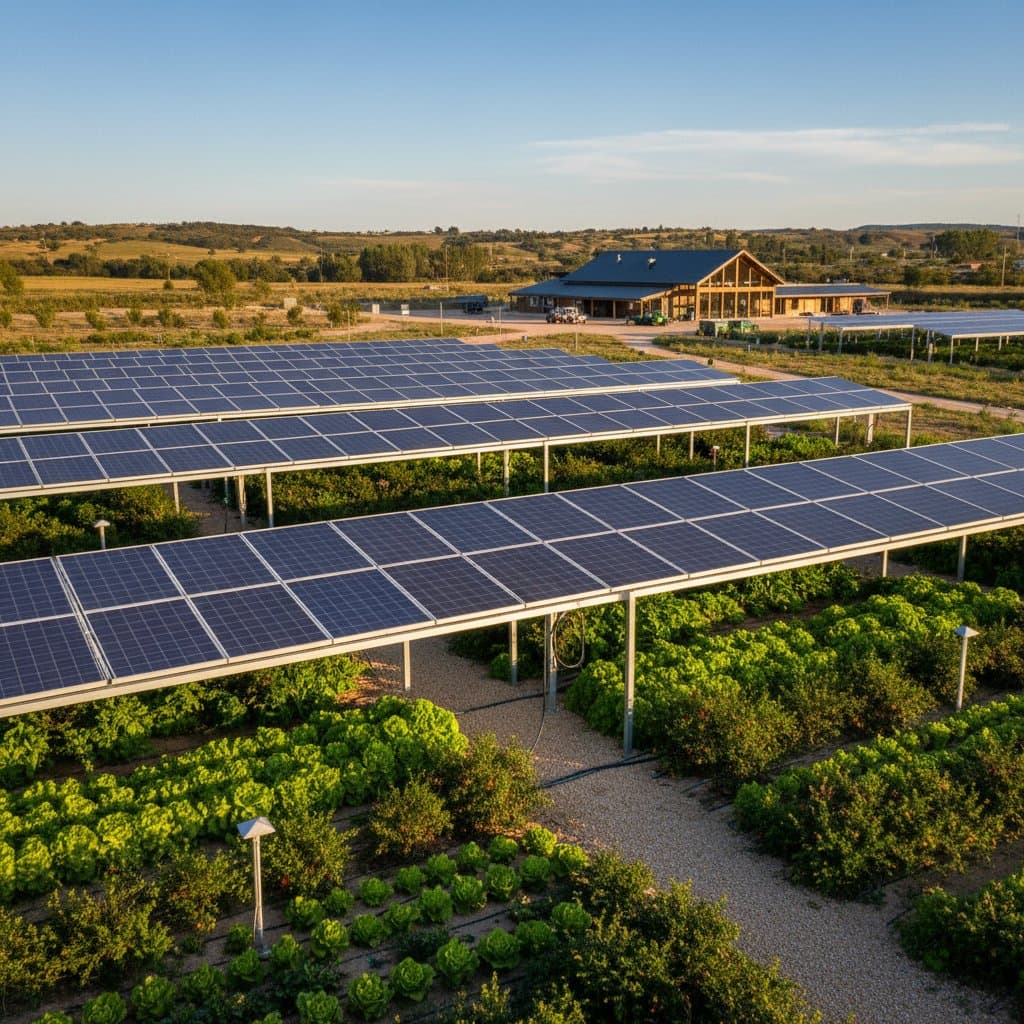
Agrivoltaics in 2025: Integrating Solar Energy and Crop Production
Solar power serves as a primary source of clean energy. Large solar farms frequently compete with agriculture for available land. Agrivoltaics alters this dynamic by combining solar generation with active farming on the same land, yielding both food and electricity. This dual-use strategy attracts interest from growers, utilities, and policymakers seeking to optimize limited land resources while bolstering rural economies.
Understanding Dual-Use Solar Systems
Agrivoltaics, also known as dual-use solar or co-located solar farming, involves placing photovoltaic panels above or between crops. These panels offer shade that minimizes soil evaporation and shields plants from excessive heat. The land beneath and surrounding the panels remains suitable for cultivation. Studies demonstrate that vegetables, grains, and forage crops thrive under partial shade. The generated electricity supplies homes, irrigation pumps, or local grids.
This approach proves ideal for areas with elevated land costs or scarce open spaces. It facilitates community-scale solar initiatives without displacing farmland. The objective extends beyond land sharing to fostering a symbiotic relationship between energy production and agriculture.
Key Safety and Installation Guidelines
Agrivoltaic installations demand meticulous electrical design. A licensed electrician must evaluate the site for grounding integrity, load calculations, and conductor routing prior to any work. Faulty wiring poses shock risks, particularly in moist fields. The National Electrical Code designates agricultural settings as damp or wet locations, requiring junction boxes, connectors, and conduits with appropriate environmental ratings.
Homeowners and small farm operators must avoid the following actions:
- Installing or altering photovoltaic wiring without obtaining permits.
- Circumventing approved connectors or protective devices.
- Operating machinery near live conductors.
- Overlooking grounding and bonding inspections.
Operators should employ a non-contact voltage tester to verify de-energized circuits before maintenance. Only licensed electricians may confirm system continuity and insulation resistance. Local authorities having jurisdiction often mandate regular inspections to ensure adherence to the National Electrical Code and zoning regulations.
Designing Effective Agrivoltaic Layouts
Panel height, spacing, and tilt angle dictate sunlight penetration to crops. Conventional solar farms employ low-mounted racks to counter wind forces. Agrivoltaic setups elevate panels to accommodate tractor and worker passage underneath, influencing wiring paths and structural demands. Engineering expertise remains crucial for these adaptations.
Prevalent layout options encompass:
- Single-axis tracking systems, enabling panels to track solar movement.
- Fixed-tilt canopies, ideal for shade-tolerant varieties such as lettuce or spinach.
- Elevated dual-row configurations, creating accessible pathways for equipment.
These arrangements impact soil moisture, temperature, and microclimates. Growers utilize sensors to track these elements and refine irrigation and fertilization practices. A shade level of 30 to 40 percent often enhances yields for select crops in warmer periods.
Advantages Extending Past Energy Output
Dual-use solar delivers tangible benefits:
- Enhanced land productivity, allowing farmers to generate electricity income alongside crop revenues.
- Decreased water evaporation, preserving soil moisture and lowering irrigation expenses.
- Promotion of biodiversity through cooler microclimates that draw pollinators and sustain habitats.
- Greater economic stability, as energy earnings buffer fluctuations in crop markets.
- Shared infrastructure, leveraging existing farm roads and electrical connections.
Realizing these gains hinges on sound system planning. Excessively dense panels may obstruct sunlight, and inadequate grounding invites hazards. Projects benefit from collaborative evaluations by solar engineers, agronomists, and licensed electrical contractors.
Addressing Challenges Through Proactive Measures
Agrivoltaics exceeds routine solar development in complexity. Farm activities introduce dust, vibrations, and humidity that accelerate component wear. Livestock might damage insulation or structures, while machinery risks harming shallow conduits.
Mitigation strategies include:
- Employing rigid metallic or liquid-tight flexible conduit suitable for direct burial.
- Installing listed cable guards at points of machinery intersection.
- Securing junction boxes with weatherproof gaskets and approved fittings.
- Conducting seasonal inspections of panel mounts for corrosion.
- Ensuring proper torque on grounding lugs via calibrated tools.
Upon detecting corrosion, discoloration, or unusual odors at connections, operators must disconnect power and summon a licensed electrician. Field repairs demand listed products like AlumiConn or Copalum crimp connectors for aluminum conductors, applied solely by professionals.
Seamlessly Incorporating Systems Into Farm Routines
Effective agrivoltaic designs align with irrigation, fencing, and crop rotations. Electrical conduits should parallel service roads or fence lines to minimize disruption from buried lines. Panels occasionally bear overhead irrigation lines, optimizing space usage.
Automation enhances operations. Soil moisture sensors connected to solar-powered controllers enable targeted watering. Weather stations permit tilt adjustments to avert shading issues or hail impacts. Low-voltage control wiring requires separation from power circuits.
Farmers ought to document all wiring and devices pre-planting. Clear labeling of disconnects and accessible manuals prove essential. In cases of ground faults or inverter malfunctions, follow manufacturer shutdown protocols and engage certified technicians.
Navigating Policy and Economic Landscapes
Local governments promote agrivoltaics via pilot initiatives and grants. Collaborations between agricultural universities and solar developers drive research on crop performance, soil health, and energy production. Initial findings indicate that dual-use systems can surpass revenues from isolated solar and farming ventures.
Permitting processes vary. Zoning entities might categorize solar elements as agricultural enhancements or utility features, each with distinct setback and fencing rules. Applicants must verify compliance with land-use and electrical codes before proceeding.
Experienced solar installers adept in agricultural setups expedite approvals. They account for soil loading and design resilient grounding against animal activity. Farmers should obtain records of tests, including continuity and insulation resistance data.
Fostering Community and Environmental Gains
Agrivoltaic operations invigorate rural areas by generating employment for electricians, operators, and agronomists. They alleviate pressures to repurpose farmland for industry. Integration with pollinator habitats revives native plants and bolsters soil integrity.
Community solar efforts link arrays to local cooperatives, enabling subscriptions that cut energy costs and sustain food output. Tours and research areas build public involvement and openness.
Environmental bodies endorse agrivoltaics for conserving land, securing grid reliability, and curbing fossil fuel emissions. This fusion of renewables and farming underscores sustainable practices without compromising output.
Ensuring Ongoing Professional Management
Agrivoltaic systems necessitate consistent agricultural and electrical upkeep. Panel cleaning demands secure access and fall safeguards. Vegetation management near equipment avoids wire or grounding damage. Qualified staff alone handle inverter or combiner servicing.
Recommended annual inspections comprise:
-
Verifying grounding continuity and bonding tightness.
-
Examining conduit seals and insulation for water entry.
-
Testing inverter performance against anticipated loads.
-
Assessing vegetation growth and soil density beneath arrays.
-
Renewing faded labels or tags.
Advancing Sustainable Farm Viability
For Philadelphia-area farms and beyond, agrivoltaics paves the way for enduring productivity. It harmonizes food security with energy self-reliance. Success depends on partnerships among farmers, electrical experts, and regulators, with safety protocols safeguarding all involved.
Prospective adopters should initiate a feasibility analysis covering soil evaluation, shading modeling, and load assessments. Engage local authorities for permitting details and select certified installers versed in agriculture.