
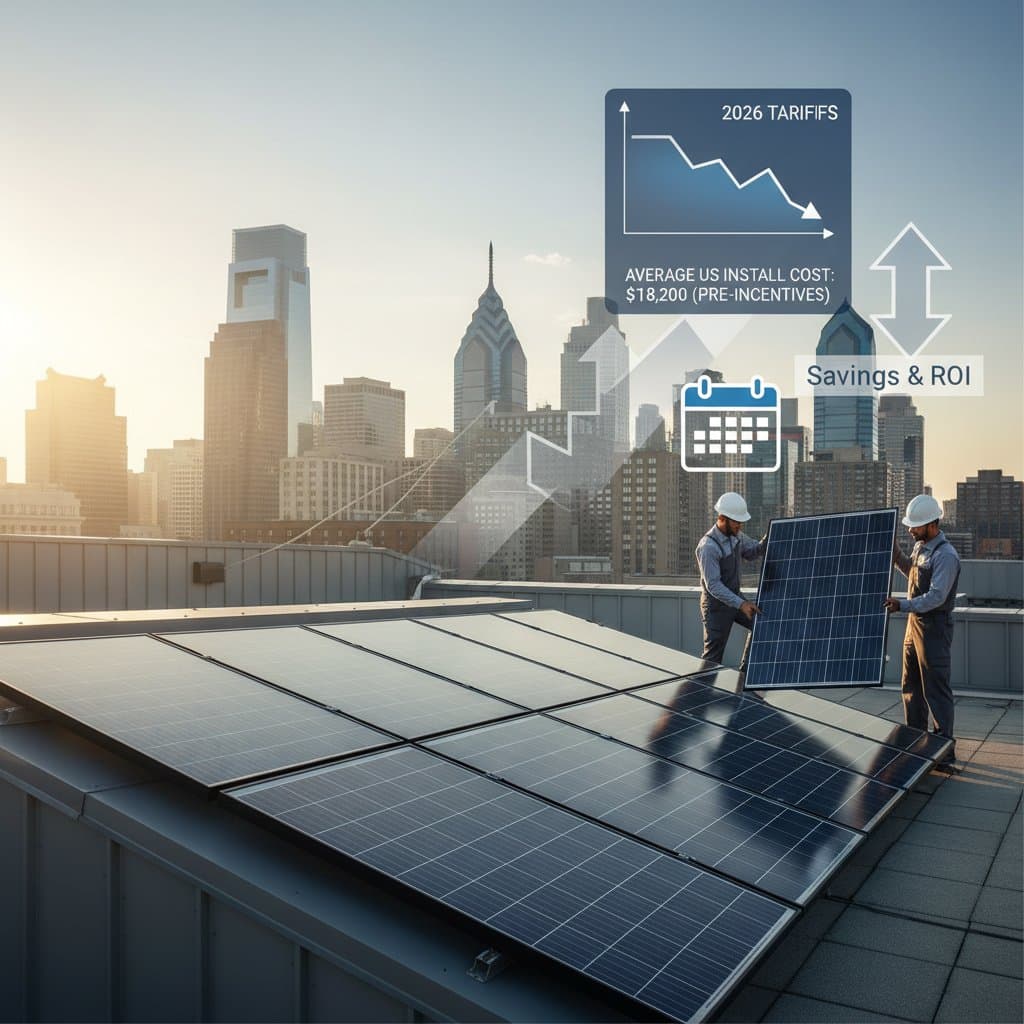
Solar Costs Before Tariffs Hit in 2026
Solar energy offers homeowners a reliable path to lower energy bills and environmental benefits. Prices for solar installations remain competitive today, but changes loom on the horizon. Proposed import tariffs set for 2026 could influence equipment costs and overall project expenses.
Homeowners in Philadelphia and surrounding areas stand to gain by exploring options now. This article examines the current landscape, potential tariff effects, and strategies to optimize savings. Understanding these elements empowers informed decisions for long-term energy independence.
Understanding the Upcoming Tariffs
The solar industry relies heavily on imported components, particularly panels from international manufacturers. United States policymakers propose tariffs on these imports starting in 2026 to support domestic production. These measures aim to level the playing field but may increase prices for consumers.
Tariffs typically add a percentage to the cost of goods crossing borders. For solar panels, this could mean a rise of 10 to 25 percent, depending on the source country. Equipment like inverters and mounting systems might face similar adjustments if sourced abroad.
Industry experts predict a modest overall impact on installation costs, around 5 to 10 percent for complete systems. Domestic alternatives exist, but they often carry higher upfront prices. Homeowners benefit from researching supplier origins early to anticipate shifts.
Current Solar Installation Costs in Philadelphia
A standard residential solar system in Philadelphia generates 5 to 7 kilowatts, sufficient for average household needs. Before any incentives, such a setup costs approximately $18,200. This figure includes panels, inverters, labor, and permitting fees.
Local factors influence pricing. Philadelphia's climate supports efficient solar production, with over 200 sunny days annually. Installation companies in the area offer competitive rates due to established supply chains and experienced crews.
Variations occur based on roof type and system size. For instance, a larger 10-kilowatt system might reach $30,000 before incentives. Shop around for quotes to identify the best value, as prices can differ by 15 percent among providers.
Federal and State Incentives to Offset Costs
The federal Investment Tax Credit covers 30 percent of installation expenses for qualifying systems. This credit applies directly to federal taxes, reducing the net cost significantly. For a $18,200 system, it lowers the effective price to about $12,740.
Pennsylvania offers additional rebates through programs like the Solar Renewable Energy Certificate market. Local utilities, such as PECO, provide net metering, crediting excess power back to the grid. These mechanisms shorten payback periods and enhance financial returns.
Philadelphia residents may access low-interest loans or grants for energy efficiency projects. Combine these with the federal credit for maximum savings. Consult a tax professional to ensure eligibility and proper application.
Calculating Payback and Long-Term Savings
Payback periods for solar systems in Philadelphia average eight years. This timeline accounts for initial costs minus incentives, offset by annual electricity savings of $1,500 to $2,000. After payback, the system generates free power for 20 years or more.
Lifetime savings exceed $40,000 for a typical setup, factoring in rising utility rates. Solar panels maintain 80 to 90 percent efficiency after 25 years. Energy independence reduces reliance on grid fluctuations and protects against future price hikes.
Use online calculators to estimate personal payback based on usage and roof orientation. Accurate assessments guide system sizing and financing choices. Focus on durable, high-efficiency components for sustained performance.
Actionable Steps to Secure Savings Now
Start by obtaining multiple quotes from certified installers. Compare not only prices but also warranties and equipment quality. Aim to lock in contracts before 2026 to avoid tariff-related increases.
Evaluate your home's solar potential with a professional site assessment. This step identifies optimal panel placement and estimates production. Early planning allows time to address any structural modifications.
Explore financing options like solar loans or leases. These spread costs over time while preserving tax credit benefits. Discuss payment plans with providers to align with budget constraints.
Stay informed on policy updates through reliable industry sources. Tariffs remain subject to legislative changes, so monitor developments. Proactive homeowners position themselves for the best outcomes.
Maximizing Returns on Your Solar Investment
Acting before 2026 tariffs positions homeowners for substantial savings and quicker returns. Solar adoption not only cuts costs but also contributes to a cleaner Philadelphia. Systems installed today benefit from current pricing and robust incentives.
Consider the broader advantages, including increased home value and reduced carbon footprint. Many resale appraisals add $4 per watt to property worth. Embrace solar as a strategic investment in comfort and sustainability.
Consult local experts at phillygoessolar.com for personalized guidance. Begin your journey toward energy savings today.