
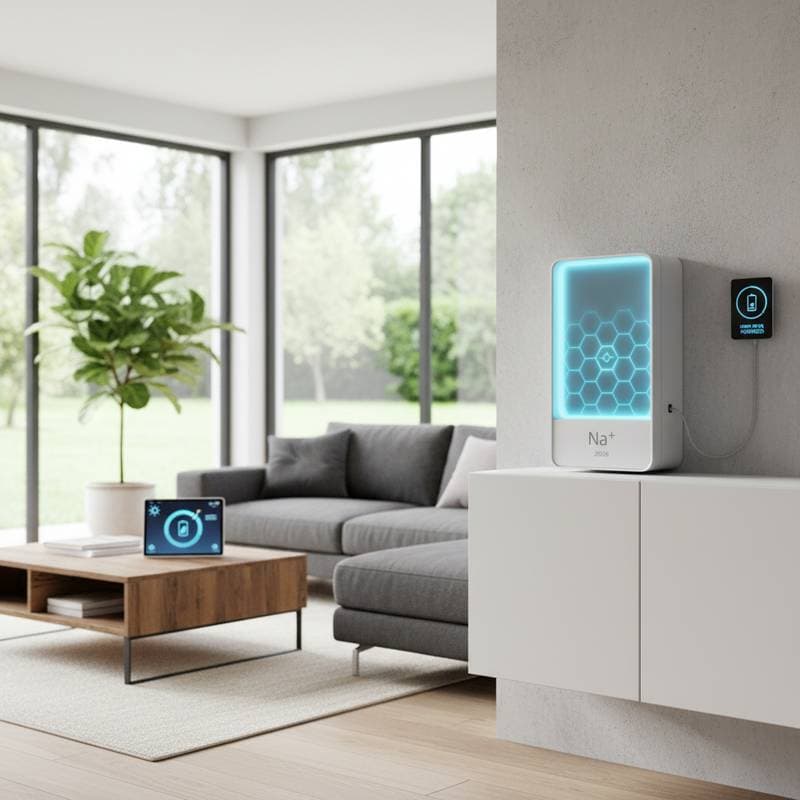
Sodium-Ion Batteries: Affordable Storage for Home Solar by 2026
Solar energy advancements often present challenges for homeowners. Emerging battery technologies, changing incentives, and complex supply chains create confusion between genuine innovations and promotional claims. Sodium-ion batteries stand out as a promising development. These batteries offer reduced costs, greater availability, and enhanced safety for residential energy storage. Production scaling positions sodium-ion technology for significant market entry by 2026, providing a viable option for cost-effective solar integration.
The Importance of Sodium-Ion Technology
Current home battery systems primarily rely on lithium-ion cells. These cells deliver reliable performance but require costly materials such as lithium, cobalt, and nickel, which originate from geographically concentrated sources. Sodium-ion batteries substitute sodium for lithium. Sodium derives from everyday salt and exists abundantly worldwide. This substitution fundamentally alters the cost structure of energy storage solutions.
Although sodium-ion cells exhibit lower energy density than lithium-ion counterparts, they store less power per unit of weight. For fixed installations like home batteries, factors such as cost and safety outweigh concerns about weight. Sodium-ion chemistry performs effectively in low temperatures and presents reduced fire hazards, rendering it suitable for household applications across varied weather conditions.
Fundamentals of Sodium-Ion Battery Operation
Sodium-ion batteries facilitate the movement of sodium ions between electrodes during charging and discharging processes. During charging, sodium ions depart from the positive electrode, traverse the electrolyte, and embed in the negative electrode. Discharging reverses this process, liberating electrons to supply power to appliances or the electrical grid.
Electrodes typically incorporate materials like hard carbon or layered metal oxides. The electrolyte consists of a sodium salt dissolved in a solvent. Each ion transfer produces electrical current, akin to lithium-ion mechanisms. Variations in ion size and electron potential result in slightly reduced voltage, yet substantially lower material expenses.
Performance and Cost Analysis
Examine a standard 10-kilowatt-hour lithium-ion battery setup for residential use. Installation costs approximate 10,000 dollars. Sodium-ion equivalents could achieve 30 percent cost reduction, lowering the price for equivalent capacity to approximately 7,000 dollars. Modest differences in efficiency and density become secondary to such financial benefits, broadening accessibility for budget-conscious homeowners.
Initial evaluations indicate sodium-ion cells reach energy densities of about 150 watt-hours per kilogram, versus 200 to 250 for lithium-ion. This level suffices for stationary units housed in garages or basements. Cycle life projections range from 3,000 to 5,000 complete charges, equating to 10 to 15 years of service based on daily cycling frequency.
Supply Chain Strengths
Sodium-ion technology excels in supply reliability. Sodium abounds in seawater and mineral reserves, extractable without reliance on scarce metals. This approach mitigates geopolitical tensions and environmental concerns associated with lithium procurement. Consequently, production can localize, diminishing transport-related emissions and logistical disruptions.
Homeowners benefit from stabilized pricing. Historical battery price swings stem from raw material deficits. A sodium-centric supply chain fosters consistency, enabling predictable budgeting for energy storage investments.
Seamless Solar System Compatibility
Sodium-ion batteries interface with home solar panels identically to lithium-ion units. They capture surplus daytime solar generation and dispense energy during evening hours. Inverters and monitoring equipment require no major modifications, allowing installers to transition with limited preparation.
Consider a household generating 9,000 kilowatt-hours annually from a 7-kilowatt solar array. A 10-kilowatt-hour battery captures peak excess production. If this offsets 40 percent of grid consumption at 20 cents per kilowatt-hour, yearly savings total 720 dollars. With a 7,000-dollar installation expense, the return on investment occurs in roughly 10 years, excluding potential rebates that accelerate recovery.
Safety and Environmental Advantages
Sodium-ion batteries circumvent thermal instability common in lithium-ion designs. They resist overheating and endure deep discharge with minimal wear. Recycling proves straightforward, as sodium and aluminum components reintegrate into industrial cycles through basic processes.
These attributes resonate with homeowners seeking eco-friendly options that minimize waste. Reduced safety protocols streamline installations, potentially decreasing ancillary expenses.
Timeline and Market Readiness by 2026
Industry leaders construct pilot facilities and expand manufacturing capabilities. Commercial-scale production will drive rapid price declines through inexpensive raw inputs and streamlined assembly. Experts anticipate initial deliveries in medium-scale storage applications, with residential products following closely. Solar adopters gain access to economical batteries that integrate effortlessly with current setups.
Practical Maintenance Guidelines
Maintenance for sodium-ion systems mirrors that of lithium-ion batteries. Position the unit in a cool, dry area with adequate airflow. Monitor charge cycles and temperatures via the system's app or inverter interface. Arrange professional inspections every few years to inspect connections and update software. Sealed designs ensure low upkeep demands for typical users.
Frequently Asked Questions
What distinguishes sodium-ion from lithium-ion batteries?
Sodium-ion batteries employ sodium as the ion carrier in place of lithium. This adjustment decreases material expenses and enhances supply dependability.
Do sodium-ion batteries offer superior safety?
Yes. They exhibit lower ignition risks and maintain efficacy in cooler environments, ideal for residential settings.
How does the lifespan of sodium-ion batteries compare to lithium-ion?
Lifespans align closely, with 3,000 to 5,000 cycles typical, varying by configuration and operational habits.
Is replacement of lithium-ion batteries with sodium-ion feasible in current setups?
Often, yes. Inverters and controls adapt with slight modifications upon standard establishment.
What cost savings can homeowners expect?
Estimates indicate up to 30 percent reduction relative to lithium-ion residential batteries at full production.
Do they provide comparable energy storage?
They deliver marginally less per kilogram, though stationary applications render the variance negligible.