
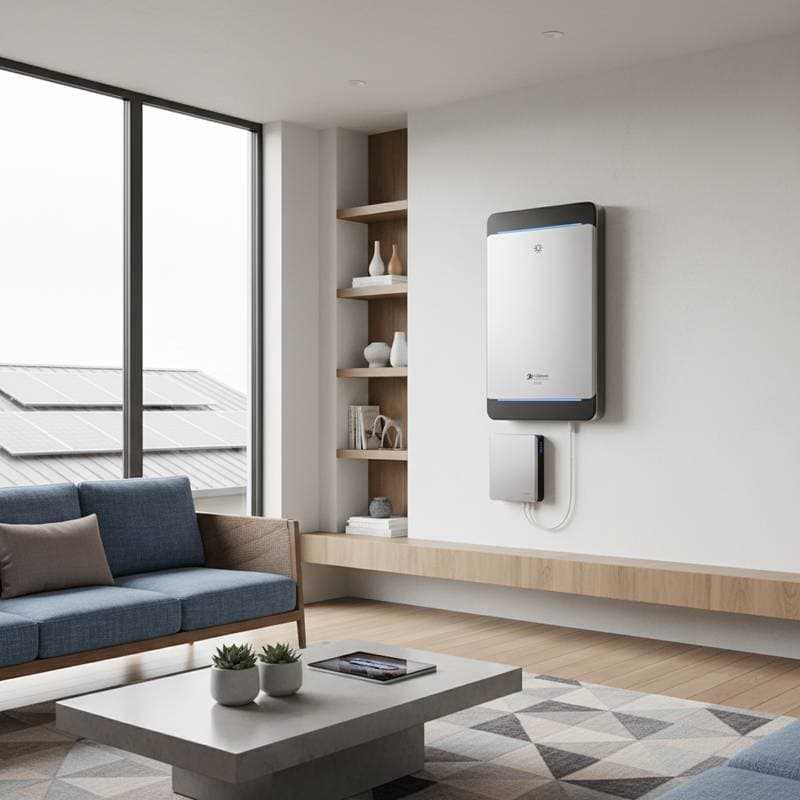
Why Solid-State Batteries Transform Home Energy in 2026
Solar technology advancements often overwhelm homeowners seeking reliable storage solutions. Traditional lithium-ion batteries advance the field, but challenges persist regarding durability, safety, and expense. Solid-state batteries address these issues through advanced chemistry, superior energy density, and accelerated charging, enabling seamless integration into residential settings.
This technology moves beyond conceptual stages. Manufacturers transition from liquid to solid electrolytes, redefining energy storage paradigms. Homeowners benefit from durable units, compact designs, and compatibility with solar arrays and electric vehicles, facilitating a sustainable and robust energy ecosystem.
Key Reasons Homeowners Benefit
Solid-state batteries extend far beyond technical specifications. They influence system reliability, financial savings, and grid autonomy for residential users.
-
Enhanced Safety Profiles
Solid electrolytes eliminate flammable liquids, reducing thermal runaway risks associated with lithium-ion systems. This design supports installations in confined areas like garages or basements without heightened fire concerns. -
Superior Energy Density
These cells store 30 to 50 percent more energy within identical volumes. For instance, a 10 kWh unit expands to 13 to 15 kWh capacity, extending backup duration and supporting intensive daily use. -
Extended Operational Lifespan
Reduced chemical degradation preserves capacity over numerous cycles. High-quality models retain over 90 percent performance after thousands of operations, potentially serving homes for more than 20 years. -
Accelerated Charging Rates
Solid materials withstand elevated voltages, enabling rapid energy intake and output. This feature proves essential for capturing solar generation during limited daylight periods. -
Simplified Maintenance Requirements
Sealed constructions demand little intervention. Systems require fewer cooling elements and avoid liquid-related complications.
Evaluating Costs and Long-Term Value
Initial solid-state implementations carry a premium of 20 to 40 percent over lithium-ion alternatives. However, prolonged durability and improved efficiency lower overall expenses across the product lifecycle.
Consider this practical comparison.
- Capacity: 10 kWh lithium-ion versus 13 kWh solid-state
- Installation Expense: $9,000 for lithium-ion, $12,000 for solid-state
- Cycle Endurance: 4,000 cycles for lithium-ion, 8,000 for solid-state
- Efficiency: 90 percent round-trip for lithium-ion, 97 percent for solid-state
Daily 10 kWh cycling equates to approximately 3,650 operations per decade. Lithium-ion units may require replacement after 10 years, while solid-state options endure twice as long. This results in nearly double the energy output per invested dollar over the system's duration.
Incentives further bridge the cost difference. Federal credits offset 30 percent of upfront expenses. State programs and utility rebates often support storage additions, particularly alongside solar installations.
With grid electricity at 18 cents per kWh, annual offsets of 4,000 kWh via stored solar yield $720 in savings. Across 15 years, cumulative benefits surpass $10,000, excluding replacement avoidance.
Sustainability and Supply Advantages
Solid-state formulations minimize reliance on cobalt and scarce metals in liquid systems. Designs incorporate abundant alternatives like lithium metal, glass ceramics, or sulfides, alleviating supply constraints and streamlining recycling processes.
Longer lifespans reduce replacement frequency, generating less waste and a diminished environmental impact per stored energy unit. Industry efforts focus on recovery methods that reclaim lithium and electrolytes with high efficiency.
Homeowners gain from eco-friendly cycles that align with broader renewable objectives.
Steps to Prepare Your Residence for Solid-State Integration
Preparation begins now, even before widespread availability. Prioritize solar configurations that accommodate future enhancements.
Consult installers to incorporate:
- Hybrid Inverters: Models supporting AC and DC coupling for versatile battery connections.
- Adaptable Infrastructure: Conduits and wiring that facilitate add-on installations.
- Mounting Provisions: Sufficient space adjacent to electrical panels.
- Integrated Monitoring: Platforms compatible with emerging devices for real-time oversight.
Such foresight minimizes disruptions during upgrades. Existing lithium-ion setups serve as interim solutions until solid-state options arrive.
Optimizing Solid-State Battery Performance
These batteries require minimal oversight, yet optimal practices enhance reliability.
- Position units in climate-controlled environments, away from extreme heat or cold.
- Apply inverter and management system updates promptly.
- Examine energy dashboards monthly for cycle patterns and diagnostics.
- Arrange expert evaluations biennially to confirm integrity and software.
- Anticipate manufacturer-supported recycling or exchange at lifecycle end.
Consistent care ensures sustained efficiency and safeguards solar investments over extended periods.
Frequently Asked Questions
What distinguishes solid-state batteries from lithium-ion types?
Solid-state versions employ solid electrolytes rather than liquids, yielding advantages in safety, density, and endurance.
How does the lifespan of solid-state batteries compare in residential applications?
Premium models achieve over double the cycles of lithium-ion counterparts, often exceeding 20 years with negligible capacity loss.
Do solid-state batteries suit indoor placements?
Affirmative. The absence of flammable components substantially lowers fire hazards, ideal for enclosed spaces like utility areas.
Is retrofitting possible for current solar installations?
Yes, provided inverters enable hybrid functionality or feature compatible interfaces.