
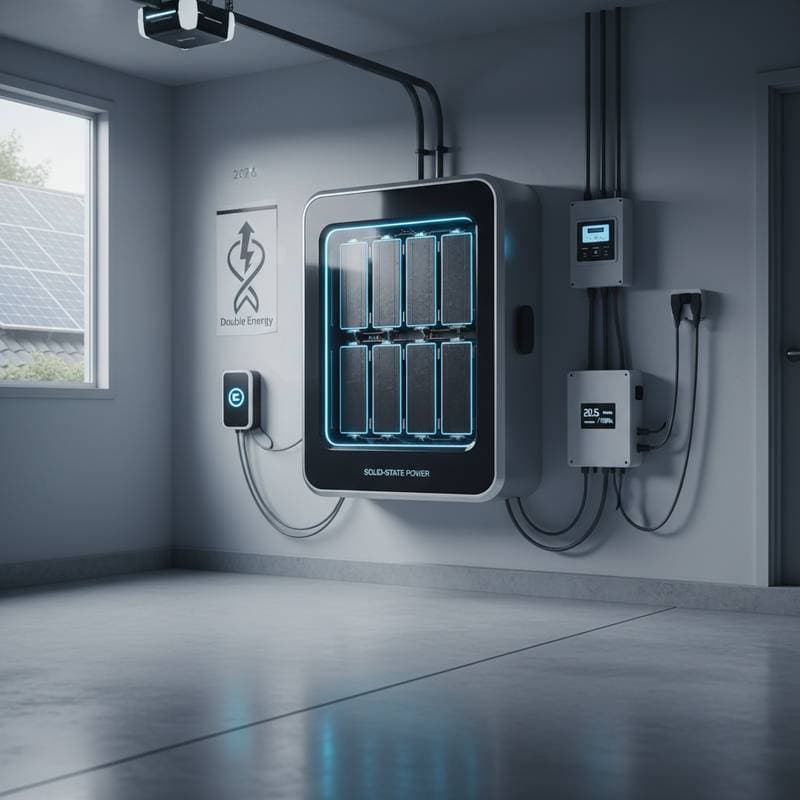
Solid-State Batteries: Doubling Energy Storage with Enhanced Safety
Solid-state batteries represent a significant advancement in energy storage technology, particularly for home solar systems. These batteries replace the liquid electrolytes found in traditional lithium-ion batteries with solid materials, which enhances safety and energy density. Homeowners integrating solar power can expect these innovations to provide more reliable and efficient storage solutions by 2026.
The transition to solid-state technology addresses key limitations of current batteries. Liquid electrolytes pose risks of leakage and fire, but solid alternatives eliminate these hazards. This shift allows for batteries that store up to twice the energy in the same space, making them ideal for compact home installations.
Understanding Solid-State Battery Fundamentals
Solid-state batteries function by using a solid electrolyte to conduct ions between the anode and cathode. This design prevents the formation of dendrites, which can cause short circuits in conventional batteries. As a result, these batteries offer extended cycle life, often exceeding 5,000 charge-discharge cycles compared to 1,000 to 2,000 for lithium-ion models.
Energy density stands out as a primary benefit. Traditional batteries achieve around 250 watt-hours per kilogram, while solid-state versions target 500 watt-hours per kilogram or more. For solar storage, this means households can store more power from daytime generation, reducing reliance on the grid during peak evening hours.
Safety improvements stem from the absence of flammable liquids. Solid electrolytes remain stable at higher temperatures, minimizing thermal runaway risks. Testing shows these batteries withstand extreme conditions without degradation, ensuring peace of mind for families with solar setups.
Advantages for Home Solar Integration
Integrating solid-state batteries into home solar systems enhances overall efficiency. Faster charging times, potentially reducing full charges to under an hour, allow batteries to capture more intermittent solar energy. This capability proves valuable on cloudy days when sunlight availability fluctuates.
Compact designs suit various home layouts. A solid-state battery system might occupy half the space of equivalent lithium-ion capacity, freeing up garage or utility room areas. Installation becomes simpler, often requiring fewer structural modifications.
Reliability during outages represents another key advantage. These batteries maintain performance in temperatures ranging from -20 degrees Celsius to 60 degrees Celsius, outperforming traditional options in extreme weather. Homeowners in regions with frequent power disruptions gain a robust backup solution.
Cost Considerations and Long-Term Savings
Upfront costs for solid-state batteries exceed those of lithium-ion by 20 to 50 percent, reflecting advanced manufacturing processes. However, longer lifespan and higher efficiency lead to lower lifetime expenses. Projections indicate payback periods of five to seven years for solar-integrated systems, driven by reduced replacement needs.
Efficiency gains contribute to savings on utility bills. By storing and discharging energy with minimal loss, often above 95 percent round-trip efficiency, these batteries maximize solar utilization. Incentives from energy programs may further offset initial investments.
Maintenance requirements remain low. Solid-state batteries resist degradation from overcharging or deep discharges, eliminating the need for frequent monitoring. This reliability translates to fewer service calls and sustained performance over decades.
Preparing for the 2026 Rollout
By 2026, major manufacturers plan widespread availability of solid-state batteries for residential use. Early adopters should assess compatibility with existing solar inverters and panels. Consulting certified installers ensures seamless integration and optimal system performance.
Evaluate household energy needs to determine required capacity. Tools like online solar calculators help estimate daily consumption and storage demands. Selecting systems with modular designs allows for future expansions as needs evolve.
Stay informed on technological updates through industry reports. Pilot programs in select markets offer opportunities to test these batteries in real-world solar applications. Participation provides insights into performance and potential challenges.
Achieving Energy Independence with Solid-State Solutions
Adopting solid-state batteries empowers homeowners toward greater energy independence. These systems support off-grid living by providing consistent power without grid dependency. Resilience against outages ensures essential appliances remain operational during disruptions.
Sustainable practices benefit from reduced environmental impact. Solid-state batteries contain fewer toxic materials and recycle more efficiently than lithium-ion counterparts. This alignment supports broader goals of clean energy adoption.
The path to grid-free living becomes more accessible. Homeowners experience lower carbon footprints and enhanced financial security through self-generated power. Solid-state technology paves the way for a reliable, eco-friendly future in residential energy management.