
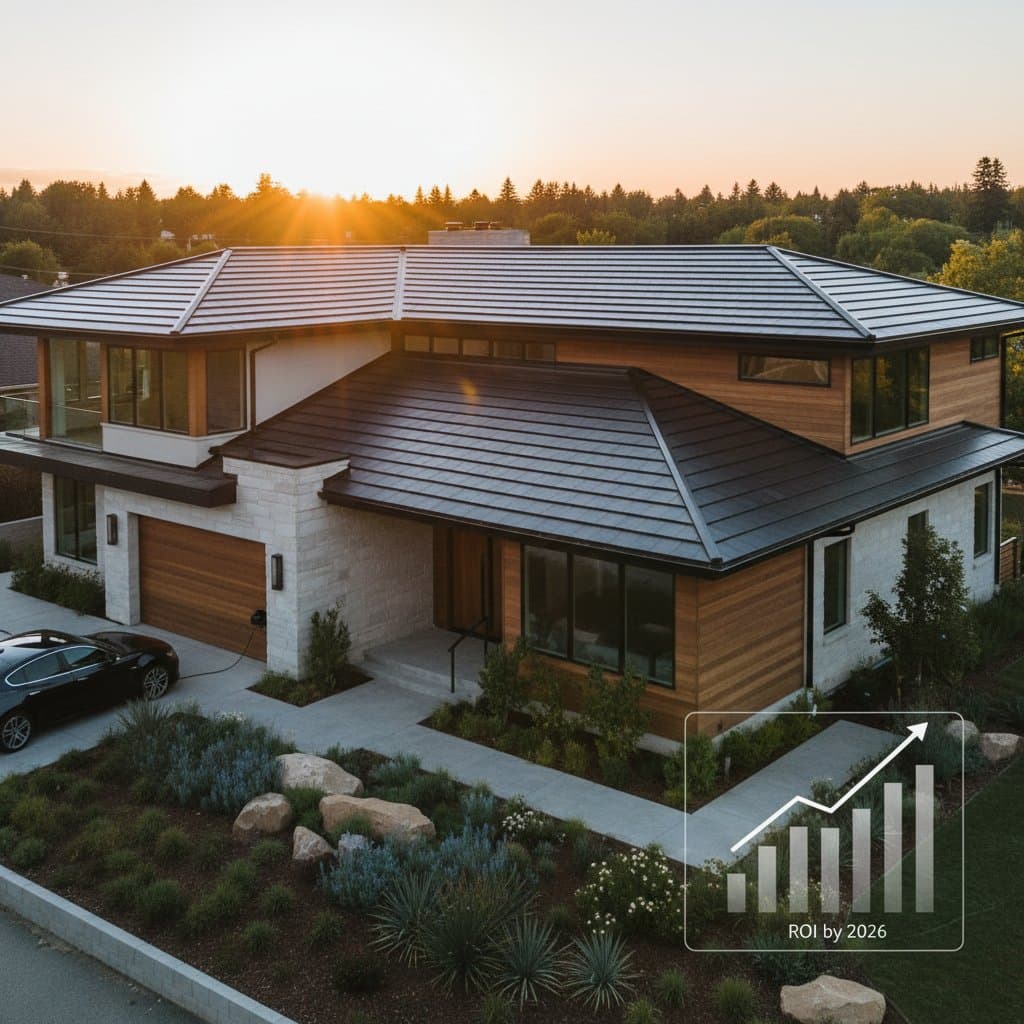
Solar Shingles ROI: Matching Panels by 2026?
Solar research often overwhelms homeowners. Individuals compare panels, batteries, and innovations such as solar shingles to determine the option that yields the strongest return on investment. A roof that shields the home while generating electricity appeals to many, yet questions persist about whether solar shingles match or exceed traditional panels in cost and efficiency. The difference between these solutions narrows rapidly, and under optimal conditions, solar shingles deliver compelling financial results for numerous households.
How Solar Shingles Function
Solar shingles, or building-integrated photovoltaics, substitute conventional roof coverings with tiles that produce energy. Photovoltaic cells within each shingle transform sunlight into electricity. Rather than positioning panels atop the roof, these shingles form the roof itself. Power electronics link the shingles into circuits that connect to an inverter, which shifts direct current to alternating current for home consumption.
The underlying science parallels panel systems, though the design varies. Shingles measure smaller and generate 13 to 20 watts apiece, based on the model and producer. Hundreds installed across a roof yield a total capacity of 7 to 12 kilowatts, comparable to standard panel arrays. This seamless integration eliminates extra racking requirements and streamlines wiring in certain installations.
Cost and Efficiency Comparison
Traditional solar panels cost less per watt. An installed 7-kilowatt panel system averages 2.75 dollars per watt, totaling approximately 19,000 dollars prior to incentives. A equivalent roof covered in solar shingles ranges from 4 to 6 dollars per watt, or 28,000 to 42,000 dollars. Material choices and labor demands account for the premium; shingle placement requires roofing skills, and the interlocking mechanism calls for exact alignment.
Output differences emerge in efficiency ratings. Standard panels achieve 19 to 21 percent conversion rates, whereas solar shingles typically range from 14 to 18 percent. As a result, shingles produce modestly less electricity per square foot. In practice, ample roof space on most homes minimizes the impact of this variance on overall system performance.
Savings from Roof Replacement Integration
The analysis shifts when roof replacement coincides with solar installation. Homeowners frequently budget 10,000 to 20,000 dollars for new asphalt or composite roofs, depending on size and materials. Solar shingles consolidate roofing and energy functions into a single purchase, merging two costs into one.
Consider a scenario where a home requires a 15,000-dollar roof replacement alongside a 19,000-dollar panel system, summing to 34,000 dollars. A solar shingle setup with matching output might total 32,000 dollars. Costs align closely, and the unified approach enhances visual appeal while possibly boosting property resale value.
Energy Output and Payback Projections
An 8-kilowatt solar shingle system generates around 1,200 kilowatt-hours per kilowatt annually in areas with Philadelphia-like sunlight. This translates to about 9,600 kilowatt-hours per year. At 17 cents per kilowatt-hour, annual savings reach 1,630 dollars.
The federal tax credit, at 30 percent of costs, reduces a 32,000-dollar installation to 22,400 dollars. Annual savings of 1,630 dollars yield a payback period of 13 to 14 years. Local rebates, state programs, or net metering further accelerate recovery; utilities often compensate for surplus grid-exported energy, reducing bills in peak production seasons.
Key Influences on Return on Investment
Several elements shape financial outcomes:
- Sunlight access: South- or southwest-facing roofs free of shade maximize production.
- Roof orientation and slope: Optimal angles and directions elevate yearly yields.
- Electricity pricing: Elevated rates amplify solar-generated savings.
- Available incentives: Credits, rebates, and certificates lower initial expenses and compress payback timelines.
- Installation variables: Intricate roof designs or high-end shingles increase expenditures.
- Scale of system: Expanded setups leverage cost efficiencies.
Favorable combinations enable solar shingles to equal panels in sustained profitability.
Durability and Upkeep
Solar shingles carry 25-year performance guarantees, on par with panels. Power output degrades by roughly 0.5 percent annually. Upkeep remains straightforward, as the design lacks visible frames or penetrations. Rainfall clears debris naturally, although yearly checks prove beneficial. Integrated construction minimizes leak risks relative to panel mounts that pierce the roof.
Certain models support section-specific repairs for damage. This modularity prolongs system lifespan past warranty terms. Integrated monitoring tools log production data and flag anomalies, ensuring reliable performance.
Design and Resale Impacts
Visual harmony attracts homeowners to solar shingles. Panels protrude above the roofline and may seem obtrusive, but shingles merge into the structure. In areas governed by architectural guidelines or associations, this subtlety proves essential. Real estate experts note that integrated solar roofs draw stronger buyer attention, particularly among those valuing refined aesthetics.
Options mimicking slate or tile while harnessing energy provide unique style. Such design merits enhance owner contentment and market positioning, even if they fall outside strict ROI metrics.
Advances Driving Stronger Performance
Producers enhance cell technologies and installation processes continually. Scaling manufacturing drives per-watt prices downward. Persistent progress suggests solar shingles approach panel equivalence soon. For those timing roof and solar projects, viability exists today.
Assess full lifecycle benefits beyond upfront figures. Include roof endurance, savings accumulation, and maintenance reductions to uncover superior economics.
Practical Steps for Evaluation
Begin with a professional roof evaluation for solar shingle interest. Installers simulate sunlight patterns, structural details, and local rates to forecast output and benefits. Obtain quotes from three providers to compare shingle versus panel options, brands, and pricing. Review warranties, inverter specifications, and tracking capabilities. Inquire about compatibility with batteries or EV chargers.
Post-installation, track monthly yields via the dashboard. Remove obstructing leaves, snow, or buildup. Arrange inspections biennially to verify connections. These practices sustain peak efficiency and safeguard long-term returns.
Frequently Asked Questions
What materials compose solar shingles?
Thin photovoltaic films encased in tempered glass or polymer compounds mimic conventional roofing appearances.
Are solar shingles suitable for every roof?
They excel on sunlit, unshaded pitches. Flat roofs or heavy shade may limit effectiveness.