
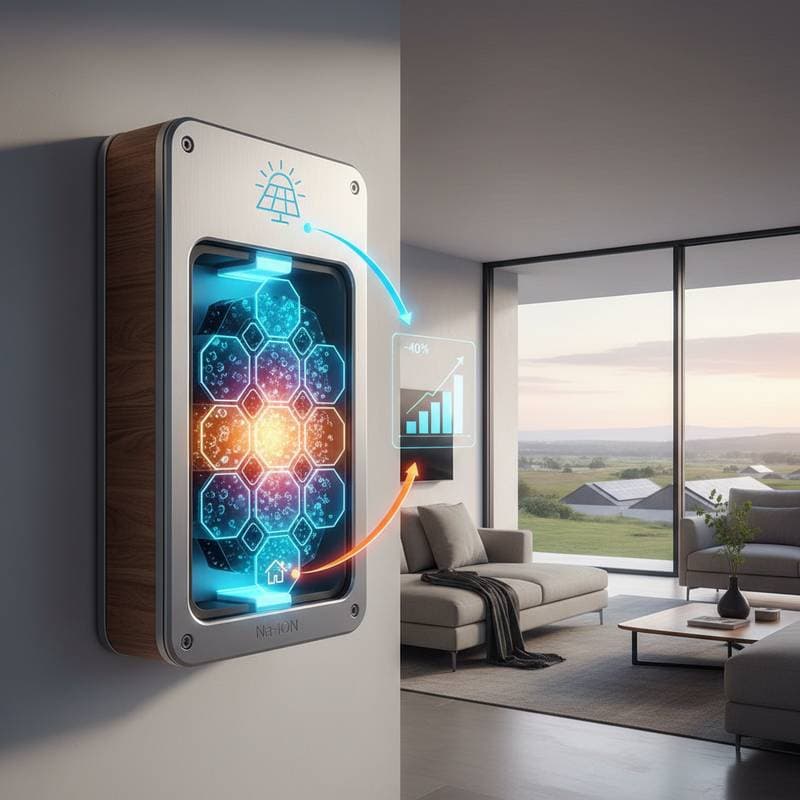
Sodium-Ion: Cheaper Tesla Battery Alternative by 2026
Solar energy adoption continues to expand, yet the cost and availability of lithium batteries pose ongoing challenges for homeowners. Individuals considering home storage solutions often encounter fluctuating lithium-ion prices and question whether a more stable, affordable option exists. Sodium-ion batteries emerge as a viable alternative, offering comparable performance at reduced costs and the potential to transform energy storage for residential and electric vehicle applications.
Why Homeowners Are Looking Beyond Lithium
Lithium batteries dominate current solar storage systems due to their compactness and reliability. However, the lithium supply chain experiences significant strain from expensive mining and refining processes, compounded by rising global demand for electric vehicles. This strain impacts solar installers and consumers through elevated prices, extended lead times, and inconsistent warranty conditions.
Sodium, in contrast, proves abundant and cost-effective, derived from salt found in seawater and everyday minerals. This accessibility in raw materials positions sodium-ion batteries to reduce production costs substantially. Industry projections indicate that scaled manufacturing could yield sodium-ion packs priced 30 to 40 percent lower than equivalent lithium-ion models.
How Sodium-Ion Batteries Work
Sodium-ion batteries function on principles similar to those of lithium-ion systems, with ions shuttling between cathode and anode via an electrolyte. Charging draws sodium ions from the cathode to the anode; discharging reverses the flow to generate electric current.
Key distinctions arise in the chemistry, as sodium ions exceed lithium ions in size and weight, influencing electrode packing efficiency. Engineers address this through materials like layered oxides or Prussian blue analogs, which accommodate larger ions while preserving structural integrity over repeated cycles.
A standard sodium-ion cell achieves energy density between 120 and 160 watt-hours per kilogram, trailing premium lithium cells that attain 200 to 250 watt-hours per kilogram. For stationary applications, where volume constraints play a lesser role, priorities shift toward affordability, safety, and longevity rather than peak density.
Safety and Temperature Performance
Sodium-ion technology excels in safety, exhibiting greater stability at elevated temperatures and reduced susceptibility to thermal runaway. These batteries also perform reliably in cold environments, benefiting installations in climates with sub-freezing winters.
Capacity retention reaches approximately 80 percent at sub-zero temperatures after cycling, surpassing lithium-ion batteries, which experience more pronounced declines. Such thermal versatility suits unconditioned spaces like garages, basements, or exterior enclosures.
Cost Example for a Home Storage System
Examine a 7-kilowatt home solar array in an optimal location, generating roughly 1,300 kilowatt-hours per kilowatt annually, or 9,100 kilowatt-hours total. At a utility rate of 16 cents per kilowatt-hour, this output offsets about 1,456 dollars in yearly electricity expenses.
A 13-kilowatt-hour lithium-ion storage addition typically costs 10,000 dollars installed. A 35 percent reduction via sodium-ion technology brings the price to approximately 6,500 dollars, yielding 3,500 dollars in upfront savings and accelerating payback by roughly two years, factoring in local incentives and rates.
Across a decade, modest differences in degradation rates remain outweighed by initial cost advantages. Sodium-ion chemistry supports thousands of full cycles, sufficient for daily solar integration over ten years in typical households.
Environmental and Supply Chain Benefits
Lithium extraction concentrates in specific regions, fostering geopolitical risks and ecological concerns. Sodium sourcing occurs domestically from ubiquitous minerals, minimizing transport emissions and environmental impact. Production avoids cobalt and nickel, materials associated with high-emission mining and intricate logistics.
Recycling proves more straightforward, as sodium-ion batteries feature fewer hazardous elements, enabling efficient material recovery with reduced chemical intervention. This profile bolsters community solar initiatives and aids utilities in achieving renewable energy objectives.
Integration with Solar and Storage Systems
Technically, sodium-ion batteries interface with conventional solar inverters and controllers through simple modifications. Voltage profiles align closely with lithium-ion standards, allowing battery management software to incorporate them via firmware updates.
Hybrid configurations blending both technologies may soon emerge, employing sodium-ion for cost-effective bulk storage and lithium-ion for peak power needs. This approach balances expenses and capabilities, prolonging overall system durability.
Advancements in monitoring enhance usability, with cloud platforms displaying voltage, temperature, and cycle data. As sodium-ion adoption grows, seamless incorporation into established ecosystems will follow, with installers providing tailored integrations.
What to Expect by 2026
Projections point to operational large-scale sodium-ion facilities in the coming years, supported by pilot operations from leading manufacturers. Commercial rollout will drive rapid cost declines as supply networks solidify.
Homeowners will gain expanded storage options in pricing and configuration. Initial offerings may target compact residential scales before scaling to comprehensive systems. Intensifying competition will elevate warranties and assurances, echoing lithium-ion's market maturation.
Practical Next Steps for Homeowners
Individuals aiming to safeguard solar investments against future shifts can act proactively. Consider these steps:
- Assess energy consumption. Analyze electricity bills to determine average daily usage, guiding appropriate storage sizing.
- Verify inverter compatibility. Select hybrid models that accommodate diverse battery types, potentially requiring only software enhancements for sodium-ion addition.
- Track incentive updates. Monitor evolving state and federal programs, as emerging rebates may favor advanced storage upon sodium-ion availability.
- Design for scalability. Incorporate expandable layouts, reserving conduits and mounts to simplify future capacity additions.
- Consult professionals. Engage local installers for insights on timelines, costs, and integration once sodium-ion products launch.
Routine maintenance sustains any battery array: clean connections, protect against moisture, and review monitoring metrics regularly. Homeowners familiar with their usage profiles will transition to sodium-ion solutions efficiently.
Preparing for Sustainable Energy Advances
Adopting sodium-ion batteries promises accessible, resilient storage that amplifies solar benefits. These systems deliver economic and ecological gains, empowering households to achieve energy independence with minimal compromise.
FAQ
What makes sodium-ion batteries cheaper than lithium-ion?
Abundant sodium sources and simplified refining processes reduce material expenses. Production demands less specialized machinery, further lowering overall costs.
Do sodium-ion batteries store as much energy as lithium-ion?
Energy density per kilogram falls slightly short, yet for stationary home use without space limitations, this gap proves negligible.
Are sodium-ion batteries safe for indoor installation?
Affirmative. Their enhanced thermal stability and broad operating range minimize overheating risks compared to lithium-ion counterparts.
Can sodium-ion batteries work with existing solar systems?
Contemporary inverters generally support integration through software modifications or basic hardware tweaks.