
Cut Your Power Bills 20% with No Roof Panels Needed
Many Philadelphia homeowners seek lower electric bills yet face barriers to rooftop solar. Roof shading, shared buildings, or structural limits often prevent panel installation. Community solar provides a practical alternative that delivers clean energy savings without any property modifications.
How Community Solar Works
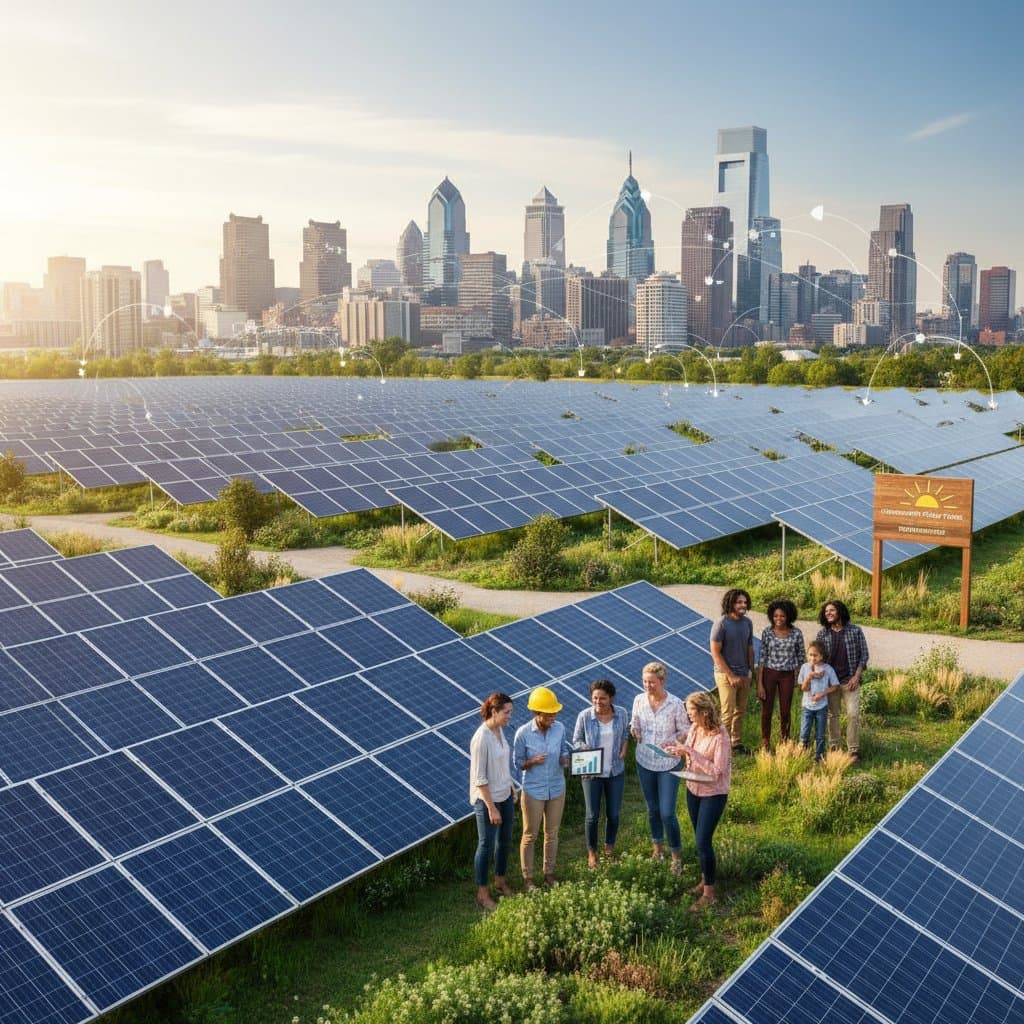
A community solar project consists of a large shared array constructed in a nearby location. Subscribers purchase or lease a portion of the energyarray. The generated electricity enters the regional grid, and the utility applies credits to the subscriber account for that share. Residents continue to receive power through their existing meter while paying a reduced rate.
This approach eliminates the need for panels, wiring, or roof penetrations on the subscriber property. No equipment requires maintenance by the homeowner. Project developers and utilities manage all technical operations, inspections, and safety compliance.
Typical Savings and Eligibility
Philadelphia programs commonly deliver bill reductions between 10 and 20 percent based on household energy consumption and subscription size. Renters, condo residents, and homeowners with shaded roofs qualify equally. Credits appear automatically on monthly PECO statements.
Participants must reside in the same utility service area as the solar array. Many programs operate without credit checks or extended contracts. Review all terms, including cancellation rights and rate structures, prior to enrollment.
Safety and Code Oversight
Community solar arrays adhere to the same electrical safety standards applied to other grid connected systems. Licensed electricians complete all wiring, grounding, and interconnection tasks. Local authorities inspect each installation before it becomes operational.
Subscribers never interact with electrical components. Access to panels, inverters, or conductors remains unnecessary. Operators isolate any circuit fault and send certified technicians for repairs. This division of duties protects residents from shock or fire risks.
Comparing Community and Rooftop Solar
Community Solar Advantages
- No roof modifications or permits required for subscribers
- No ongoing maintenance or cleaning obligations
- Flexible options suitable for renters and short term residents
- Savings begin as soon as utility credits activate
Rooftop Solar Advantages
- Direct ownership and control over equipment
- Greater potential lifetime savings under optimal roof and sun conditions
- Access to specific tax incentives in certain cases
Each option aligns with different household circumstances. Owners planning long term occupancy with suitable roofs may choose private systems. Renters and multi unit residents gain advantages from community participation without structural changes.
Steps to Enroll Safely
- Identify verified projects through Pennsylvania Department of Environmental Protection resources and local solar directories.
- Examine subscription agreements for cancellation policies and billing procedures. Reject any program demanding full prepayment.
- Verify that PECO supports the required credit transfer process.
- Review monthly bills to confirm credits align with the subscription agreement.
- Request annual performance reports and inspection records from the project operator.
How to Get Started with Community Solar in Philadelphia
Contact a licensed electrician with questions about electrical safety and meter compatibility. Reach recognized developers who provide transparent pricing along with verified local permits. Enrollment in a reputable program reduces power costs by up to 20 percent while supporting renewable energy expansion and avoiding roof work or maintenance demands.