
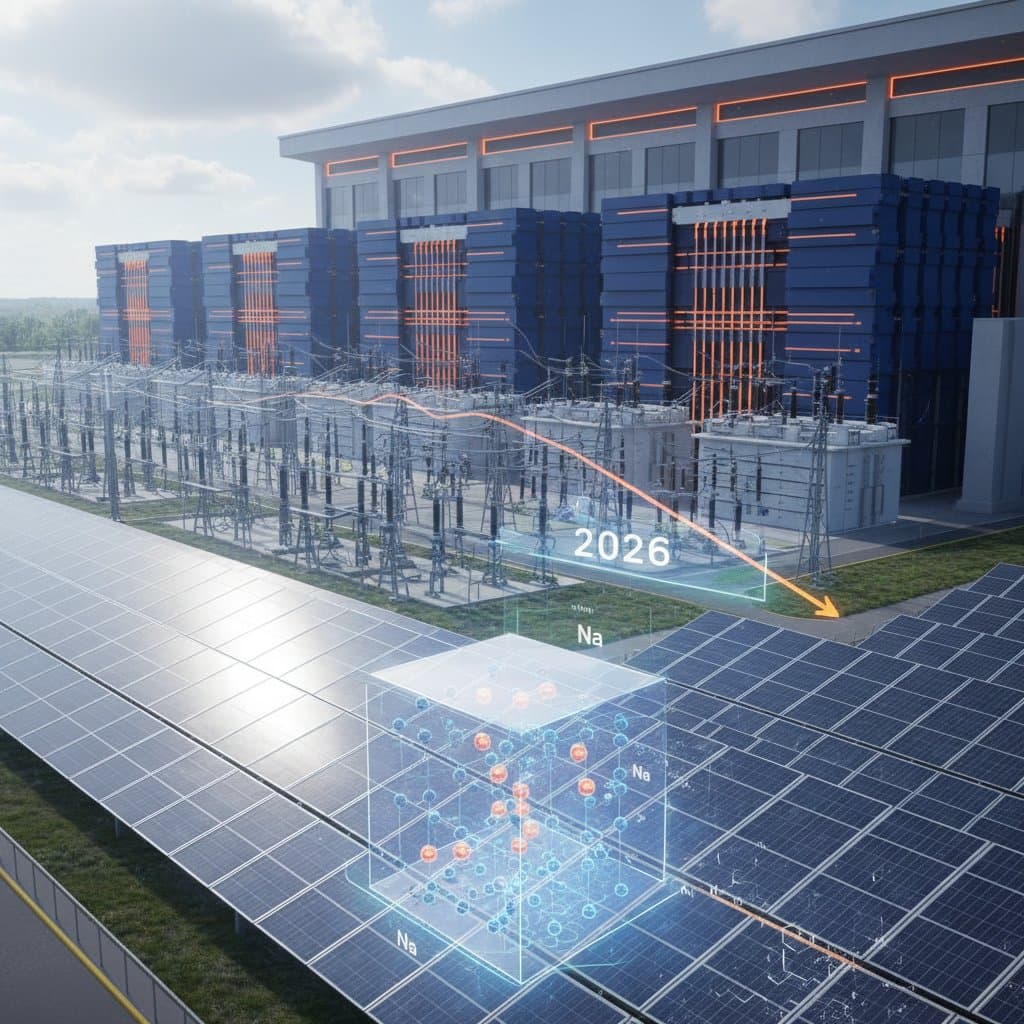
Sodium-Ion Batteries: A Path to Affordable Grid Power by 2026
Renewable energy storage demands cost-effective solutions to handle variable solar and wind output. Sodium-ion batteries position themselves as a viable alternative to lithium-ion for utility-scale applications. Their advantages in cost, safety, and resource availability position them to influence energy pricing and solar system performance for residential users.
Homeowners interested in solar integration should track these developments, as they may lead to steadier electricity rates and enhanced grid reliability.
The Role of Sodium in Energy Storage
Sodium derives from everyday table salt, making it far more accessible than lithium, which demands intensive mining from scarce reserves. This abundance minimizes supply disruptions and supports lower production expenses for battery manufacturers. Grid operators benefit from reduced vulnerability to global market fluctuations, while solar adopters gain from potentially lower pass-through costs in utility bills.
In sodium-ion batteries, sodium ions shuttle charge between electrodes, mirroring lithium-ion mechanics but with more economical components. Although lithium provides superior energy density for compact uses, sodium suffices for fixed installations where volume matters less. Utilities favor this approach for buffering solar peaks, ensuring consistent power delivery without excessive infrastructure.
Enhanced Safety and Operational Reliability
Grid storage requires technologies that withstand diverse conditions without compromising safety. Sodium-ion batteries function at reduced voltages, curbing thermal runaway risks that plague lithium systems. They also endure broader temperature swings, preserving efficiency in unconditioned outdoor setups common to utility sites.
Notable safety features encompass:
- Minimal fire or explosion potential during physical impacts
- Consistent output in temperatures from below freezing to over 100 degrees Fahrenheit
- Slower capacity fade over extended idle periods
For solar-dependent households, these traits translate to dependable grid support, cutting outage risks and associated repair expenses.
Sourcing Materials and Environmental Benefits
Lithium extraction often involves controversial practices affecting ecosystems and communities. Sodium-ion designs incorporate abundant elements like iron, manganese, and carbon, which pose fewer ethical and ecological challenges. Recycling these materials demands standard processes, unlike the specialized handling needed for cobalt or nickel.
Analyses indicate sodium-ion batteries may halve material expenses relative to lithium counterparts. Utilities can leverage this savings to fund renewable expansions without rate hikes. Aqueous electrolytes in sodium cells further aid sustainability by lowering flammability and easing disposal.
Deploying Sodium-Ion in Grid Operations
Effective grid management hinges on storing surplus renewable generation for peak demand. Sodium-ion batteries excel here by capturing midday solar excess and dispatching it evenings, smoothing supply variations. Their economics enable broader deployment, fostering a more resilient network.
Primary cost factors include:
- Affordable inputs: Sodium compounds cost a fraction of lithium salts.
- Adaptable production: Existing lithium facilities require few modifications for sodium lines.
- Enduring performance: Prototypes endure over 3,000 cycles with less than 20 percent capacity drop.
As manufacturing grows, operators may hybridize sodium and lithium setups, optimizing each for specific roles and curbing overall expenditures.
Key Differences: Sodium-Ion Versus Lithium-Ion
Both technologies employ ion movement for energy transfer, yet their traits diverge in ways that favor sodium for static uses. Lithium-ion packs more power into lighter packages, ideal for vehicles. Sodium-ion, though bulkier, prioritizes cost and robustness for grid duties.
Core contrasts involve:
- Energy storage efficiency: Lithium achieves higher watt-hours per kilogram; sodium trades density for affordability.
- Discharge capability: Comparable steady power for load balancing in both.
- Environmental adaptability: Sodium retains 90 percent capacity at 0 degrees Celsius, outperforming lithium.
- Economic viability: Sodium targets under $100 per kilowatt-hour by mid-decade.
- Risk profile: Sodium avoids rapid heating cascades seen in lithium failures.
These attributes render sodium preferable for expansive, stationary storage supporting solar arrays.
Leading Producers and Real-World Trials
Innovators like CATL, Faradion, and Natron Energy advance sodium-ion commercialization through dedicated factories. Pilot deployments in Europe and Asia test these batteries for frequency regulation and renewable firming. Results highlight seamless integration with existing grid controls.
Projections point to widespread utility adoption by 2026, blending sodium for bulk storage with lithium for high-density needs. Such combinations enhance system flexibility, mitigating single-technology risks.
Linking Sodium-Ion to Solar and Residential Setup
Community solar initiatives stand to gain from nearby sodium storage, capturing local generation for off-peak use. This setup minimizes transmission losses and stabilizes neighborhood voltage. Homeowners with rooftop panels experience fewer curtailments during high-production hours.
Though residential sodium units remain emerging, their pricing trajectory suggests future viability. When considering additions, prioritize systems with UL 1973 certification and compatibility with your inverter. Engage certified installers to navigate permitting and ensure seamless grid ties.
Routine Checks for Sodium-Ion Systems
Maintaining battery health involves monitoring external signs of issues. Verify voltage holds steady between 2.5 and 4.0 volts per cell during operation. Track enclosure temperatures, aiming below 50 degrees Celsius under load.
Watch for:
- Uniform connections without corrosion
- Absence of bulging casings or leaks
- Consistent charge times without anomalies
In case of irregularities, power down the unit and summon a qualified technician. Utilities conduct deeper diagnostics, including impedance testing, to forecast longevity and preempt downtime.
Navigating Regulations for Storage Adoption
Federal and state bodies enforce rigorous standards for battery integration. The Department of Energy promotes sodium-ion via research grants, while utility commissions review deployment proposals. Compliance with UL 9540 ensures fire propagation controls in installations.
NFPA 855 guidelines dictate spacing, ventilation, and suppression systems for large arrays. Sodium-ion's profile aligns well, often surpassing requirements. For home additions, secure permits from local inspectors to validate interconnections and safety measures.
Prospects for Sodium-Ion in Energy Systems
Maturing sodium-ion capabilities promise a diversified storage landscape, easing renewable scaling. Cost declines will underpin solar viability, amplifying returns on home investments through better net metering. Grids evolve toward hybrid models, blending technologies for optimal efficiency.
Homeowners benefit from this shift via predictable pricing and reduced reliance on peaker plants. Track utility announcements for regional projects that could enhance your solar output value.
Practical Actions for Solar Users
Evaluate your current setup against upcoming storage trends by reviewing annual energy statements. Discuss with providers whether sodium pilots influence local rates or incentives. Seek equipment with verified cycle warranties exceeding 5,000 uses.
Prioritize safety in expansions: Insist on grounded enclosures and automatic shutoffs. These steps position your system for long-term savings amid grid advancements.
Sodium-ion batteries pave the way for economical renewable storage, bolstering solar's role in daily energy needs.