
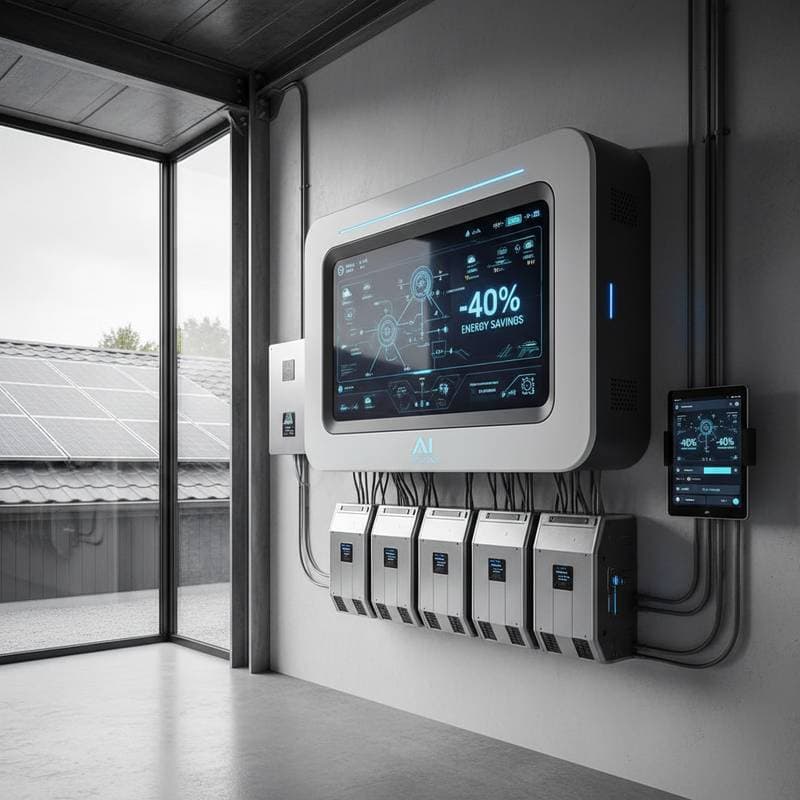
AI Solar Optimizers Reduce Energy Bills by Up to 40 Percent in Real Time
Solar energy research often presents challenges for homeowners. Many question whether emerging technologies truly achieve the advertised savings. Artificial intelligence now redefines solar system operations by enabling learning and adaptation. AI solar optimizers assist households in reducing energy bills by up to 40 percent via intelligent, real-time management.
This advancement focuses on enhanced coordination rather than panel or battery replacements. AI systems learn energy consumption patterns, predict sunlight availability, and optimize power distribution. Such capabilities transform a conventional solar installation into a dynamic system that adjusts immediately to environmental and usage changes.
Mechanics of AI Solar Optimization
Standard solar inverters convert sunlight to electricity using predefined algorithms. AI solar optimizers introduce advanced intelligence by tracking production, storage, and consumption at intervals of seconds. These systems evaluate factors including sunlight intensity, grid requirements, and household demand patterns.
Optimization divides solar arrays into micro-zones or individual panels. Sensors provide continuous data to a central processor. Machine learning models then allocate power efficiently. For instance, if shading from a structure affects one panel, the system redirects flow from unaffected panels to sustain overall performance.
At the core, sunlight strikes solar cells, generating electron movement across semiconductor junctions to produce current for the inverter. The AI overlay anticipates subsequent events. It stores surplus energy during low-rate periods, releases from batteries during peak pricing, and schedules high-energy tasks such as water heating or electric vehicle charging for cost-effective times.
Quantifiable Benefits and Savings
Examine a 7-kilowatt system in Philadelphia. The area typically yields 1,200 kilowatt-hours per kilowatt annually, totaling 8,400 kilowatt-hours. With an average utility rate of 18 cents per kilowatt-hour, this offsets approximately 1,512 dollars in annual grid expenses.
AI optimization enhances this by forecasting shading, weather, and usage, increasing output and minimizing waste by about 15 percent. This generates an additional 1,260 kilowatt-hours yearly, valued at 226 dollars.
Greater reductions arise from strategic timing. The system adapts to daily routines, storing energy off-peak and utilizing batteries during high-cost intervals. In typical residences, this strategy alone lowers bills by 25 to 30 percent. When paired with production improvements, overall savings approach 40 percent. Across a decade, these efficiencies return over 15,000 dollars.
Investment Costs and Return Timeline
Installing AI optimization components generally ranges from 1,000 to 2,000 dollars for residential setups. Federal tax incentives and local rebates frequently offset part of the expense. The addition recoups costs within three to five years via reduced energy expenditures and superior system efficiency.
Conventional solar installations offer solid returns, yet AI shortens the recovery period. Precise control over generation and usage maximizes each kilowatt-hour. This approach also safeguards against escalating utility prices and evolving rate plans.
Enhancing System Reliability and Durability
Beyond financial gains, AI safeguards investments through vigilant oversight. Real-time monitoring identifies issues like panel soiling, inverter faults, or microinverter failures prior to performance impacts. Early alerts enable proactive maintenance, preserving high efficiency.
Performance logs for each panel create comprehensive histories. The system accommodates seasonal shifts, automatically modifying operations for tracking systems. Iterative refinements in predictions minimize interruptions and prolong component lifespan.
Standard systems experience 0.8 percent annual efficiency loss due to degradation. AI-optimized setups demonstrate reductions near 0.4 percent, effectively halving long-term decline rates.
Seamless Connection to Smart Homes and Grid Systems
Contemporary AI platforms interface with smart thermostats, appliances, and electric vehicle chargers. They orchestrate operations, such as activating heat pumps during surplus production or postponing vehicle charging to align with low-cost windows. This synchronization maintains budget adherence and power thresholds.
Utilities increasingly incentivize such capabilities. In regions with time-based pricing or net metering, AI synchronizes exports with grid peaks. Timely energy release secures premium credits, positioning residential solar as a contributor to network balance.
Broader Ecological and Societal Advantages
Local generation of each kilowatt-hour eases pressure on distant power facilities. AI boosts effective solar yield without additional hardware, further diminishing carbon emissions. On-site usage also curtails transmission inefficiencies.
Widespread adoption of intelligent optimization strengthens community grids. Reduced peak loads decrease outage risks and extend infrastructure longevity. These outcomes advance regional environmental objectives while moderating collective expenses.
Steps to Implement AI Optimization
Evaluate your existing inverter and battery configuration first. Numerous AI solutions retrofit straightforwardly, though some necessitate hybrid inverters. Certified professionals assess suitability and project personalized savings from your usage data.
Inquire about user interfaces. Access a dashboard displaying real-time production, consumption, storage, and grid interactions. Select platforms supporting over-the-air updates and compatibility with current smart ecosystems.
Post-installation, allow two to four weeks for data accumulation across weather and routine variations. This period refines predictive models. Subsequently, observe optimized battery cycles, diminished grid reliance, and bill reductions.
Sustaining Optimal Performance
Maintenance remains straightforward. Clean panels annually or biannually, clear sensor obstructions, and apply firmware updates promptly. AI conducts self-diagnostics, yet professional annual inspections confirm peak operation.
Upon adding appliances or altering home layouts, revise usage profiles via the application. The AI recalibrates to accommodate evolving demands. This ongoing adaptation ensures sustained efficiency and consistent returns.
Frequently Asked Questions
What distinguishes AI solar optimization from conventional inverters?
Standard inverters operate on static protocols. AI versions learn from data and adapt dynamically to optimize production and usage based on live conditions.
Do AI optimizers integrate with current solar installations?
Yes, in many cases. Integration hinges on inverter specifications and data protocols; professionals verify compatibility and outline upgrades.
What savings levels are realistic?
Savings typically span 25 to 40 percent, blending enhanced generation with intelligent timing strategies.
Is an internet connection essential for AI functionality?
It supports updates and advanced learning. Offline, onboard controls uphold safety and core operations.
How reliable are AI predictions?
Following initial training, accuracy surpasses 90 percent for usage trends and solar output forecasts.
How does AI handle outages?
With battery integration, it regulates discharge to prolong runtime and prioritize critical loads.
Are data privacy issues present?
Collected information remains anonymized for model enhancement; no personal details transfer to external entities.
Which incentives support AI solar enhancements?
Federal credits apply to solar components, with select states providing rebates for intelligent management tools.