
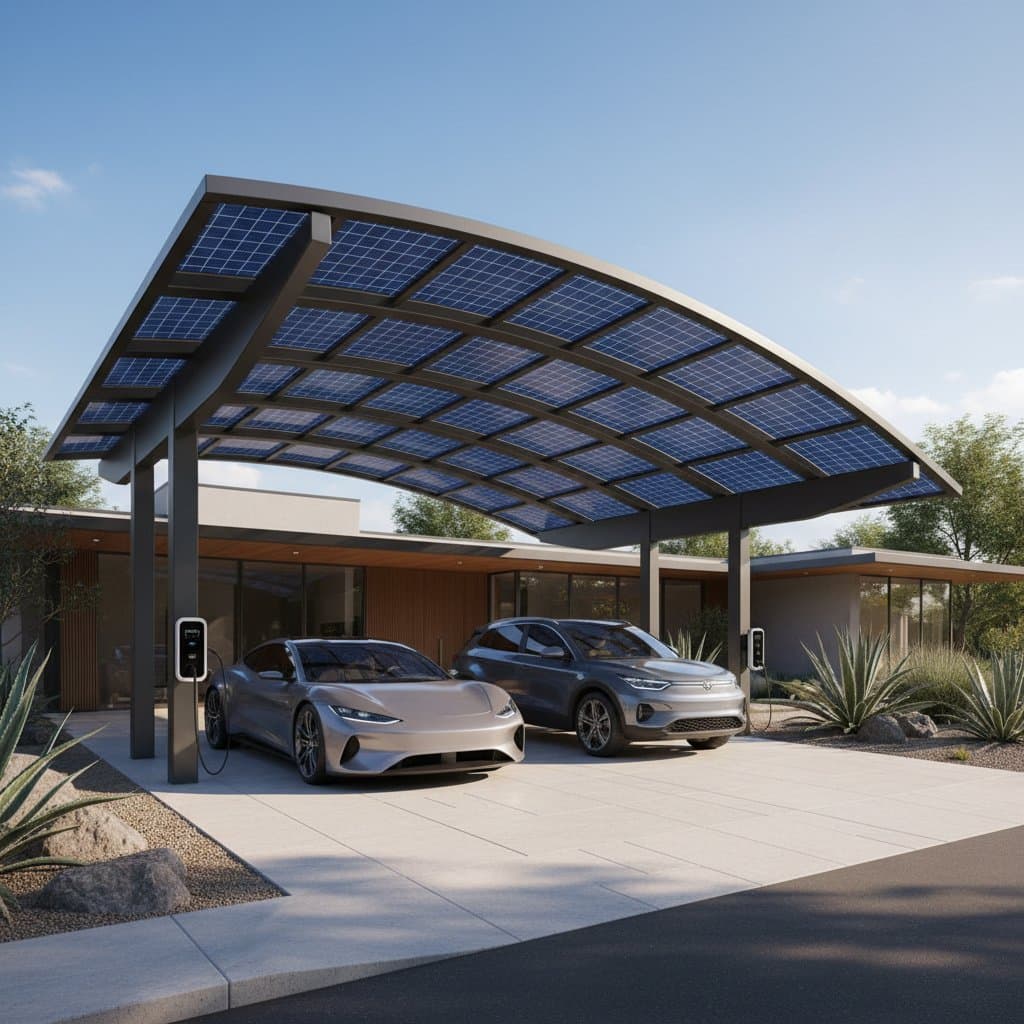
Introduction to Driveway Solar Canopies
Driveway solar canopies emerge as a pivotal innovation in residential renewable energy solutions for 2026. These structures mount photovoltaic panels over parking areas to capture sunlight while providing shelter for vehicles. Homeowners gain a multifunctional asset that addresses energy needs, climate challenges, and lifestyle demands in an era of increasing sustainability focus.
The appeal lies in their seamless integration with everyday home features. Unlike traditional rooftop solar arrays, canopies utilize underused driveway space effectively. This approach maximizes land efficiency and enhances property value through smart design.
As urban areas like Philadelphia prioritize green initiatives, these canopies align perfectly with local goals for reduced carbon emissions. They represent more than an upgrade; they embody a practical step toward energy independence.
Understanding Driveway Solar Canopy Basics
A driveway solar canopy consists of a sturdy frame supporting solar panels positioned above the driveway. The design resembles a carport but incorporates energy-harvesting technology. Panels tilt at optimal angles to absorb maximum sunlight throughout the day.
Materials emphasize durability, with aluminum or steel frames resistant to weather elements. Glass-encased panels ensure longevity and efficiency, often warrantied for 25 years or more. Installation elevates vehicles beneath, protecting them from rain, snow, and intense sun exposure.
These systems connect to home electrical grids or standalone batteries for storage. Advanced models include inverters that convert direct current to usable alternating current. This setup powers household appliances or feeds excess energy back to the utility for credits.
Core Benefits of Installing a Driveway Solar Canopy
Enhanced Energy Production
Driveway canopies generate substantial electricity, often rivaling rooftop systems of similar size. A standard 20-foot by 20-foot canopy can produce up to 10 kilowatts, sufficient to offset a significant portion of annual household consumption. Sunlight reflection from pavement below boosts panel efficiency in some designs.
Positioning over driveways captures consistent exposure without shading from trees or buildings. This reliability ensures steady output, even in variable weather common to the Northeast. Homeowners observe immediate reductions in utility bills as the system offsets peak-hour demands.
Protection and Comfort for Vehicles
The primary non-energy advantage involves shielding cars from environmental damage. Ultraviolet rays fade paint and interiors over time; canopies block this degradation effectively. In regions with heavy snowfall, like Philadelphia winters, the covered space simplifies snow removal.
Rain protection prevents water spots and corrosion on vehicle surfaces. Summer heat mitigation keeps interiors cooler, reducing air conditioning needs when entering the car. These practical perks extend vehicle lifespan and enhance daily convenience.
Integration with Electric Vehicle Charging
As electric vehicle adoption surges, driveway canopies facilitate seamless charging solutions. Built-in ports allow direct connection from panels to vehicle batteries, minimizing reliance on grid power. This setup supports overnight charging with clean, self-generated energy.
Smart controls optimize charging during peak solar production hours. Excess daytime energy charges the vehicle while powering the home at night. Such synergy positions canopies as essential for EV owners planning for 2026's expanded electric mobility landscape.
Financial and Environmental Advantages
Incentives make driveway solar canopies accessible in 2026. Federal tax credits cover 30 percent of installation costs, with additional state rebates in Pennsylvania reducing upfront expenses further. Local programs in Philadelphia offer grants for solar projects that enhance urban greenery and energy resilience.
Payback periods typically range from 5 to 8 years, depending on energy usage and sunlight availability. After this, the system delivers free electricity for decades, yielding substantial long-term savings. Property tax exemptions in many areas preserve financial benefits without increasing assessments.
Environmentally, these canopies cut greenhouse gas emissions by displacing fossil fuel-based power. Each kilowatt-hour generated avoids carbon release equivalent to planting multiple trees annually. They contribute to broader community goals, such as Philadelphia's commitment to 100 percent renewable energy by mid-century.
Design Flexibility and Customization Options
Homeowners select from various canopy styles to match architectural preferences. Minimalist frames blend with modern homes, while ornate designs suit traditional properties. Adjustable heights accommodate tall vehicles or additional storage beneath.
Panel configurations allow scalability; start small and expand as needs grow. Translucent panels permit partial light filtration for a brighter under-space. Aesthetic finishes, like powder-coated colors, ensure visual harmony with surroundings.
Professional assessments determine ideal sizing based on driveway dimensions and energy goals. Software simulations predict output and visualize the final look. This tailored approach guarantees functionality without compromising curb appeal.
Installation Process: Step-by-Step Guide
Begin with a site evaluation by certified solar professionals. They measure the driveway, assess structural integrity, and review local permitting requirements. This initial consultation identifies any ground reinforcements needed for stability.
Next, secure necessary approvals from municipal authorities. In Philadelphia, streamlined processes for solar installations expedite timelines. Engineers design the frame to withstand wind loads and seismic activity if applicable.
Construction occurs in phases: foundation pouring, frame erection, and panel mounting. Electrical integration follows, connecting to the home system or grid. Final inspections verify safety and performance before activation.
Post-installation, monitor output through apps that track production and savings. Maintenance involves occasional cleaning and inspections, keeping the system at peak efficiency with minimal effort.
Emerging Trends Shaping 2026 Adoption
Technological advancements drive canopy popularity in 2026. Bifacial panels capture light on both sides, increasing yields by 20 percent over standard models. Integration with smart home ecosystems allows voice-activated controls and predictive energy management.
Modular designs enable easy upgrades, such as adding battery storage for off-grid capability. Community solar initiatives pair canopies with shared energy pools, benefiting renters or those with unsuitable sites. Philadelphia's push for resilient infrastructure accelerates these trends through policy support.
Market growth reflects consumer demand; projections indicate a 40 percent rise in installations nationwide. Early adopters report enhanced home values, with appraisers recognizing solar assets at premium rates. This momentum positions canopies as a cornerstone of future-proofed living.
Steps to Launch Your Driveway Solar Project
Research reputable installers with experience in canopy systems. Request multiple quotes to compare pricing and warranties. Verify certifications from organizations like the North American Board of Certified Energy Practitioners.
Calculate potential savings using online tools that factor in local rates and sunlight data. Consider financing options, including low-interest loans dedicated to renewables. Align the project with personal timelines, such as EV purchase plans.
Engage neighbors or join local solar groups for insights and potential group discounts. Track policy updates, as 2026 brings expanded incentives. This proactive approach ensures a smooth transition to solar-powered living.
Realizing Sustainable Homeownership Benefits
Driveway solar canopies deliver multifaceted value that extends beyond immediate gains. They foster energy security in an unpredictable grid environment and promote mindful consumption habits. Families experience cleaner air and lower costs, contributing to healthier communities.
The investment reflects a commitment to legacy-building, passing on efficient, eco-friendly properties to future generations. Philadelphia homeowners lead this shift, inspiring regional adoption. Embrace this opportunity to redefine your driveway as a hub of innovation and responsibility.