
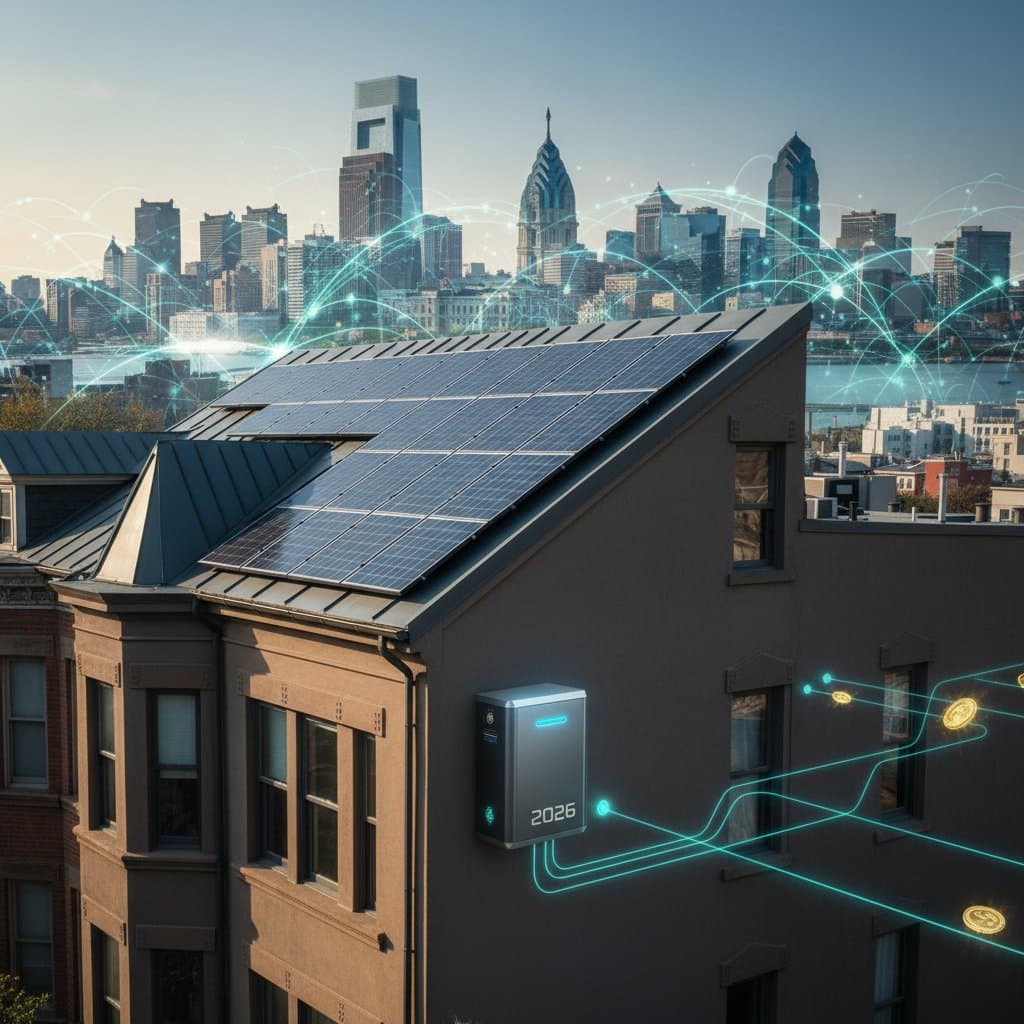
Solar Income Opportunities: Home Generation in Philadelphia by 2026
Philadelphia homeowners increasingly seek ways solar installations exceed mere bill reductions. Emerging grid programs enable income generation via smart interactions, variable rate structures, and shared energy models. Households equipped to produce renewable power position themselves for tangible financial gains.
Importance of Solar-Driven Earnings
Regional electricity rates continue to climb, positioning solar as a vital offset. A standard 7-kilowatt rooftop array in Philadelphia generates approximately 9,100 kilowatt-hours annually. At prevailing rates of 24 cents per kilowatt-hour, this yields around 2,180 dollars in annual savings prior to fixed fees. Integration with credit mechanisms, battery systems, and time-of-use schedules further unlocks revenue potential.
Beyond cost control, solar enhances home resilience, curtails carbon output, and diminishes dependence on external supplies. Each home-generated kilowatt-hour prevents about 0.7 pounds of carbon dioxide release. Across 10 years, a single household averts multiple tons of emissions, contributing to broader environmental goals.
Mechanisms Behind Solar Revenue
Solar panels transform sunlight into direct current electricity, which inverters convert to alternating current for household consumption. Surplus energy returns to the grid. Conventional net metering reimburses exports at retail rates, but innovative initiatives extend this framework to include dynamic pricing sales or peak-hour storage strategies.
Consider a system exporting 300 kilowatt-hours during a high-sun month. Full retail crediting delivers roughly 72 dollars toward the utility account. Incorporating battery storage for evening discharge amplifies returns through demand response rewards, compensating participants for grid support during critical periods.
Investment and Return Projections
Installation of a reliable 7-kilowatt system in the area ranges from 16,000 to 20,000 dollars pre-incentives. Federal tax credits and local rebates often slash costs by 30 percent or greater. Given production levels and rates, payback typically occurs within 7 to 10 years. Panels endure 25 years or beyond, yielding subsequent electricity at minimal expense alongside persistent credits.
Batteries introduce additional investment yet enhance adaptability. A 10-kilowatt-hour unit costs approximately 8,000 dollars post-installation. Such systems relocate solar production to high-demand evenings, ensure outage protection, and boost eligibility for interactive grid schemes. Together, they can cut grid dependency by over 70 percent.
Initial Steps for Installation
Begin by compiling 12 months of utility statements and evaluating roof alignment. Optimal setups feature south-facing surfaces with limited obstructions. Solicit proposals from a minimum of three certified installers, standardizing parameters for fair comparison. Verify inclusion of incentives, interconnection charges, and credit frameworks in each bid. Inquire regarding monitoring applications and warranties, which extend 20 to 25 years for key components.
Preliminary efficiency measures amplify benefits. Upgrade to LED lighting, apply weather sealing, and install programmable thermostats to lower overall consumption. This increases the proportion of generated energy available for export or storage, maximizing potential earnings.
Maintenance for Optimal Output
Perform annual spring cleanings on panels to remove debris. Review inverter notifications each month and monitor generation relative to projections. A decline exceeding 10 percent warrants professional assessment. Modern setups often feature user-friendly digital interfaces for effortless performance oversight.
Pathways to Participation
Solar revenue extends beyond expansive lots to include renters via community arrays and collective initiatives. Initiate with a professional shading analysis, secure multiple installer estimates, and investigate area-specific grid programs. These actions fortify energy autonomy while advancing regional sustainability.
Frequently Asked Questions
Can all solar output be sold directly to the grid?
Homes prioritize self-consumption before exporting surplus. Certain rate options permit complete export under dedicated plans.
How does partial roof shading affect performance?
Professionals employ microinverters or segmented designs to minimize impacts from shadows.