
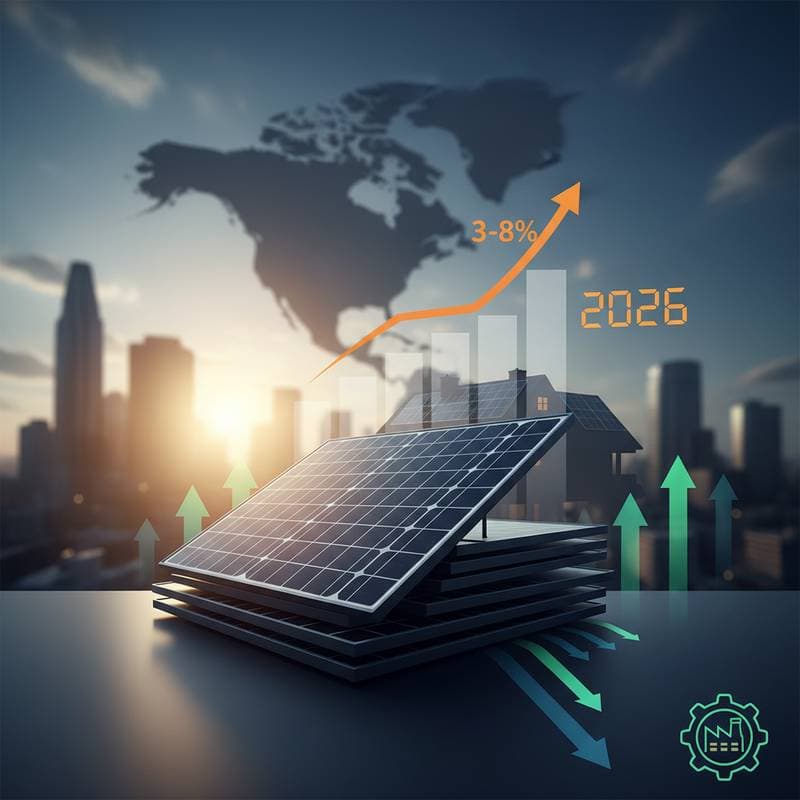
2026 Solar Tariffs: Anticipated Price Increases for Panels
Homeowners planning solar installations often encounter news about impending tariffs and seek clarity on implications for their projects. Solar panels now appear commonly on residences nationwide, delivering reduced electricity bills, greater energy independence, and lower environmental impact. Trade policies significantly influence equipment costs; higher tariffs elevate prices for imported panels, which in turn affect overall installation expenses and return on investment timelines.
For those evaluating solar options, grasping tariff mechanics and potential price shifts enables informed decisions on project timing and configuration. Even amid rising costs, solar power continues to offer substantial long-term financial and ecological advantages.
Mechanics of Solar Tariffs
Solar modules traverse an extensive global supply chain, from polysilicon procurement and wafer fabrication to cell production and panel assembly, often spanning multiple nations. Tariffs may impose duties at various stages within this process.
Upon tariff implementation, importers remit the additional fees upon entry. These surcharges cascade through distributors to installers and ultimately consumers. Suppliers frequently amass pre-tariff stockpiles to circumvent initial hikes; depletion of these reserves typically triggers prompt price escalations.
While domestic producers gain competitiveness, short-term supply constraints may arise, intensifying market pressures.
Incentives Mitigating Tariff Effects
Robust federal and state programs substantially counteract tariff-driven increases. The federal clean energy tax credit reimburses a significant portion of expenditures on solar arrays, storage solutions, and associated hardware. Pennsylvania households may access additional rebates or performance incentives via renewable initiatives.
Net metering policies from utilities compensate excess grid exports, accelerating financial recovery despite equipment price rises. Municipal low-interest loans or property-assessed clean energy financing distribute costs over extended periods, enhancing accessibility.
Strategic Timing for Installations
Prospective solar adopters benefit from prompt action to capitalize on existing inventory. Installers maintain pre-tariff stocks; committing to a contract prior to exhaustion secures prevailing rates.
Integrate roof repairs or additions like heat pumps and EV chargers to consolidate efforts, trimming labor and streamlining rebate applications.
Delaying risks exposure to full tariff impacts, while haste without thorough assessment invites suboptimal designs. Initiate consultations and evaluations promptly to facilitate deliberate choices.
Optimizing Installed Systems
Post-installation, routine practices sustain peak performance. Review monitoring dashboards monthly to verify output aligns with projections. Arrange biennial professional inspections for debris clearance and connection integrity; expect 0.5 percent yearly efficiency decline as standard.
For battery owners, track charge-discharge patterns; 90 percent round-trip efficiency prevails. Reserve stored power for peak-rate evenings to heighten bill reductions.
Annual gentle cleaning, tailored to local conditions like pollen accumulation, preserves yields. Employ soft tools and moderate water pressure, eschewing abrasives.
Practical Steps Forward
- Compile 12 months of utility statements to analyze consumption trends and peaks.
- Commission shade analyses from providers to quantify annual solar exposure.
- Solicit multiple quotes standardized by system capacity, yield forecasts, and rate inputs.
- Verify eligibility for federal, state, and local incentives prior to commitment.
- Establish maintenance protocols: initial post-install review, recurring audits, vegetation management, and panel care.
Tailored solutions exist for diverse households and finances. Incremental progress yields meaningful reductions, positioning individuals advantageously ahead of price adjustments.
Frequently Asked Questions
What constitute solar tariffs? Import duties applied to panels and components from abroad, elevating equipment acquisition costs.
By what margin might tariffs elevate installation expenses? Expect 3 to 8 percent overall hikes, varying with sourcing strategies.
Is pre-tariff installation advisable? Early action often secures inventory-based pricing, avoiding subsequent surges.
Do U.S.-made panels evade tariffs? Domestic production sidesteps import fees, potentially stabilizing costs post-implementation.
How do incentives counterbalance rises? They subsidize major portions of outlays, preserving attractive payback horizons.
Might tariffs enhance quality? They influence markets indirectly, possibly promoting rigorous domestic oversight and support.