
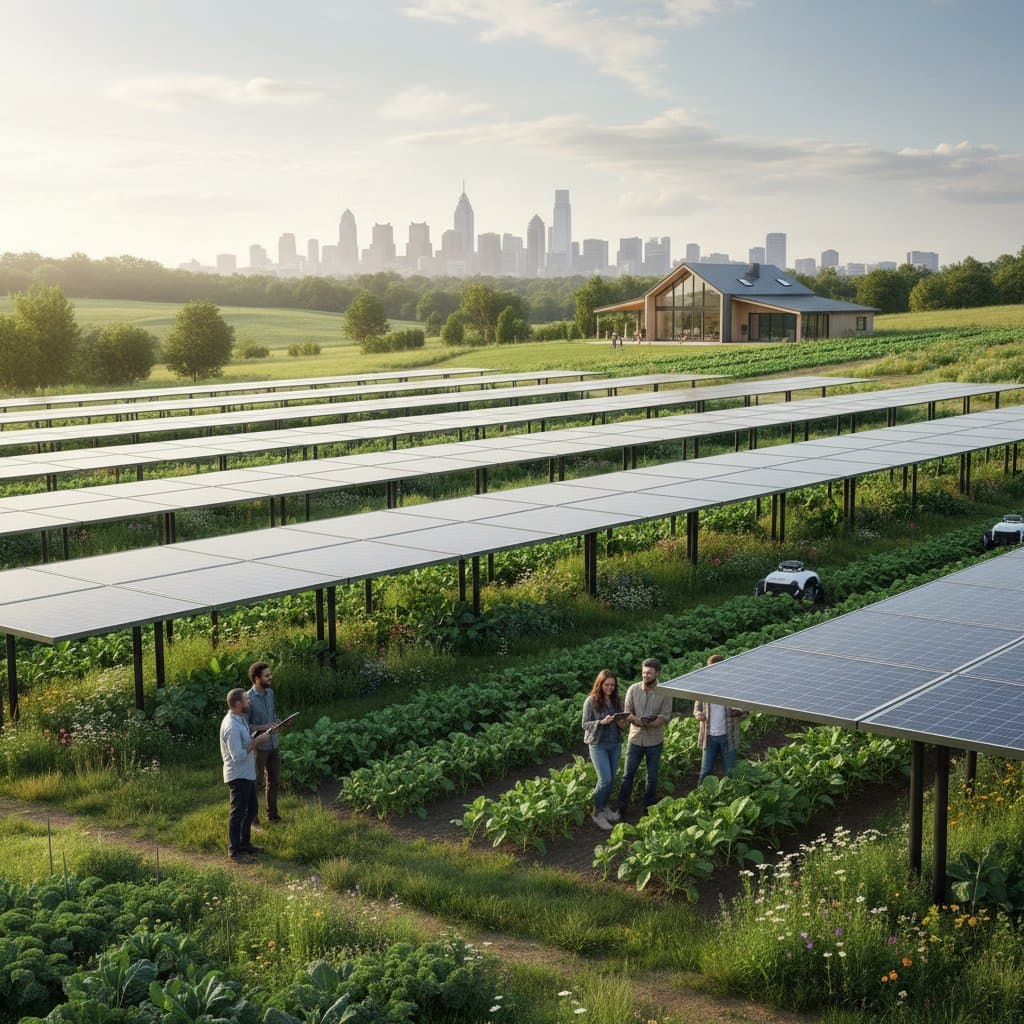
Agrivoltaics: Integrating Solar Energy with Crop Production in 2026
Agrivoltaics represents an innovative approach to land use that combines solar energy generation with agricultural production. This method, also known as dual-use solar, allows photovoltaic panels to produce electricity while crops grow beneath or alongside them. Farmers, energy developers, and local governments increasingly adopt this model to generate clean power without sacrificing valuable farmland.
In regions near Philadelphia, agrivoltaics provides landowners with the chance to lease land for solar installations while maintaining soil productivity and local food supplies. State regulations continue to evolve, incorporating updates to agricultural and energy codes that support these integrated systems. This development fosters sustainable practices that benefit both the environment and the economy.
Understanding Agrivoltaic System Operations
Agrivoltaic systems feature solar panels mounted on elevated structures, typically in rows, to permit sunlight penetration to the ground below. The elevation creates sufficient space for crop cultivation, machinery movement, and irrigation equipment. Adjustable mounting racks enable panels to optimize shading patterns and manage water flow from rainfall.
Farmers select shade-tolerant crops, including leafy greens, berries, and forage grasses, for cultivation under the panels. Studies from research facilities demonstrate that moderate shading reduces evapotranspiration and mitigates heat stress, often resulting in crop yields similar to those in unshaded areas.
Essential System Components
- Photovoltaic modules capture sunlight and convert it into direct current electricity.
- Inverters transform direct current into alternating current suitable for grid integration.
- Racking systems elevate and secure panels, ensuring stability against wind and ground conditions.
- Monitoring sensors measure variables such as soil moisture, ambient temperature, and energy production.
- Protective fencing and signage delineate areas with electrical risks to prevent unauthorized access.
All components require certification for outdoor durability, with installations adhering to precise torque guidelines from manufacturers. Improper connections rank among the primary sources of system failures in solar installations.
Site Design and Placement Strategies
Effective agrivoltaic designs hinge on panel spacing, orientation, and height to balance light distribution for crops and efficiency for energy capture. Inadequate configurations risk stunted plant growth or diminished power generation. Engineers employ simulation tools to harmonize these elements during planning.
Steps for Site Assessment
-
Evaluate Solar Potential Analyze sunlight availability using pyranometers or satellite imagery, accounting for shadows and seasonal shifts.
-
Analyze Soil Properties Examine soil composition and drainage to support crop health and structural integrity, steering clear of flood-prone or unstable zones.
-
Design Access Pathways Incorporate routes for farm equipment and emergency services, upholding setbacks around electrical components like inverters.
-
Identify Suitable Crops Prioritize varieties adapted to reduced light, such as salad greens and root crops, which thrive in partial shade.
-
Outline Electrical Infrastructure Protect wiring conduits from physical harm and position junction boxes above potential flood levels.
A licensed electrical contractor oversees the final design and grid connection protocol. Utilities review and authorize all interconnection arrangements to ensure compliance and safety.
Addressing Risks and Maintenance Protocols
Agrivoltaic setups face environmental challenges, including dust accumulation, precipitation, thermal fluctuations, and wildlife interference, all of which impact reliability. Routine checks safeguard long-term performance and safety.
Routine Maintenance Procedures
- Examine panels and supports for loosened fasteners or rust development.
- Conduct yearly tests on ground-fault interrupters and related safety devices.
- Ensure inverter cooling systems remain unobstructed by removing accumulated debris.
- Control plant growth near electrical housings to avoid interference.
- Log energy output data each month to identify anomalies early.
A sudden decrease in production signals potential module damage or inverter malfunction. Technicians must de-energize systems via the main disconnect before any internal access; unqualified individuals should contact certified professionals immediately.
Harmonizing Agricultural and Energy Outputs
Farm operations vary in emphasis, with some prioritizing crop volumes and others maximizing electricity yields. Vegetable growers might opt for greater panel separation and increased height to facilitate equipment operations. Solar-focused projects could employ tighter arrays for higher energy density. Optimal implementations strike a balance that serves both objectives.
Integrated designs view the solar array as an extension of the farm landscape. Contour farming directs water flow effectively, while dedicated pollinator zones enhance biodiversity and soil vitality. Crop rotation or controlled grazing prevents overgrowth beneath panels, promoting overall ecosystem health.
Building Skills for Agrivoltaic Implementation
Agrivoltaics generates demand for interdisciplinary expertise, blending electrical knowledge with farming practices. Professionals, including electricians and agronomists, receive training on safe interactions between energized systems and agricultural activities. Courses cover topics such as soil conservation, animal management near power sources, and hybrid system diagnostics.
Community colleges and vocational institutions expand curricula to include solar upkeep and rural electrical safety. These programs equip participants to contribute to renewable energy expansion and resilient food systems.
Steps for Landowners Exploring Agrivoltaics
Landowners interested in agrivoltaics should start by consulting local agricultural extension services for site-specific advice. Next, engage a qualified solar developer to conduct a feasibility study, evaluating land suitability and potential revenues from dual income streams. Secure necessary permits through county planning offices, ensuring alignment with zoning and environmental standards.
Partner with certified installers experienced in dual-use projects to oversee construction. Post-installation, enroll in monitoring programs to track performance and adjust operations as needed. This structured approach minimizes risks and maximizes benefits for sustainable land management.
Realizing Sustainable Benefits Through Agrivoltaics
Agrivoltaics redefines land productivity by enabling simultaneous food and energy production, reducing competition between agriculture and renewables. Farmers gain diversified revenue, improved resource efficiency, and enhanced resilience against climate variability. Communities benefit from preserved open spaces, reliable clean energy, and bolstered local economies. As adoption grows in 2026, this practice sets a model for integrated, forward-thinking land stewardship.