
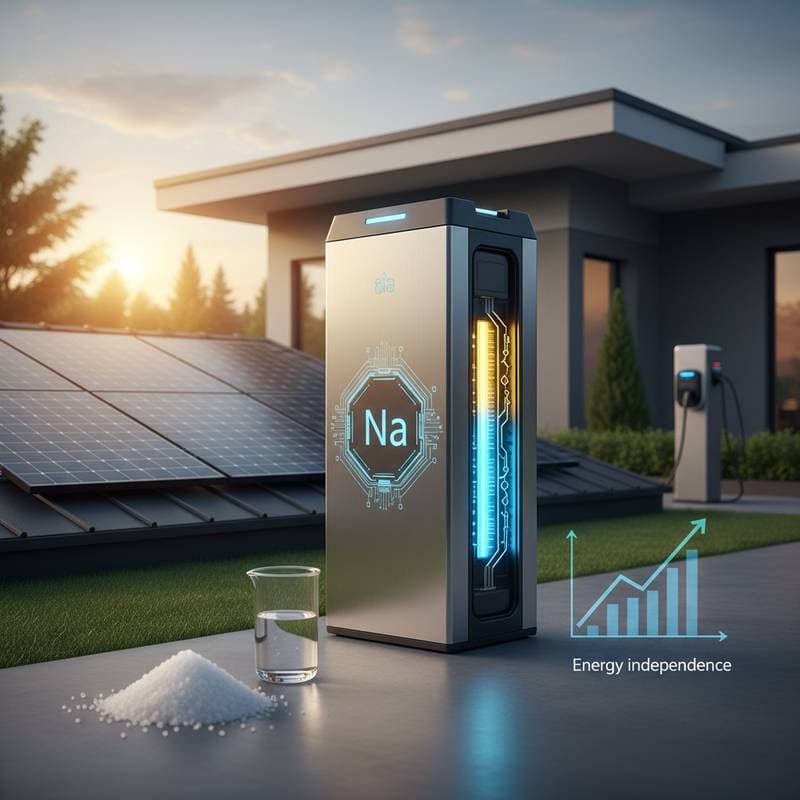
Cheaper Sodium Batteries: Future of Affordable Solar Storage
Solar research often overwhelms homeowners, particularly when discussions address batteries. Many individuals appreciate the concept of storing solar energy yet pause upon reviewing lithium-ion storage costs. Sodium batteries now transition from laboratory prototypes to commercial availability, offering a pathway to more affordable solar storage.
This evolution in sodium-based technology may transform renewable energy usage in homes and communities. The change does not involve immediate replacement of lithium. Instead, it expands access to dependable storage options within reasonable budgets.
How Sodium Batteries Work
Sodium-ion batteries function similarly to lithium-ion batteries at their foundation. Both types transfer charged ions between electrodes during charging and discharging cycles. The primary distinction lies in the element employed: sodium proves far more abundant than lithium and derives from everyday salt rather than mined ores.
Within the battery, sodium ions pass through an electrolyte toward a layered cathode composed of materials like sodium iron phosphate or sodium manganese oxide. During charging, these ions depart the cathode, traverse the separator, and embed in the anode. Upon discharge, the ions return, generating electrical energy for the connected circuit.
This ion movement produces electron flow through external wiring to operate appliances, lighting, or heating systems. The chemical composition allows simpler manufacturing processes than lithium counterparts and incorporates materials conducive to recycling.
Energy density presents the main technical challenge, as sodium atoms exceed lithium atoms in size, resulting in reduced ion capacity per cell volume. This leads to marginally lower storage per unit. However, advancements in electrode design and electrolyte formulations yield progress. Contemporary sodium cells achieve energy densities approaching 150 watt-hours per kilogram, versus 180 to 250 for typical lithium cells. Annual improvements continue to narrow this disparity.
The Cost Equation
Examining figures clarifies sodium batteries' potential market impact.
A 10-kilowatt-hour lithium system typically costs $12,000 when installed. Equivalent sodium capacity may range from $6,000 to $8,000, influenced by production volume and vendor rates.
Consider this scenario:
- Solar array size: 7 kilowatts
- Annual production: 9,100 kilowatt-hours
- Grid rate: 18 cents per kilowatt-hour
- Annual value of solar production: approximately $1,640
- Battery capacity: 10 kilowatt-hours
- Estimated daily use from battery: 8 kilowatt-hours
- Annual battery output: 2,900 kilowatt-hours
Stored kilowatt-hours offsetting grid power at 18 cents yield annual savings of about $522. For $12,000 lithium storage, payback exceeds 23 years. Sodium storage at $7,000 shortens payback to roughly 13 years. Rising utility rates or available incentives further enhance returns, rendering storage viable for broader homeowner adoption.
Material Abundance and Supply Chain Benefits
Lithium extraction concentrates in select regions with intricate methods. Sodium exists ubiquitously, refined from seawater, brines, or widespread mineral deposits across continents. Such availability stabilizes pricing and mitigates geopolitical supply risks.
Sodium battery cathodes depend less on costly metals like cobalt or nickel. This reduces expenses, bolsters environmental outcomes, and streamlines recycling. Solar installers benefit from diminished worries over procurement delays or fluctuating component costs.
Paired with local production, sodium batteries foster a robust storage sector that generates employment and lessens reliance on imports.
Integration with Existing Solar Systems
Sodium batteries employ control electronics and inverters akin to lithium systems. Numerous hybrid inverters accommodate sodium chemistry via firmware modifications. This compatibility simplifies upgrades for solar panel owners.
Installation procedures mirror those for lithium. The battery links to the inverter, which interfaces with the primary electrical panel. Excess daytime solar energy routes to the battery via the inverter. Nighttime operation draws from storage to supply the home.
Monitoring applications display real-time data on production, usage, and charge levels. Maintenance involves software updates and periodic inspections of wiring or ventilation.
Environmental and End-of-Life Considerations
Recycling sodium batteries surpasses lithium processes, as they avoid toxic or scarce metals. Water-based electrolytes and safe electrode treatments enable efficient recovery. End-of-life handling reclaims most aluminum, copper, and steel components.
Sodium's nonflammable and low-reactivity nature enhances storage and transport safety. Reduced insurance expenses follow for installers and operators.
Homeowners prioritizing sustainability find alignment with solar's goal of minimizing impacts across production, use, and disposal phases.
What to Expect in the Coming Market
Analysts anticipate sodium batteries debuting in compact uses like backup power, portable units, and shared solar initiatives. Scaled manufacturing will soon extend to home systems.
Initial offerings may feature modest energy density yet superior cost per kilowatt-hour. Maturing production elevates performance and extends warranties.
Installers testing these batteries report timelines comparable to lithium setups, without unique permitting needs. Chemistry differences reside internally, not in external procedures.
Homeowners should exercise patience alongside interest. Brief anticipation for sodium solutions may yield substantial savings while preserving dependability.
Practical Next Steps
- Evaluate current energy consumption by reviewing utility statements to identify usage patterns and peak periods.
- Estimate solar output using online calculators or professional evaluations based on roof dimensions, orientation, and obstructions.
- Select battery-compatible inverters if future storage is planned, ensuring support for diverse chemistries.
- Monitor announcements from manufacturers regarding sodium product launches each quarter.
- Investigate federal tax credits, state rebates, and local policies applicable to various battery types.
- Arrange for maintenance by positioning batteries in temperature-controlled, ventilated areas and inspecting connections yearly.
These actions position individuals to adopt advanced solar storage when costs and capabilities match personal objectives.
FAQ
What makes sodium batteries cheaper than lithium batteries?
Sodium batteries incorporate plentiful, low-cost materials like salt-derived compounds, bypassing expensive lithium and cobalt mining. This approach cuts raw material and production expenses.
How long do sodium batteries last?
Quality sodium batteries endure over 3,000 full cycles, equating to about ten years of daily operation before notable capacity decline.
Can sodium batteries replace lithium batteries in existing systems?
Yes, in numerous instances. Similar voltage profiles allow integration with hybrid inverters supporting multiple types after firmware adjustments.
Are sodium batteries safe?
Yes. Their thermal stability, reduced flammability, and ease of transport exceed lithium-ion safety standards.
How does energy density compare between sodium and lithium batteries?
Sodium variants store modestly less energy by weight, though ongoing innovations diminish this gap.
Will sodium batteries work in cold climates?
Current designs operate effectively in broad temperature ranges. Specialized low-temperature electrolytes expand suitability for harsh winters.