
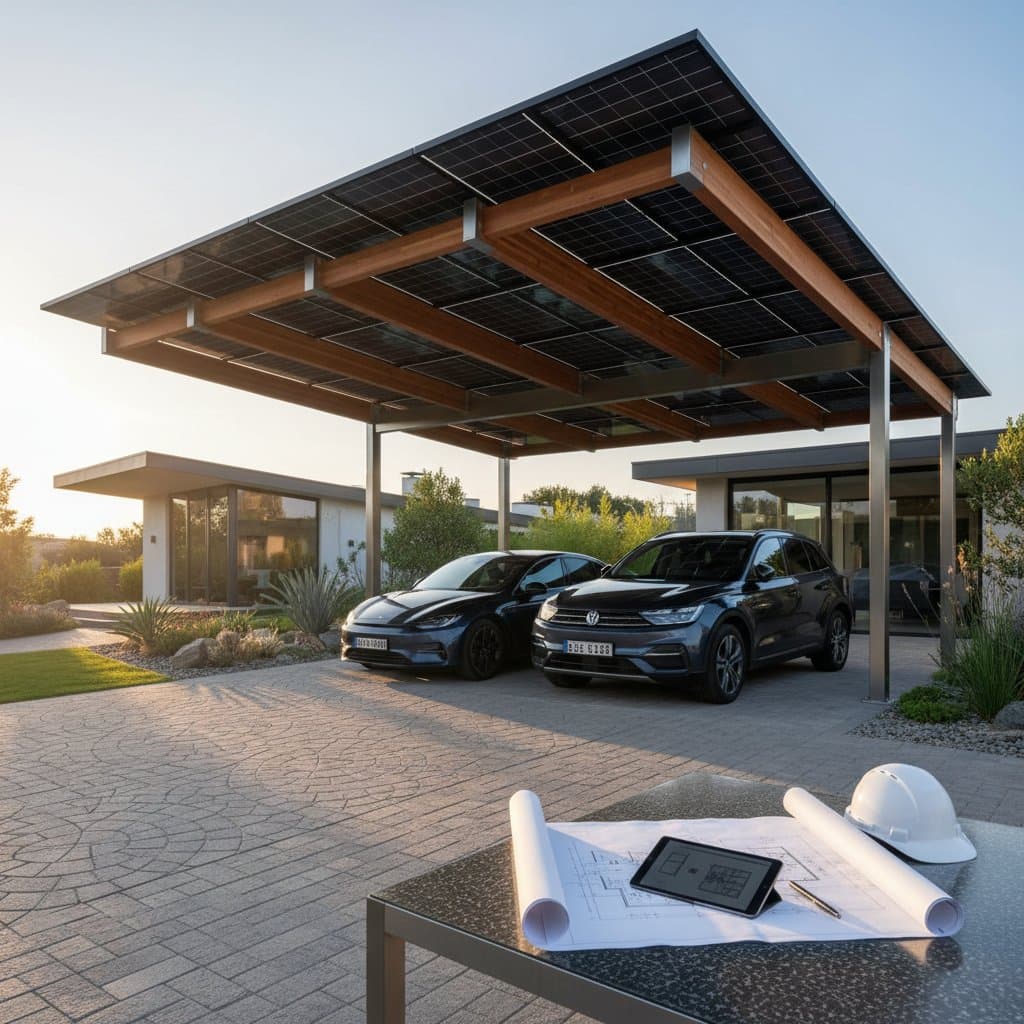
Driveway Solar Canopies: Permits That Maximize ROI
Solar installations can appear daunting, particularly with innovative options such as driveway canopies. Homeowners frequently encounter concerns about intricate permits, variable expenses, and variable financial outcomes. In practice, a thoughtfully designed solar canopy yields consistent energy savings, safeguards vehicles from weather exposure, and elevates property worth. Grasping the permit process and its link to return on investment unlocks these advantages.
How Driveway Solar Canopies Work
A driveway solar canopy consists of a elevated frame constructed from steel or aluminum, topped with solar panels. This setup functions as both an electricity producer and a covered parking area. The panels absorb sunlight through photovoltaic cells, where photons excite electrons in silicon, generating direct current. An inverter then transforms this into alternating current suitable for household consumption.
Systems typically span 4 to 8 kilowatts, scaled to driveway size and parking needs. For instance, a 6 kW canopy in an area with 1,200 kilowatt-hours per kW annually generates approximately 7,200 kilowatt-hours each year. At an average utility rate of 18 cents per kilowatt-hour, this translates to about 1,296 dollars in annual electricity savings.
Why Permits Matter for ROI
Permits extend beyond mere regulatory requirements; they shape design options, confirm safety, and determine access to financial benefits. Local authorities generally mandate building and electrical permits for solar canopy projects. Zoning reviews may apply if the structure approaches property boundaries or surpasses height restrictions.
These approvals verify adherence to regional wind and snow load criteria. They also ensure electrical integrations align with utility guidelines. Absence of proper permits may lead to penalties, forfeited incentives, or insurance issues. A compliant installation qualifies for federal tax credits and state rebates, potentially reducing initial expenses by 30 percent or greater.
The Steps Behind a Permit-Ready Design
-
Site Assessment
Professionals evaluate driveway measurements, potential shading, and solar orientation. South-facing configurations with a 5- to 15-degree tilt often yield the best annual performance. -
Engineering Plans
Licensed engineers draft structural blueprints and electrical diagrams. These documents detail foundation depths, panel arrangements, and wiring paths. -
Permit Submission
Submit the engineered plans along with fees, which range from 200 to 800 dollars based on local regulations. -
Utility Approval
The utility examines interconnection specifications for grid compatibility. Approval enables excess energy export via net billing or credit mechanisms. -
Inspection and Commissioning
Post-installation, officials inspect grounding, cabling, and framework stability. Clearance follows, activating the system for use.
Cost and Payback Example
A 6 kW driveway solar canopy might cost 24,000 dollars prior to incentives. Application of a 30 percent federal tax credit reduces this to 16,800 dollars. Including 1,000 dollars for permits and inspections brings the net outlay to 17,800 dollars. With 1,296 dollars in yearly savings, the payback period reaches approximately 13.7 years. State rebates or enhanced net billing can shorten this to around 10 years, followed by 10 to 15 years of cost-free electricity.
Factors That Affect ROI
-
Sun Hours
Areas with greater solar exposure generate higher output per installed kilowatt. -
Tilt and Orientation
Aligning the canopy near the site's latitude optimizes energy capture across seasons. -
Shading
Obstructions like trees or buildings may reduce yield by 10 to 30 percent. -
Equipment Selection
High-efficiency panels at 22 percent outperform standard options, justifying higher upfront costs through superior longevity. -
Utility Rates and Policies
Elevated electricity prices hasten financial recovery. -
Installation Expenses
Regional labor rates and material prices influence total budgets.
Permitting integrates these elements, often demanding shading analyses, load assessments, and utility documentation. Addressing them early prevents expensive modifications.
Maintenance and Long-Term Care
Installed solar canopies demand minimal maintenance. Periodic panel cleaning and bolt inspections after severe weather maintain efficiency. Production monitoring tools allow real-time oversight and early issue detection. Warranties typically cover panels for 25 years and structures for 10 years; retained inspection logs safeguard these protections.
Preparing for Installation
Compile site surveys, electrical panel images, and recent utility statements before proceeding. Engage a certified installer experienced in local regulations. Request an itemized quote distinguishing equipment, labor, and permitting costs. This clarity supports realistic planning. Approved permits pave the way for completion in one to two weeks, subject to conditions.
Driveway solar canopies elevate ordinary spaces into valuable energy producers. Proper permitting secures not only operational reliability but also enduring benefits in home efficiency and worth.
FAQ
Do driveway solar canopies require separate permits from rooftop systems?
Yes. Authorities classify them as independent structures, necessitating dedicated building and electrical approvals.
Will a canopy work if my driveway faces north?
Performance remains viable, though output could decline by 10 to 20 percent. Adjustable mounts can orient panels southward for improved results.