
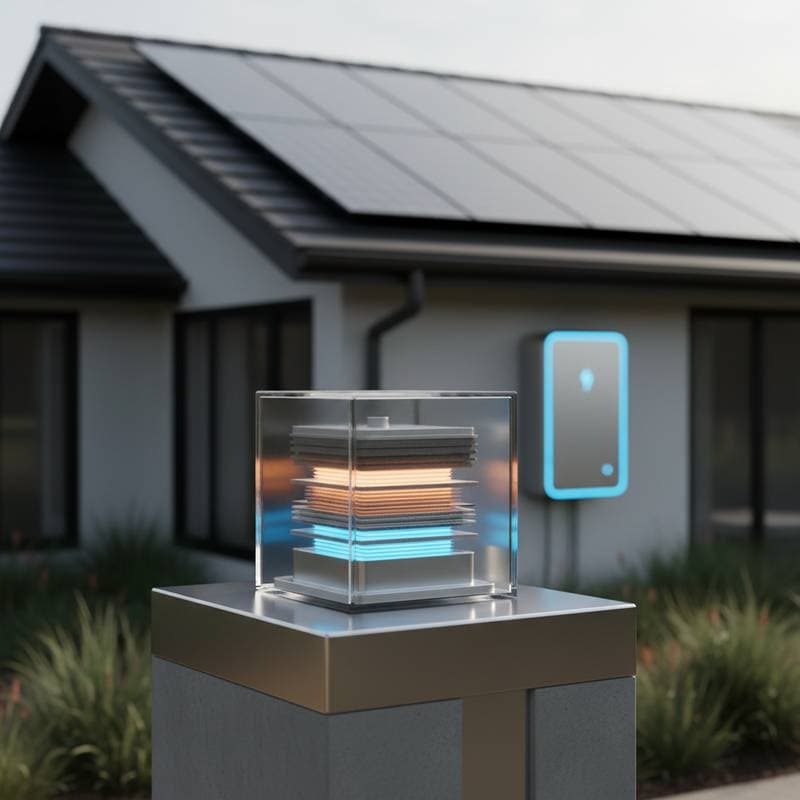
Solid-State Batteries: The Lithium Game Changer
Homeowners investing in solar and storage systems often inquire about advancements beyond lithium-ion technology. The industry directs attention to solid-state batteries. These innovative designs replace the liquid electrolyte in traditional lithium cells with a solid material. This substitution enables higher energy density, faster charging times, and enhanced safety features. Although solid-state batteries remain uncommon in residential settings, the technology nears practical implementation. Knowledge of their benefits, operational principles, and required safety protocols empowers informed decisions for future solar battery selections.
How Solid-State Batteries Work
A battery stores electrical energy through the movement of ions between a positive electrode, known as the cathode, and a negative electrode, called the anode, via an electrolyte. In lithium-ion batteries, the electrolyte consists of a liquid that facilitates ion flow. Solid-state batteries employ a solid ceramic or polymer electrolyte that conducts ions without relying on liquid components.
This fundamental shift influences multiple performance aspects:
- Ion transport: Solid electrolytes facilitate efficient ion movement at elevated temperatures, though performance may diminish at lower temperatures.
- Electrode structure: These designs accommodate denser electrodes, thereby increasing overall energy capacity.
- Safety margin: The absence of liquid electrolyte minimizes risks of leakage or ignition.
- Thermal stability: The solid electrolyte withstands expansion and contraction, enhancing mechanical durability.
When integrated with solar systems, this stability mitigates degradation from frequent charge and discharge cycles.
Challenges in Residential Use
Despite notable safety advantages, solid-state batteries encounter technical and economic obstacles prior to broad adoption. Manufacturers address key issues including:
- Manufacturing cost: Fabricating solid electrolytes with uniform quality proves costly.
- Operating temperature: Certain solid materials require higher temperatures for optimal ion conduction.
- Interface stability: The contact area between the solid electrolyte and electrodes must endure thousands of cycles without degradation.
- Scalability: Prototypes typically function at reduced scales, whereas residential applications demand large-capacity modules.
The cost per kilowatt-hour exceeds that of current lithium-ion units. However, projections indicate reductions as production expands and material innovations emerge. Battery developers operate pilot facilities, targeting initial commercialization in automotive and stationary storage sectors.
Comparing Battery Types
| Feature | Lithium-Ion | Solid-State |
|---|---|---|
| Electrolyte | Liquid | Solid |
| Energy Density | High | Higher |
| Fire Risk | Moderate | Low |
| Cycle Life | 3,000 to 5,000 cycles | Potentially 10,000+ cycles |
| Operating Temperature Range | Moderate | Wider, depending on material |
| Maintenance | Minimal | Minimal |
| Cost (current) | Lower | Higher |
This table highlights how solid-state batteries may extend cycle life significantly and reduce safety concerns. Although initial costs present a barrier, long-term benefits in durability and reliability could justify the investment for extended-use systems.
Environmental and Recycling Benefits
Transitioning to solid electrolytes enhances recyclability prospects. Lithium-ion batteries incorporate flammable liquids and intricate separators that hinder disassembly. Solid-state configurations utilize fewer layers and simpler materials, streamlining the recycling process.
Research demonstrates that solid components recover with minimal chemical intervention. This approach diminishes the environmental impact associated with production and disposal. For solar-equipped households pursuing comprehensive sustainability, such battery advancements align with the objectives of renewable energy generation through rooftop panels.
What Homeowners Can Do Now
Preparation for solid-state integration involves several straightforward actions:
- Assess current storage: Evaluate the condition and warranty of existing batteries. Modular lithium-ion systems often permit future upgrades without inverter replacement.
- Plan electrical space: Allocate sufficient capacity in electrical panels and storage areas to support emerging technologies.
- Track manufacturer updates: Monitor announcements from established brands and certification entities like UL and the National Fire Protection Association.
- Consult professionals: Discuss compatibility strategies with solar installers or electricians familiar with evolving storage solutions.
PhillyGoSolar advises reliance on credible industry channels over unverified reports. Updates from accredited labs, standards groups, and certified professionals provide the most reliable guidance.
Maintenance and Monitoring
Solid-state batteries offer reduced maintenance needs, yet vigilant oversight remains essential. Utilize system interfaces or mobile applications to observe charge cycles, temperatures, and overall health status. Configure notifications for deviations from normal parameters.
In cases of irregular voltage or charging failures, isolate the battery from connected circuits and engage a qualified technician. Avoid accessing internal components or overriding safety mechanisms. Maintain storage environments as clean, dry spaces devoid of flammable substances. Sustain temperatures within specified ranges, and schedule professional inspections to verify secure connections and operational monitoring equipment.
Preparing for Enhanced Solar Reliability
Solid-state batteries represent a pivotal advancement in energy storage, promising safer and more efficient solar integration. By addressing current limitations, this technology supports longer system lifespans and reduced operational risks. Homeowners who stay informed and plan accordingly position themselves to adopt these innovations seamlessly. This forward-thinking approach maximizes the value of solar investments while contributing to broader energy sustainability goals.