
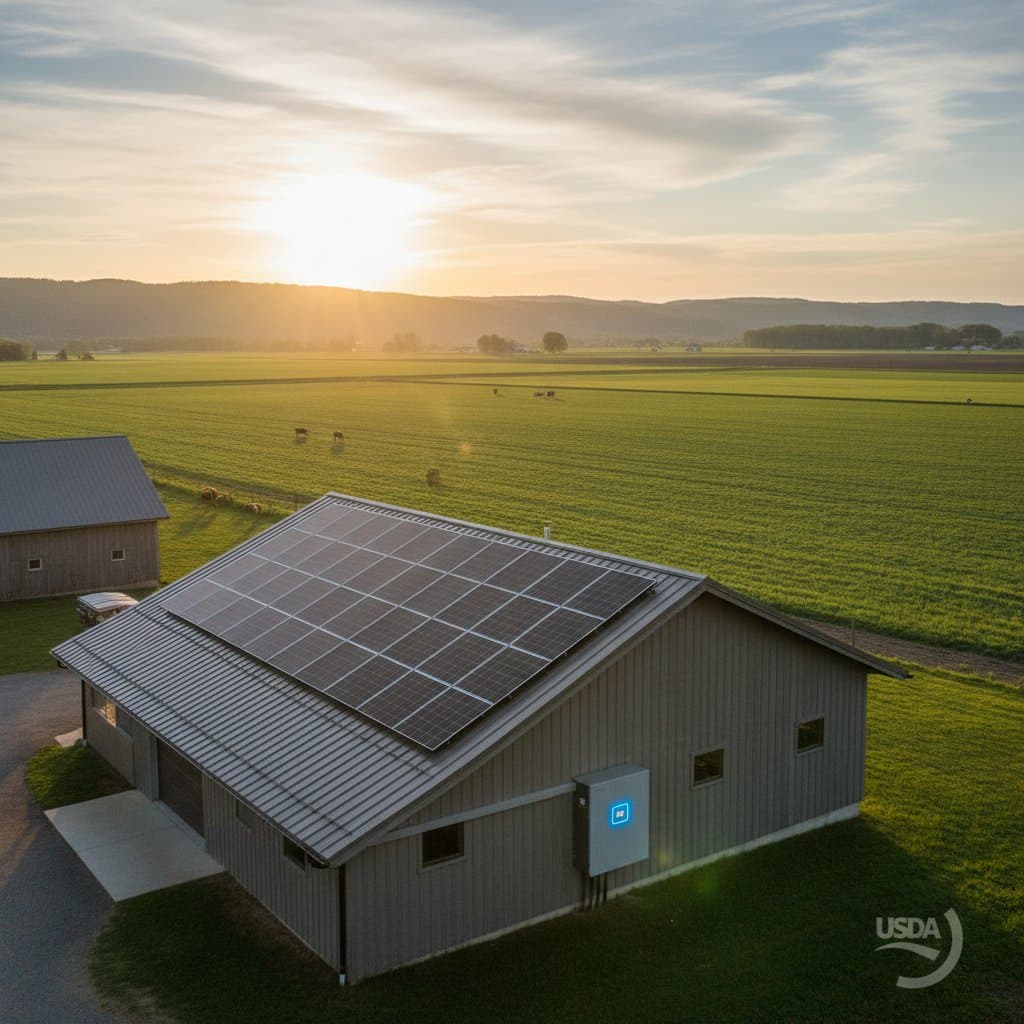
New USDA Grants: Up to $15,000 for Rural Solar Storage Systems
Solar incentives often present challenges for rural homeowners and small farm operators who must weigh initial expenses against future benefits. The latest USDA funding simplifies this choice. This program provides grants of up to $15,000 for solar-plus-storage installations in rural locations, enabling property owners to enhance energy self-sufficiency and lower utility expenses.
Rural families and agricultural businesses frequently encounter issues with power stability and escalating energy prices. Extended transmission lines, aging infrastructure, and variable weather contribute to frequent disruptions and cost increases. Integrating solar panels with battery storage addresses these challenges effectively. The USDA initiative promotes this combination to foster affordability.
Reasons Behind USDA Support for Solar Storage
The USDA has long advanced renewable energy through programs such as the Rural Energy for America Program. This current grant cycle underscores the importance of energy storage alongside generation. Solar arrays produce electricity during daylight hours, while batteries ensure continuous operation for lighting, irrigation, and cooling systems beyond peak sun hours or amid grid failures.
These grants, provided as direct funding rather than loans, motivate smaller property holders to invest in durability. The USDA seeks to assist rural areas in reducing energy expenditures, bolstering local power networks, and decreasing greenhouse gas outputs without navigating intricate loans or interest charges.
Grant Mechanics
The maximum $15,000 award targets qualified solar-plus-storage setups for rural residences, farms, and modest enterprises. Grants offset a share of overall system expenses, which generally span $25,000 to $60,000 based on capacity and components.
Applicants satisfy two primary requirements.
- Location: Properties qualify if situated in rural zones, typically beyond large urban boundaries.
- Application: Systems must support farming, small-scale commercial activities, or primary rural dwellings.
Upon approval, payments go directly to recipients or contractors following confirmation of setup and functionality. Numerous installers assist with paperwork to streamline the procedure.
Core Advantages of Solar Storage Systems
Solar paired with storage yields financial and operational gains.
- Utility Bill Savings: Solar generation covers daytime consumption, and batteries minimize grid usage during costly evening periods.
- Power Backup: Storage sustains vital equipment during outages, including pumps, illumination, and refrigeration units.
- Energy Autonomy: Reduced dependence on diesel backups or fluctuating fuel costs enhances control.
- Property Value Boost: Installations often elevate market appeal through sustained lower energy demands.
The USDA grant diminishes the initial investment hurdle for these outcomes.
Illustrative Cost Analysis
Examine a 7 kW solar array combined with a 10 kWh battery. Each kilowatt of solar capacity yields approximately 1,300 kilowatt-hours yearly, varying by site and sunlight availability. Such a setup produces about 9,100 kilowatt-hours per year.
At a utility rate of 15 cents per kilowatt-hour, this generation saves roughly $1,365 annually. The battery increases total costs by $3,000 to $5,000 yet delivers outage protection and optimized energy use.
Suppose the full installation totals $35,000. The $15,000 USDA grant reduces the effective cost to $20,000. Additional federal tax incentives may further decrease this to around $14,000.
With $1,365 in yearly offsets, payback occurs in approximately 10 years. Systems endure beyond 25 years, extending benefits. For agricultural or commercial users, outage prevention adds significant value by averting potential losses.
Unique Value of Solar Storage in Rural Settings
Rural environments present distinct conditions that amplify the worth of solar storage. Sparse grid connections raise repair expenses and downtime risks. On-site batteries retain generated power, maintaining essential operations despite prolonged service delays.
Farms rely on consistent electricity for crop preservation. Pumps for irrigation, fans for animal housing, and units for produce storage demand uninterrupted supply. Solar batteries offer this reliability without ongoing fuel logistics or equipment servicing.
Rural cooperatives may apply different net metering or peak pricing than city providers. Storage enables strategic energy deployment, maximizing credits during optimal export times or high-demand rates.
Application Process for USDA Grants
Prospective applicants submit via the USDA energy programs portal or regional offices. Steps include:
- Site Evaluation: Conducted by certified installers or consultants to assess feasibility.
- System Design: Detailed proposal outlining expenses, specifications, and projected outputs.
- Qualification Check: Documentation confirming rural status and appropriate usage.
- Form Filing: Completion per USDA directives.
- Completion Review: Inspection post-installation to release funds.
Partnering with seasoned installers eases compliance, including standards for inverters and battery safety.
Factors Influencing System Performance and Savings
Outcomes vary by site-specific elements and policies.
- Solar Exposure: Greater daily hours accelerate production and recovery time.
- Mounting Configuration: Optimal south-facing angles on roofs or ground enhance yields.
- Obstructions: Nearby foliage or buildings reduce efficiency.
- Rate Plans: Elevated peak or demand fees heighten storage benefits.
- Component Selection: Efficient panels and durable batteries improve longevity.
- Additional Supports: Layering with tax credits or rebates amplifies reductions.
Installers utilize local data on climate and rates to forecast results accurately.
Ongoing Maintenance Practices
Solar panels demand little attention, primarily periodic cleaning and checks. Batteries feature software for health monitoring. Lithium-based units include warranties of 10 years or more, with systems managing charge cycles and thermal conditions automatically.
Annual professional reviews confirm inverter efficiency, battery status, and connections. Clear paths around ground arrays prevent efficiency losses. App-based tracking allows owners to spot deviations in output early.
Steps for Rural Property Owners to Proceed
Funding availability remains finite and sought after. Early submission improves success rates. Many integrate USDA grants with state aids or cooperative programs for compounded returns.
This opportunity aligns federal assistance with tax relief and operational efficiencies. Solar storage secures power, trims costs, and appreciates assets while easing pressure on outdated networks.
Initial Actions to Take
Start with a professional site visit. Experts determine sizing, pricing, and grant fit quickly. Review recent bills for precise savings projections. Selected designs prompt installer-led applications and follow-up verifications.
Adopting solar storage extends beyond economics. It fortifies rural properties against grid vulnerabilities, supported by up to $15,000 in USDA aid, aligning costs with clean energy advantages.
FAQ
Who qualifies for the USDA solar storage grant?
Rural residents, farm operators, and small business owners beyond urban areas qualify if systems power their sites directly.
Can the grant combine with other incentives?
Yes, pairing occurs with federal tax credits, state programs, and utility offers for enhanced savings.
Must systems include batteries?
Yes, eligibility requires integrated solar and storage for backup and efficiency.
What battery capacity suits small properties?
Typical sizes range from 10 to 15 kilowatt-hours, covering overnight or outage needs for essentials.
How long until approval?
Timelines depend on location and demand; responses often arrive within months of filing.