
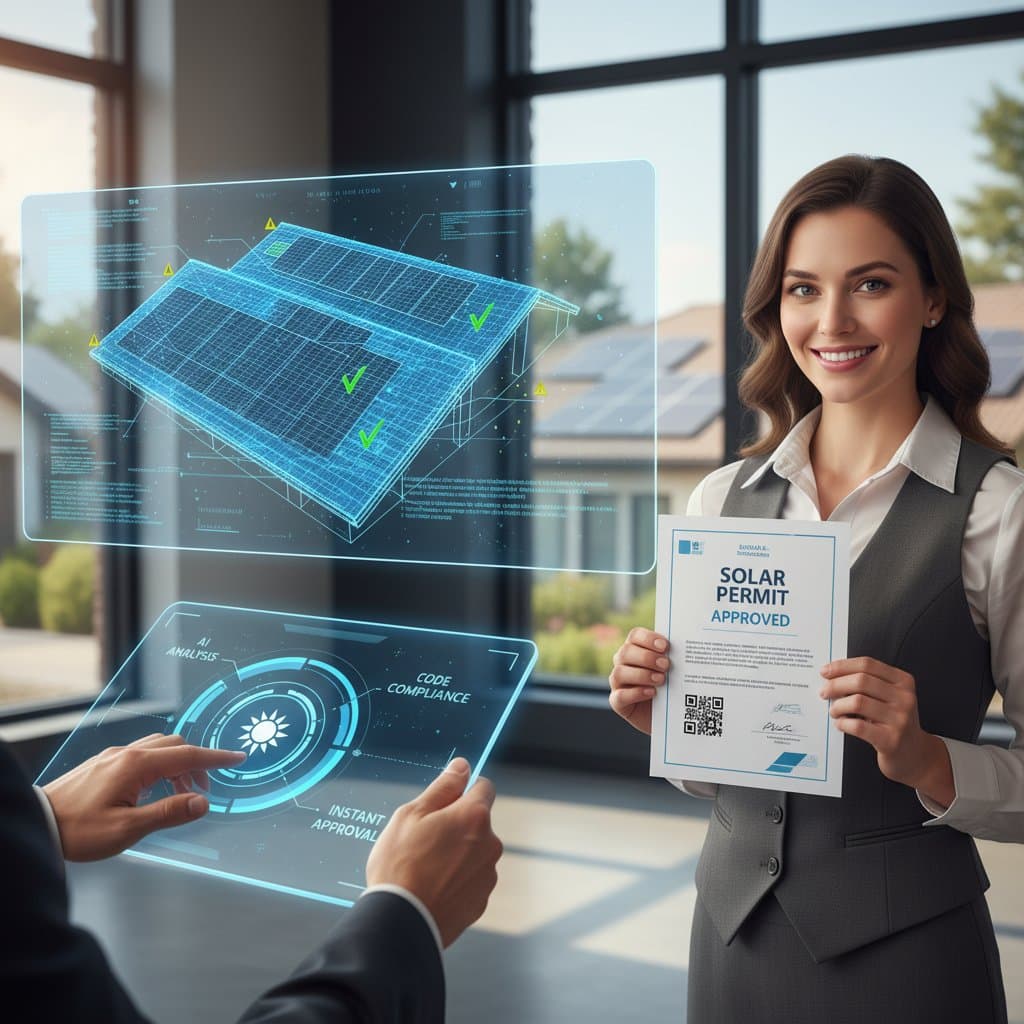
AI Accelerates DIY Solar Permitting in 2026
Homeowners pursuing rooftop solar installations frequently encounter delays beyond panels and wiring. The permitting phase requires local authorities to examine designs, confirm electrical safety, and ensure adherence to building codes before construction commences. For do-it-yourself projects, this review often extends over several weeks. Emerging artificial intelligence tools now address these bottlenecks by interpreting plans, validating requirements, and issuing approvals within hours.
PhillyGoSolar has examined the mechanics of these AI platforms, persistent challenges, and guidance for homeowners considering automated processes. Such innovations promise accelerated solar deployment, yet vigilance regarding safety and jurisdiction-specific rules proves indispensable.
Mechanisms of AI in Permit Acceleration
AI permitting solutions employ computer vision alongside rule-based algorithms to evaluate digital submissions against comprehensive code databases. These systems consult National Electrical Code provisions, regional modifications, and equipment manufacturer directives. Upon receiving a solar layout from a homeowner, the tool executes a structured assessment:
- Parses the diagram to pinpoint electrical elements such as inverters and arrays.
- Evaluates conductor gauges, circuit breaker capacities, and earthing configurations relative to code specifications.
- Validates structural placements, including roof clearances and emergency pathways, per municipal guidelines.
- Identifies absent certifications or incompatible components.
- Produces a detailed conformity assessment for authority examination.
Municipal staff subsequently confirm the AI outputs, bypassing initial groundwork. Pilot initiatives demonstrate reductions in processing from multiple days to under a single shift, streamlining workflows without compromising thoroughness.
Maintaining Safety and Installation Integrity
Efficiency gains do not supplant professional discernment. Physical inspections remain crucial for electrical reliability. While AI validates theoretical compliance, it overlooks on-site factors like proper terminal tightening or certified connector usage.
Typical risks in self-managed solar setups encompass:
- Insecure or thermally stressed connections within distribution enclosures.
- Improper junctions between aluminum and copper wiring.
- Omission of ground-fault circuit interrupter or arc-fault circuit interrupter safeguards on circuits.
- Inadequate sealing around roof entries.
Essential implements include non-contact voltage detectors, calibrated torque wrenches, and approved splicing devices. Homeowners unfamiliar with these instruments should avoid handling electrical integrations.
Qualified electricians alone possess the capability to measure voltage attenuation, assess bonding efficacy, and scrutinize service panel adequacy. Insufficient panel capacity or flawed grounding could lead to inspection failures, irrespective of prior AI clearance.
Safe Actions for Homeowners
AI tools simplify permit initiation, yet execution demands defined limits. Homeowners may safely undertake:
- Collecting precise roof dimensions and obstruction assessments.
- Leveraging web-based interfaces to calculate array scale and alignment.
- Submitting array configurations and wiring schematics for preliminary AI scrutiny.
- Examining generated conformity overviews prior to engaging professionals.
Individuals must refrain from altering utility interfaces, attaching wires to energized boards, or affixing mounting hardware absent expertise in waterproofing techniques.
For complex tasks, engage a certified solar electrician to handle:
- Disconnect switch placement.
- Pathway enclosure and weatherproofing.
- Earthing system establishment.
- Comprehensive tension and circuit verification.
Insights from Specialists
Dr. Rachel Simmons, an engineer specializing in renewable systems, emphasizes that AI enhances uniformity without obviating expert review. "Uniform application of digital standards across submissions minimizes inconsistent denials for homeowners," she observes.
Philadelphia-based licensed electricians share similar views. Numerous professionals note that AI preliminary evaluations halve administrative burdens, allowing greater emphasis on practical installations and diagnostic procedures.
Inspection Readiness Essentials
AI endorsements pave the way for on-site evaluations, which authorities conduct post-installation. Examiners focus on:
- Proper markings and pathway designations.
- Conductor curvature and enclosure safeguards.
- Earthing pathway integrity from modules to primary service.
- Accurate interrupter dimensions and fastening precision.
Successful verification enables utility net metering setup and grid interconnection. The AI step facilitates entry; it does not guarantee operational efficacy or hazard mitigation.
Advancing Your Solar Project
Homeowners ready to utilize AI permitting should:
- Access the municipal solar platform and verify AI review availability.
- Compile electronic blueprints and circuit illustrations via accredited software.
- Submit complete files, encompassing device approvals and technical documents.
- Analyze the AI conformity report and address highlighted discrepancies.
- Arrange conclusive evaluation with electrician attendance.
Retain duplicates of approval documents, assessment records, and component guarantees. These materials safeguard assets and streamline ongoing upkeep, fostering long-term solar success.