
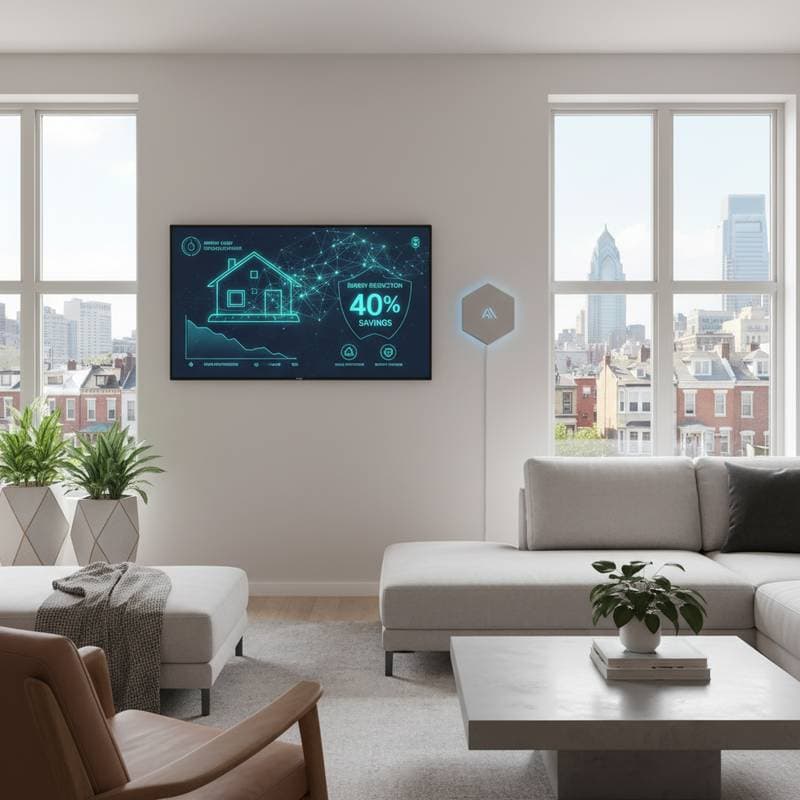
Smart Home AI Monitors Reduce Energy Bills by Up to 40%
Philadelphia homeowners confront escalating energy costs and variable consumption patterns. Numerous residents install solar panels or energy-efficient appliances, yet tracking actual energy use remains uncommon. Smart home AI energy monitors address this gap. These devices employ sensors, data analytics, and adaptive algorithms to pinpoint waste and enhance performance. Proper installation and integration yield reductions in utility bills approaching 40 percent, alongside greater comfort and system reliability.
Prioritize Safety in Every Installation
Verify the safety and grounding of your electrical service before installing or upgrading an energy monitoring system. Shut off power at the main breaker prior to accessing any panel or junction box. Halt work immediately if corrosion, overheating, or damaged insulation appears, and summon a licensed electrician. Professionals assess wire integrity, service capacity, and adherence to electrical codes.
Avoid splicing conductors or placing current transformers within a live panel. Employ a listed enclosure, torque screwdriver, insulated gloves, and non-contact voltage tester. Licensed electricians alone handle wiring inside main service equipment or load-side alterations.
Functions of AI Energy Monitors
AI energy monitors capture real-time electricity flow throughout the home. They discern each appliance and circuit's unique signature via voltage and current patterns. Gradually, the system constructs a digital profile of household energy behaviors.
Subsequent analysis reveals inefficiencies, such as an aging refrigerator consuming excess power, a water heater operating off-schedule, or standby phantom loads from idle electronics. Notifications deliver via mobile app or web dashboard, complete with targeted correction suggestions.
Advantages of AI Over Traditional Monitors
Standard energy monitors display aggregate consumption without specifying culprits. AI systems leverage high-resolution sampling to disentangle overlapping signals. They reveal specifics, like a heat pump activating prematurely, an oven extending cycles unduly, or a restricted dryer vent.
Such granularity enables practical energy management. Residents adjust habits or arrange maintenance to avert costly waste.
Essential System Components
A full AI monitoring setup comprises:
- Current transformers that clamp onto main conductors to gauge current flow.
- Voltage leads linked via a listed breaker or plug for voltage reference.
- Processor or hub that relays data to cloud or local servers.
- AI software platform that decodes electrical signatures into device-specific insights.
- Mobile application for oversight, reports, and notifications.
Certain systems link seamlessly with smart thermostats, EV chargers, or battery storage. Independent models provide access through secure portals.
Installation Hazards to Avoid
Monitoring hardware interfaces near high-voltage elements. Faulty connections risk severe shocks, arc flashes, or structural damage. Key risks include:
- Loose or undersized connectors overheating and igniting insulation.
- Erroneous polarity or phase links harming sensors.
- Unlisted devices nullifying warranties and breaching codes.
- Insufficient strain relief loosening wires over time.
Hesitate on uncertain steps and engage a licensed electrician versed in AI systems and National Electrical Code standards.
Navigating Codes and Permits
Philadelphia mandates compliance with the National Electrical Code and local amendments, overseen by the Department of Licenses and Inspections. Panel modifications necessitate permits and inspections. Low-voltage wiring external to the panel typically bypasses permitting, though verification with local authorities is essential.
Opt for UL-listed or ETL-listed devices to align with codes and insurance. Steer clear of unlisted imports lacking safety certifications.
Mechanisms for Waste Reduction
AI monitors target inefficiencies across three domains.
-
Behavioral inefficiencies: The system logs superfluous operation of lights, fans, or appliances. It prompts users to deactivate zones or automates shutdowns for idle periods.
-
Equipment shortcomings: Early detection flags motor wear, compressor irregularities, or heating element faults. These prevent escalated energy draw and prolong device lifespan.
-
Load optimization: Flexible loads shift to off-peak hours or peak solar output, curbing grid reliance and voltage fluctuations.
Assessing Realistic Savings
Vendors project up to 40 percent reductions in optimal scenarios. Actual outcomes hinge on home scale, appliance variety, and resident involvement. Research from the Electric Power Research Institute indicates 15 to 38 percent drops in energy use within six months of diligent application.
Greatest gains emerge in dwellings with electric water heaters, heat pumps, and diverse entertainment setups. AI orchestration aligns these loads for peak efficiency.
Synergy with Solar and Battery Systems
AI monitors augment solar oversight. Paired with inverters or batteries, they monitor generation alongside usage. This facilitates deploying stored solar energy during high-rate intervals.
Consider a scenario where the AI identifies noon water heater cycles aligning with solar peaks. It stores heat for evening needs, minimizing grid pulls. Such strategies diminish net metering imports and elevate solar investments.
Criteria for System Selection
Evaluate AI monitors based on:
- Compatibility with electrical service and smart ecosystems.
- Privacy measures, including local versus cloud data handling.
- Firmware and AI model update cadence.
- Installer and manufacturer support.
- Seamless ties to solar, EV, or automation platforms.
Prioritize systems featuring explicit labeling, safety certifications, and forthright data policies.
Installation Process Outline
Licensed electricians follow these steps for AI monitor deployment:
- De-energize the main service and test with a non-contact voltage detector.
- Affix sensors to service conductors using approved clamps within the panel.
- Attach voltage reference via a two-pole breaker or outlet.
- Anchor wiring with strain relief and route cables externally.
- Position the communication hub proximate to the router or Wi-Fi.
- Sync sensors and calibrate via the app.
- Re-energize and validate voltage, current, and phase readings.
Homeowners manage app configuration post-inspection and hardware setup.
Troubleshooting Performance
Inaccurate data recording prompts checks for:
- Reversed or mispositioned sensors.
- Unsecured voltage connections.
- Wi-Fi disruptions or excessive router separation.
- Outdated firmware.
- Server downtimes.
Electricians or support teams recalibrate or swap defective components as required.
Safeguarding Data and Privacy
These systems gather intricate household data. Bolster security with robust passwords and two-factor authentication. Ensure manufacturers apply encryption for data transmission and storage. Local processors appeal to those favoring on-site data retention over cloud reliance.
Insights from Specialists
Dr. Lena Torres, electrical engineer at the Smart Energy Research Center, observes, "The primary benefit of AI monitoring lies in temporal pattern recognition. It uncovers minor inefficiencies prior to substantial expense accrual." This underscores the superiority of evolving systems over fixed meters.
Sustaining System Performance
AI setups demand regular updates and inspections. Quarterly reviews confirm uniform voltage across channels. Dust enclosures and inspect wire insulation routinely. Address drifting readings or unresponsive devices through professional intervention.
App updates refine AI algorithms ongoing. Emerging features boost detection without hardware changes.
Indicators for Professional Assistance
Engage a licensed electrician when:
- Panels exhibit overheating or corrosion.
- Circuit labels lack or confuse.
- Solar, generators, or batteries integrate.
- Breakers trip post-installation.
Experts evaluate load distribution, lug torque, and sensor clearance from bus bars or breakers.
Advancing Energy Management in Philadelphia
Initiate with a comprehensive home energy audit to establish consumption baselines. Select a certified AI monitor suited to your panel and devices. Engage the dashboard routinely to analyze trends and refine habits.
Pair monitoring with solar arrays, LED fixtures, and efficient appliances for amplified results. Monitor billing cycles to gauge strides toward 40 percent savings. For pre-code wiring or connection doubts, secure Philadelphia electrician support. Effective, informed energy strategies root in secure practices and expert collaboration.