
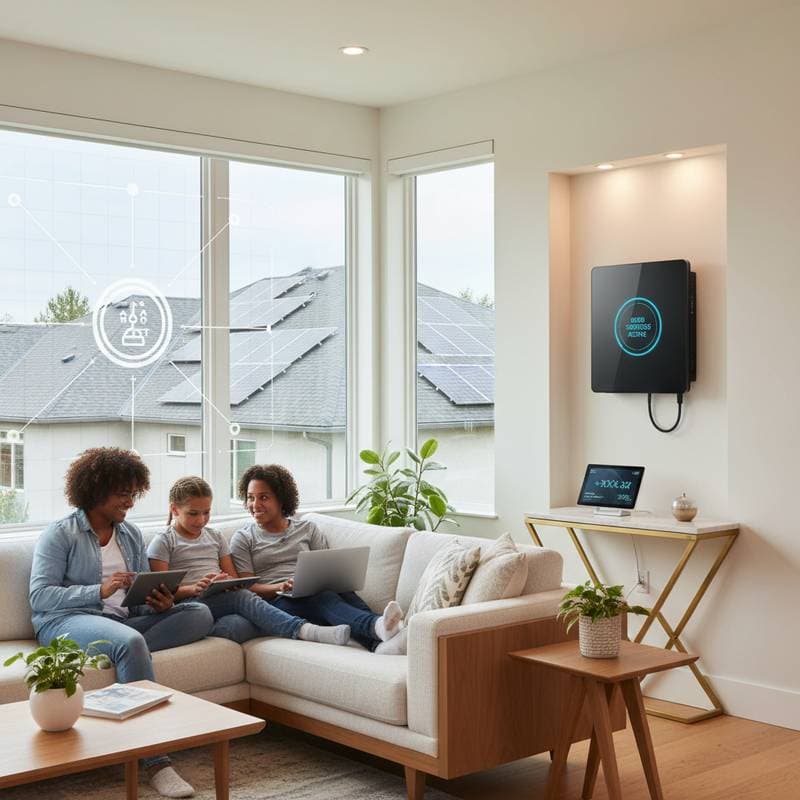
Smart Inverters Enable Grid Support Payments Starting in 2026
Homeowners equipped with solar panels already benefit from reduced electricity costs and greater energy autonomy. An additional advantage emerges soon. Smart inverters position solar installations to receive compensation for aiding electric grid stability. This development elevates solar systems from mere energy producers to proactive contributors that bolster local infrastructure while enhancing financial returns.
Technical expertise proves unnecessary to grasp the mechanics or capitalize on the opportunities. A series of straightforward actions and appropriate hardware suffice to integrate a solar setup into an emerging ecosystem where renewable energy intersects with intelligent management.
The Significance of Smart Inverters
Conventional solar inverters convert direct current from panels into alternating current suitable for household appliances. Smart inverters advance beyond this basic function. They establish communication with the grid, modulate output dynamically, and react to directives that maintain consistent voltage and frequency levels.
During periods of high demand or excessive solar influx, these inverters incrementally adjust power delivery. Utilities achieve more efficient operations, and communities experience diminished outage risks. Homeowners who authorize their systems for such contributions qualify for remuneration.
Mechanics of the Compensation Framework
Electric utilities and grid managers perpetually align supply with demand. They compensate major power facilities for balance assistance. Smart inverters extend this capability to residential-scale operations.
Consider a standard 7-kilowatt solar array, which generates approximately 9,100 kilowatt-hours annually under optimal sunlight conditions with limited obstructions. In forthcoming grid initiatives, utilities may transmit instructions to the inverter for brief output modifications. Participants receive corresponding credits that accumulate over time.
Projections indicate potential earnings of $50 to $150 per year for average residential systems, influenced by engagement extent, regional tariffs, and infrastructure requirements. Although incremental, these funds help cover ongoing expenses and prolong the economic lifespan of solar investments.
Advantages Extending Past Financial Gains
Enhanced Grid Stability
Distributed smart inverters alleviate pressure on transmission networks and mitigate voltage fluctuations. Neighborhoods derive collective improvements in power quality.
Accelerated Solar Permitting Processes
Utilities frequently cap rooftop solar deployments due to integration challenges. Smart inverters address these issues, facilitating broader adoption.
Improved Environmental Profile
Solar participants in balancing roles enable fossil fuel facilities to minimize idle capacity, thereby lowering greenhouse gas outputs.
Superior System Oversight
Contemporary smart inverters incorporate robust analytics platforms. Owners access live data on generation, usage patterns, and equipment condition.
Investment and Returns Overview
Existing solar owners might upgrade by swapping inverters at warranty expiration. Replacement smart models range from $1,000 to $2,500, scaled to capacity and capabilities. Professional installation incurs an additional $200 to $500.
Prospective solar adopters find grid-responsive features bundled into complete system pricing. Since many configurations already support connectivity and oversight, incremental costs for service eligibility remain minimal.
Return timelines hinge on utility program designs. Beyond direct reimbursements, heightened grid capacity fosters community-wide solar growth, preserving real estate appeal and fortifying regional durability.
Preparation Strategies
-
Evaluate Existing Inverter Specifications. Identify the model via labeling or documentation. Recent units often comply with smart standards, potentially requiring only software enhancements.
-
Consult Installers on Compatibility. Verify secure integration with utility communication protocols.
-
Analyze Recent Utility Statements. Review 12 months of billing to gauge available output margins without compromising daily needs.
-
Monitor Program Developments. Track announcements from utilities and grid authorities regarding trials and registration procedures.
-
Maintain Equipment Vigilance. Routinely clean panels, examine connections, and sustain monitoring application functionality.
Overlooked Perks
Smart inverters promote consistent indoor environments and safeguard appliances from fluctuations. Stable voltage curtails surge incidents, prolonging device longevity. In outage-prone regions, pairing with battery storage sustains essentials like lighting and cooling, while allowing grid engagement during stable periods.
These technologies future-proof residences. As electric vehicles, efficient heating systems, and automated controls proliferate, inverters orchestrate interactions to refine energy allocation.
Options Across Investment Levels
Essential Measures
- Examine solar performance metrics on a monthly basis.
- Update inverter software to the latest version.
- Enroll in utility alerts for energy-related updates.
Moderate Enhancements
- Integrate a programmable thermostat or demand-response module aligned with inverter functions.
- Deploy a compact battery to manage post-sunset consumption.
Comprehensive Initiatives
- Upgrade legacy inverters to certified smart variants.
- Participate in virtual power plant collectives that pool resources for amplified incentives.
- Assemble integrated setups encompassing solar, storage, and advanced heating for optimal adaptability.
Optimizing System Longevity
Smart inverters depend on reliable networks. Verify internet stability, optimize router placement, and enable application alerts. Arrange yearly professional assessments to validate cabling and apply patches. Vendors often offer remote troubleshooting to preempt minor faults.
Panels warrant biannual cleaning, particularly following intense allergen periods, to sustain efficiency. Address any alerts on voltage irregularities or diminished yields by engaging installers or providers promptly, avoiding unauthorized resets to ensure safety for home and infrastructure.
Collective Home Contributions
Aggregated participation from numerous residences yields substantial outcomes. Coordinated rooftop adjustments rival the flexibility of large conventional generators during transient demands. Individuals secure modest rewards, while localities attain more sustainable and dependable electricity.
Initiate involvement by assessing setup readiness, researching initiative timelines, and accessing utility resources on distributed generation. As opportunities unfold, solar assets evolve into multifaceted assets that yield returns, safeguard communities, and advance ecological objectives.
Frequently Asked Questions
What qualifies a solar system for smart inverter programs?
Systems with inverters capable of grid communication and real-time response meet basic criteria. Check manufacturer specifications for compliance with standards like IEEE 1547.
How do payments get calculated and distributed?
Compensation bases on participation duration, adjustment frequency, and predefined rates. Utilities typically credit accounts quarterly or annually via bill adjustments.
Will grid services impact my home energy supply?
Programs design adjustments to avoid disruptions. Inverters prioritize household needs, curtailing exports only when excess capacity exists.
Can older solar installations participate?
Upgrades prove feasible for systems under 10 years old. Consult certified technicians to evaluate inverter replacement viability.
What role do batteries play in these setups?
Batteries enhance flexibility by storing surplus for later grid support or home use, potentially increasing eligible services and earnings.