
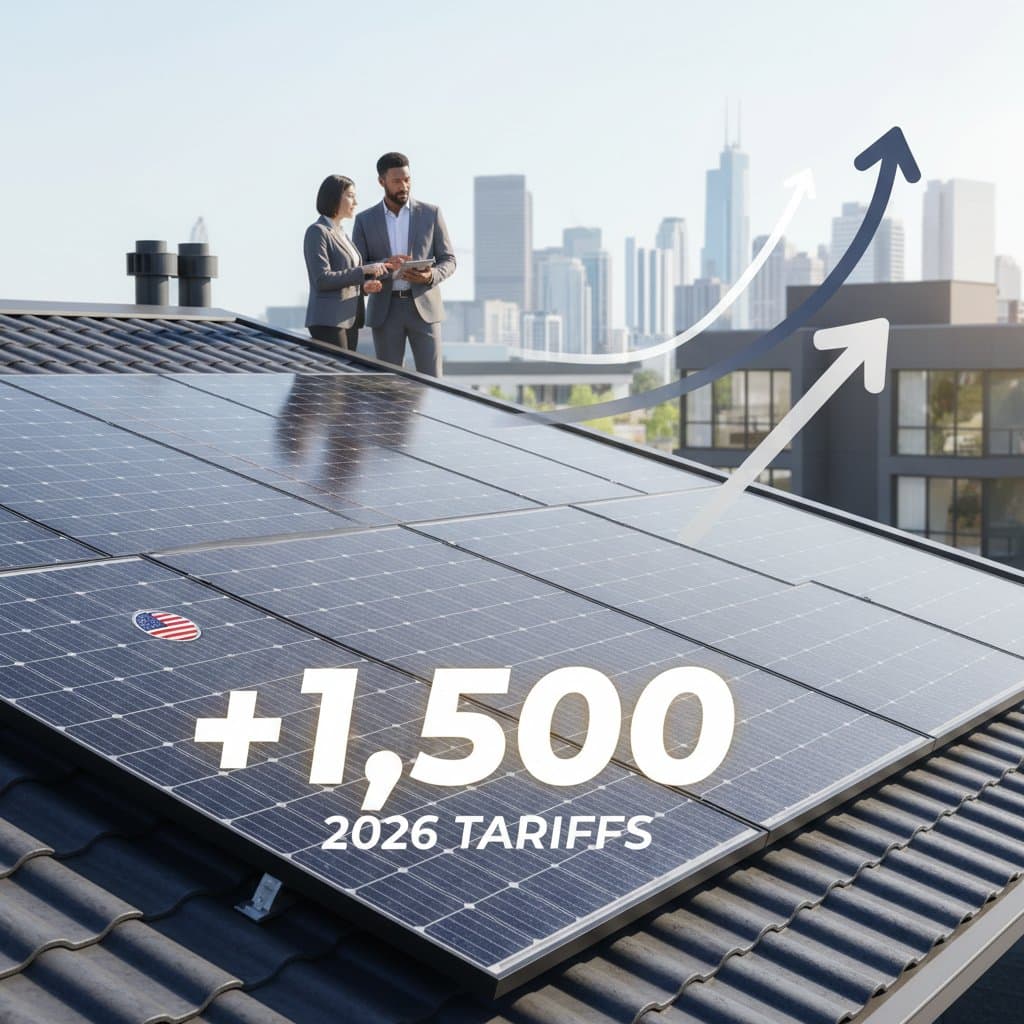
2026 Tariffs: Why Solar Panels Will Cost More Soon
Homeowners considering solar installations often pause to assess timing amid fluctuating interest rates and equipment prices. Recent announcements of import tariffs on solar panels signal impending cost increases that demand proactive planning. These tariffs will elevate prices, yet informed decisions now can secure favorable economics for your investment.
Why Tariffs Affect Solar Pricing
Solar panels involve components sourced globally, with cells, frames, and assembly crossing multiple borders. Tariffs on imported panels or parts raise expenses at each production stage. Manufacturers transmit these costs to distributors, who in turn adjust quotes from installers to maintain viability.
A modest 15 percent tariff on a $10,000 equipment package adds $1,500 before accounting for taxes, permits, or labor. For a standard residential setup, this adjustment can extend the payback period by one to two years, varying by local electricity rates and available incentives.
How Solar Pricing Breaks Down
A complete home solar system encompasses several elements beyond the panels themselves. Installed costs typically allocate as follows:
- Modules and inverters: Approximately 45 percent of the total
- Racking, wiring, and safety equipment: About 20 percent
- Labor and permitting: Roughly 25 percent
- Soft costs such as marketing, design, and overhead: Around 10 percent
Tariffs primarily impact the modules and inverters category, with ripple effects on financing and insurance due to elevated project valuations.
What the New Tariffs Target
This tariff initiative targets imported crystalline silicon solar cells and assembled panels from key manufacturing nations. The policy aims to bolster U.S. production, fostering job growth and resilient supply chains. However, it restricts access to affordable imported panels that dominate current installations.
Domestic manufacturing expands steadily, though capacity remains constrained. Persistent high demand could constrain supply, potentially driving retail prices up by 10 to 20 percent based on the blend of imported and local components.
Why This Matters for Homeowners
A 7-kilowatt system in a sunny region generates roughly 9,100 kilowatt-hours annually. With electricity at 24 cents per kilowatt-hour, it offsets about $2,180 in yearly costs. Tariffs elevating system prices from $21,000 to $24,000 could prolong payback from nine to eleven years, though lifetime savings endure.
For those eyeing solar soon, proceeding before full tariff implementation preserves existing pricing structures. Post-tariff, panel and inverter costs may remain elevated for years.
Paths Forward for Every Budget
Immediate full installation suits not all budgets. Targeted preparations allow benefits across scales.
Starter Actions
- Conduct a shade study to evaluate roof suitability.
- Collect 12 months of utility bills for accurate usage profiling.
- Upgrade to LED bulbs and install smart power strips to minimize consumption during planning.
- Examine state and local incentives that may counter tariff effects.
Mid-Tier Upgrades
- Enhance attic insulation and seal ducts to lower energy demands for heating and cooling.
- Deploy a smart thermostat to monitor patterns and align usage with peak solar hours.
- Anticipate EV charging or heat pump integrations compatible with future solar additions.
High-Impact Projects
- Proceed with a roof-ready solar array prior to tariff escalation.
- Integrate a heat pump water heater or battery storage for enhanced reliability.
- Select U.S.-made panels to align with domestic support and tariff exemptions.
How Incentives Offset Tariffs
Incentives mitigate rising panel costs effectively. Federal tax credits, state rebates, and renewable certificates lower net expenses. A $24,000 system qualifies for a 30 percent credit, reducing it to $16,800; at $2,180 annual savings, payback aligns at eight years, comparable to past benchmarks.
Net metering policies amplify value. Retail-rate credits for excess power boost returns; lower credits favor systems sized to match consumption for consistent benefits.
Installation and Performance Factors
Tariffs alter equipment selections without affecting core solar functionality. Installers might opt for higher-efficiency modules to maximize output per panel, minimizing roof coverage and ancillary expenses. Switching to 400-watt panels from 350-watt models requires fewer units, partially countering tariff hikes.
Key performance elements include:
- Sun hours and shading impacts
- Roof pitch and orientation
- Module temperature and ventilation
- Inverter efficiency and power limits
- Degradation rate: Approximately 0.5 percent annually
- Battery efficiency: Round-trip rates if storage applies
These factors enable precise quote evaluations and cost breakdowns.
Cost-Benefit Outlook for Different Timelines
Pre-tariff installations capture current rates and incentives. Delaying introduces higher equipment costs but possibly expanded domestic choices. Outcomes hinge on market dynamics and supply evolution.
In moderate sunlight, each kilowatt yields about 1,300 kilowatt-hours yearly. A 7-kilowatt array offsets 9,100 kilowatt-hours, saving $2,180 at 24 cents per unit. A 20 percent price rise maintains robust returns over 25 years.
Maintenance and Long-Term Value
Installed solar requires minimal upkeep. Clean panels annually if dust accumulates and review monitoring data monthly. Inverters warrant 10 years, panels 25 years; one inverter replacement typically occurs over the lifespan. Lifetime savings often surpass $40,000 amid rising utility rates.
Tariffs increase initial outlays but preserve solar's core advantages: clean power, reduced bills, and insulation from grid volatility.
Next Steps for Homeowners
- Arrange a site assessment with certified installers ahead of tariff enforcement.
- Obtain three comparable quotes based on identical system specifications, shading, and components.
- Confirm incentive qualifications and utility interconnection protocols.
- Inquire about U.S.-made alternatives eligible for additional credits or tariff avoidance.
- Design for emerging needs such as EVs or heat pumps to enable scalable growth.
These steps, from efficiency tweaks to quote solicitations, position you for timely action and cost safeguards.
FAQ
What are solar panel tariffs?
Tariffs impose duties on imported panels or components to promote local production, thereby increasing costs for foreign-sourced equipment.
How much could tariffs add to a home solar system?
Rates vary by source, but expect 10 to 20 percent hikes. A $20,000 system might incur $2,000 to $4,000 additional.
Will domestic panels avoid these tariffs?
Yes, U.S.-produced panels evade import duties, though they may reflect higher domestic labor and materials.
Can incentives offset tariff-related price increases?
Absolutely. Federal and state programs cut net costs by 25 to 40 percent, sustaining solar viability.
Should I wait for prices to settle?
Delaying risks higher post-tariff expenses. Early action secures prevailing rates and incentives.